Saturday, January 7, 2023

DEJA BLUES – The Emotional Interplay of Music and Memory

There’s this song I discovered long ago on the Putamayo album, Acoustic Africa. It’s called "Baro," by the Malian singer Habib Koité. I’m sure I liked the song the first time I heard it, but gradually it’s become not just my favorite cut on the album, but one of the dearest pieces of music I know.

Now, when I listen to Baro, the music—the sweet layering of Koité’s silky voice with chorus, guitar, the marimba-like balafon and some gentle percussion—brings me to tears. So what happened since that first time I heard it that has loaded that song with so much emotion?

         It taps into…that dimly-lit corner of my
         consciousness where many nameless,
         placeless scraps of emotion reside.


FROM ROMANCE TO RAP

There are two distinct ways in which music might move me. The first is with its sheer intrinsic beauty. Beauty that resides in the sound itself—the sublime melding of melody, harmony and tempo that, like a beautiful painting or stunning piece of architecture, simply delights my senses.

Reynaldo Hahn’s operatic "L’Heure Exquise" is an example. It calls up no part-
icular emotional association for me, but even the first time I heard it I found it achingly beautiful. 

Even more personal than music’s intrinsic beauty is its evocative power. Its ability to recall moments or periods in the past. Sweetness or sorrow; pleasure or pain; gladness or grief—or any combination of those emotions.

It doesn’t have to be one particular experience or feeling either; sometimes it simply taps into that dimly-lit corner of one’s consciousness where many nameless, placeless scraps of emotional memory reside.

Of course, this kind of appeal is subjective. To one person, the music that recalls emotion might be a gentle, romantic-period pastorale; to another, a tender ballad; to yet another—don’t ask me why—it’s the harsh scolding of gangsta rap.

      John McVie said that song would “make
      grown men weep.” Turns out I’ve become
      one of them.


GROWN MEN WEEP

Often, the appeal grows over time. The first time I heard Christine McVie’s (of Fleetwood Mac) "Songbird," I was below decks on a 32-foot sailboat, crossing North Carolina’s Pimlico Sound in a gale. I was hunched over a plastic bilge bucket, barfing my guts out.

McVie’s ex, John McVie, once said that song would “make grown men weep.” Turns out I’ve become one of them. How could the most obvious of associations—the sheer misery of that bilious day at sea—have given way to such tender, weepy allusions?

I have a pretty good idea what those allusions are, but I'll spare you the TMI violation.

Aaron Copeland’s "Fanfare For the Common Man"—all three magnificent minutes of it—stirs entirely different feelings. Instead of melting me, this piece makes me stand tall and feel invincible.

While "Fanfare's" sounds themselves are undeniably thrilling, I’m not sure what the emotional association is, unless it’s a cultural one. A meaning derived, I suppose, from this type of music’s use in grand ceremonies and their depiction in film.

Oh, and don’t get me going on Puccini’s "Nessun Dorma," from Turandot. To me—admittedly far from an opera aficionado—it’s easily the most stirring aria I’ve heard. Especially in the hands of Pavarotti, whose performance takes the emotion to the next level.


FULL OF IT
This intrinsic/associative duality brings to mind something I used to tell clients during my graphic design career about the value of a good logo. 

The design, I explained, should be thought of as an empty vessel. It has to be unique and pleasing to the eye, of course. And the really good ones employ devices to make them especially memorable (like the the illusion of movement, or an interplay between positive and negative space).

But filling the vessel with meaning, connecting the visual appeal with feelings that build a positive impression, occurs over time. It comes from repeated association of the symbol with customer experiences. It’s the way the receptionist answers the phone, the quality and pricing of the organization’s products or services, the integrity of its personnel.

Isn’t this what happens with music? Some pieces appeal to us simply for their beautiful exteriors; others, the ones that not only appeal to us, but grow on us, get “filled,” over the course of many exposures, with intensely personal emotional associations.

Let’s make this a conversation. Do you agree that music taps into some well of emotion in nearly every human being? What musical works do that for you? If you hear them too often, does the intensity of the feelings diminish?

Saturday, December 24, 2022

Happy Holidays!

 I wish all my visitors and loyal followers from all over the world—80 countries so far—the very best of this season. For us Christians, that means MERRY CHRISTMAS! (para mis hispanohablantes amigos, ¡FELIZ NAVIDAD!) For my Jewish friends, it's HAPPY HANUKKAH! For all of us here in the northern hemisphere, it's HAPPY WINTER SOLSTICE! 


Whatever your celebration, may these days be kind to you, your families and your loved ones. May they bring you new awareness, wonder and gratitude!

Saturday, December 10, 2022

BANSHEE BRINK – Survival and Serenity On Cross-Country Skis

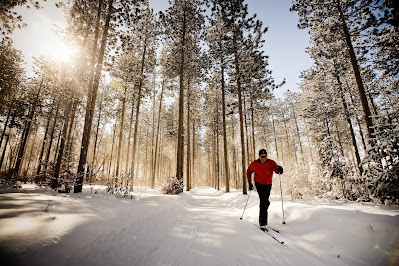
Ah-h-h, the dry, rhythmic whisper of skis on snow. Sh-h-h…sh-h-h….sh-h-h-h-h. An inch of fresh powder last night, and my green wax is spot on—grabs like tank treads going up hills; slick as Teflon going down.

Vivid sun cuts cleanly through fourteen-degree air. In the forest, trees cast pillars of shadow. Snowflakes, awakened by gentle breezes from their naps on high boughs, dust my jacket with glitter.


My body’s working well; I ask the best from every limb, and get it. My hands are already warm enough to shed my gloves. My spirits encourage me, as if skiing just ahead, laying down solid tracks, making it look and feel so easy.

          Before I know it I’m going way too fast
          to slow down.


Through a small clearing I glide, up a long herringbone hill, along a wooded ridge, and finally over the top. Speed picks up slowly; a little poling, faster and faster; now poles can’t keep up; I nearly brush the trees; hope I can stay in the tracks!

Wait! What’s this just ahead…Oh, no, too late! Over a blind crest and Whoa-h-h-h! A roller-coaster hill drops out from under my skis, sending me into near free-fall. Before I know it I’m going way too fast to slow down. Oh my God, I’m dead.

At the bottom a sudden dip catapults me out of the enclosure of the woods and into open sky over a sea of white. It feels like I'm in the air for five slo-mo seconds. I land more or less on my feet, regaining my balance, and then coasting…coasting.

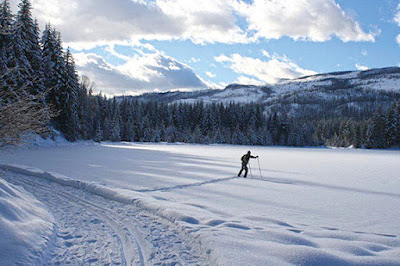
A few easy strides…coasting…and then, far out on the frozen lake, I glide to a stop. I pause to catch my breath and listen. To the brittle silence of winter wilderness. To the still drumming beat of my heart.

(I later find out that I've just survived "Banshee Brink," one of the area's most notorious cross-country ski trail features.)

One’s thoughts are torn at exquisite moments like this. Between the immediate magic and deeper reflection. I’m not very religious, but for some reason, the words of a chapel reading I heard nearly 60 years ago when I was a counselor at a boys’ camp in Maine come to mind:

May the lake, the trees, the wide spaces of the fields and all the nature
 sights and sounds of earth and air be unto us as gates whereby we enter the vast kingdom of thy presence—and think quiet and compelling thoughts.

Saturday, December 3, 2022

TALKING SNOW – And Other Winter Wonders

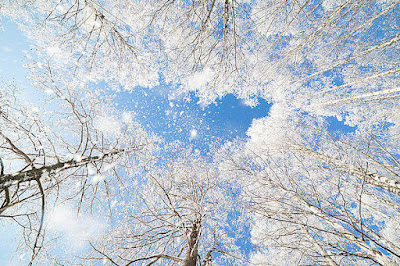
It’s early December here in Minneapolis. We’ve just been visited by the season’s first snow storm, which blanketed my home town in eight inches of beautiful, sparkly-white powder. In a typical winter we’ll expect another four to six feet.

Like most of us norteños, I entertain mixed feelings about the coming four-and-a-half to five months of winter.  From mild depression over its getting dark at 4:30, to annoyance at having to don two or three extra layers of clothes to go outside, to the sheer exuberance of a nice ski with the right wax on fresh snow.

My trick for staying reasonably happy through a Minnesota winter—or any season for that matter—is to overcome the downsides by opening my eyes and my soul to wonder.

COLD, HARD TRUTHS
Here, in no particular order, are a few tips I hope might warm your way through these long, cold, dark days, alternating with some of my most memorable winter experiences related to each tip:

Forget the notion that snow is white, and look more carefully for the many colors it wears.

During a watercolor painting class I tried painting a snow scene. I kept wondering why it looked so flat, so unconvincing. The instructor explained that my snow was just “too white.” She was right; I added shadings of blue and violet, even hints of gray, and nailed it.

Snow and ice love to play. Blow them; throw them; slide on them; build with them; make igloos and angels.

When I walked to school as a ten-year-old, I’d pass an old, iron fence whose posts were capped with three-inch spheres. Every cold winter day, my friends and I would each spit on one of those balls. By February, barring a major thaw, we’d have three- or four-inch spit stalagmites.

Snowflakes seem so calm and silent. But see if you can’t make out their whispered breath when a few million of them settle and shift in a light breeze. Listen for snow’s “hush, hush!” under ski or sled. Heed its complaints when crushed under foot or tire.

When Sally and I head home from an evening event on one of those crackly-cold, minus-20 January nights, I love the concert that emanates from the parking lot: snow's squeaking like Styrofoam underfoot; its groaning and crunching under tons and tires; the rasp of scrapers on icy windshields; the labored cranking of cars’ starters.

Don’t curse the freezing air; celebrate it. Marvel at the way it reveals your breath. How its density carries sounds. How it lets you walk on water. Or skate…or drive.

When it drops to minus 20 or colder, I love to take a pan of boiling water outside and throw the water up in the air. It explodes into a cloud of snow, hissing as if you’d thrown it onto a white-hot griddle.

             The hard rubber puck hit the goal’s
             metal post…and shattered.

If it gets really, really cold—like the minus 36 I experienced last winter up in Bemidji—remember how that feels; it’ll make for a kind of warped bragging rights the rest of your life.

My high school’s hockey rink was outdoors, unenclosed. One day when the temperature hovered around 25 below one of my teammates hit a great slap shot. The hard rubber puck hit the goal’s metal post…and shattered.

Appreciate the graceful shapes snow assumes when sculpted by the wind; and its ability to record everything from the passing of a field mouse to the progression of climate change over millennia.

Right after a fresh snowfall, Nature bore witness to a poignant, life-and-death drama right in the middle of my back yard: a line of delicate mouse or vole tracks that ended abruptly. And flanking the very last tiny footprint, the subtle, but unmistakable, imprints of two-foot wings.

Discover snow’s sublime beauty in both its micro and macro forms. An individual snowflake is one of Nature’s most elegant, beguiling creations. And, in the billions, they can bury a freight train, shut down a city or become the medium for gorgeous drifting dunes.

During my Army stint, I spent a weekend leave in New York City. Sunday dawned to the hush of over a foot of fresh snow. The normal hustle and hum of big-city life had been damped down to the easy murmur of a village. The only things moving were people on foot; the only sounds, the laughter of folks having a snowball fight…and swish-swish of one guy skiing.

Discover how, when a lake’s unbridled liquidity freezes solid and flat, it sets free your own gliding, swirling dance. You will need skates.

I’ll never forget my first skate on “black ice." Sunfish Lake had just frozen over (just a couple of inches thick), and neither wind nor snow had yet marred its glassy, obsidian perfection.*

Shed the scratchy, stifling coat of adulthood for a while, and free your inner child to delight in the season.

While skiing through the woods, I stopped in a pool of sunlight. I don't know what prompted me to lift my gaze, but suddenly I was awash in a fine, dazzling-diamond mist. The five-year-old in me opened my mouth and caught as much as I could on my tongue. I took a deep breath of pure, sub-zero air and vowed I’d never forget.
I haven’t.

All right, I know everyone who lives anywhere has his or her own war stories about their weather. But I say you can have your hurricanes and heat waves, your super cells and sand storms. I’ll take the winter weather wonders of Minnesota any day. 

 C’mon, I know you’re envious!

* I later learned that another skater had fallen through the ice that day on the same lake. Officials insist lake ice is safest to walk on when it’s clear and at least four inches thick. Even then, you should carry a pair of picks designed to enable your escape in the event you break through.

Thursday, October 6, 2022

WHERE NOTHING IS EVERYTHING – The Sacredness of the Spaces Between

In Nature, as in life, we can see more if we notice not just things, but the spaces between things; not just sounds, but the silences they frame.
Far from empty, these inhalations in the song of creation are what make each note so clear, so sweet.

From Under the Wild Ginger – A Simple Guide to the Wisdom of Wonder, by Jeffrey Willius

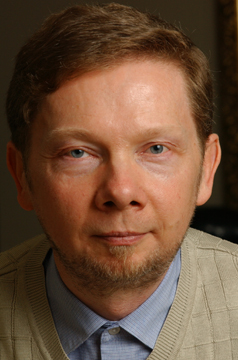
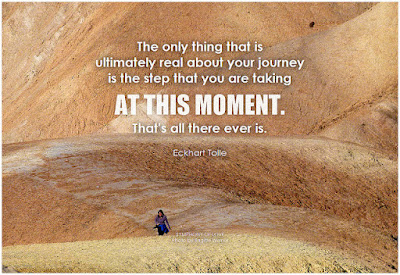
I’ve been reading Eckhart Tolle’s inspiring 2005 book, A New Earth – Awakening to Your Life’s Purpose. I’d been aware of the elfin spiritual guru’s Zen-like teachings for many years, and have watched several of his interviews about spiritual evolution and the path toward ego-less consciousness. (I also enjoy actor/comedian Jim Carrey’s unlikely musings about his own Tolle-inspired take on life.)

Revisiting Tolle has piqued my interest in better understanding and articulating my own spiritual beliefs, especially where they align with his on the concept of space.

I’ve written in these pages many times about the metaphysical significance of space. How to find it amongst the phalanx of responsibilities and stimuli that press in on us every day. How Nature can help provide that space.

         It’s all just story, whose true setting
         is invariably in the past or the future,
         neither of which even exists.


EVERYWHERE AND NOWHERE

I love the way Tolle delineates the realms of ego and higher consciousness. Ego, he says, comprises all the thoughts, feelings and even experiences that seem to define our lives. Higher consciousness, our true essence, our Being is everything else. It’s like this invisible—yet somehow perfectly beautiful—vessel, which exists both everywhere and nowhere.

While the ego feeds on stuff—Tolle calls it “content”—that comes and goes through that space, it’s all just story, whose true setting is invariably in the past or the future, neither of which, he asserts, even exists.

Content—like emotion, accomplishment, personality or pain—though the ego wants desperately to glom onto it, inevitably comes and goes. Our self-actualization depends on our ability to let it do so while realizing that it has nothing to do with who we really are. 


         Though I often hear people describe their
         ultimate happy place in terms of fullness,
         I experience mine as a divine void.


THE ELOQUENCE OF SILENCE
I love this notion of space being the essence of awareness. It feels like the central truth in which I’ve always known my personal spirituality is grounded. It explains perfectly why, though I often hear people describe their spiritual happy place in terms of fullness, I experience mine as a divine void. It’s why, for example, I find the “moment of silence” sometimes offered in services of prayer and remembrance so powerful.

It explains all kinds of notions human beings find hard to comprehend, but which I know somewhere deep inside to be true. Like how one reality might reside just a membrane’s thickness away from its opposite. Like the seeming mirror images of the immense and infinitesimal. Or how there’s no such thing as a straight line—since they all eventually end up at the same place they started.

That timeless, placeless, formless expanse in which those truths reside sounds a lot like what many spiritual traditions would call God.

                                             ~       •      ~       •       ~    

                                SIDEBAR: There’s Nothing To You
In case you had any doubt about the relative importance of matter and space in the Universe, consider this: If one could remove all of the empty space contained in and around every atom in every person on planet Earth and compress us all together, the overall volume of our particles would amount to something roughly the size of a sugar cube! *  **

* “The Volume of Humanity – If All the Space In Our Atoms Is Removed” By Phil Plait, SYFY Wire, Oct. 29, 2018

** Of course, this compression can only happen theoretically. Since the position of atoms in most solids is determined by what’s called wave function, they are about as close together as the laws of physics allow.

Sunday, September 11, 2022

CAP’N CRUNCH – Master of Dwindling Days

I’ve never been that big a fan of fall. The lush, green mantle that summer tucked around us so tenderly in June is growing threadbare. Flowers are fading. The crisp crack of bat on baseball is giving way to the dull thump of foot on football.

Summer’s luscious, oxygen suffused air will turn first to the sugary sweet smell of decay, then get wrung out, dried and sterilized.

Worst of all, daylight, after nourishing eyes and souls well into the evening for the past few months, gets dialed down like lighting for a noir photo. Too soon it will be dark by 4:30.

And need I even mention the coming four-month deep freeze here in Minnesota?

     I set out each day looking for—and finding—
     the bright side of autumn.


MY INNER TEN-YEAR-OLD
It all feels like gradual starvation. Nonetheless, determined to choose a mindset of abundance over scarcity, I set out each day looking for—and finding—the bright side of autumn.

My daily walks are a kind of meditation on that ambition. I head outdoors with eyes and heart open to fall’s undeniable small wonders: berries, from black to white with all the colors in between; the busyness of critters squirreling away stores for winter; leaves, dying with panache, flaunt their finest colors.

One of my favorite harbingers of fall is the oaks’ dropping their acorns. More specifically, stepping on their brittle capules, many of them knocked loose by impact with the sidewalk.

As I walk I seek out the elegant little crowns, aiming to crush as many as I can. I'm sure I look deranged, lurching back and forth, seeing if I can’t hit one with each step. Chalking up a double is especially rewarding.

Squnching one with the toe or arch of your shoe might do the trick, but the sound and feel are most satisfying when you hit it right on the ball of your foot.

The lower the humidity, the crunchier the little cups get. If it rained last night, fuggedaboutit. The best is when they’ve baked in full sun for a few hours.

(My wife rolls her eyes when I do this; thinks I’m reverting to my silly, inner ten-year-old. Which, of course, I take as a compliment.)

      Look right past the withering of summer’s
      joys and find those of fall.


RECLAIM THE WONDER
Don’t we all—especially after all the dispiriting events we’ve been through the past few years—need a little more reversion to childhood? Hell, we needed it even before COVID, George Floyd, the climate calamity and what’s-his-name, when far too many of us were already allowing workaday concerns and mindless diversions to steal our innate senses of wonder and play.

So c’mon folks, let’s reclaim that precious, lighthearted exuberance that is—or at least should be—every evolving soul’s birthright. Get out there, take a deep breath of this sweet, late-summer air. Look right past the withering of summer’s joys and find those of fall.

Look for those first crimson leaves of sumac and the fantastic shapes and patterns of fungi; smell the crisp autumn air; listen for the Vs of Canada geese heading south.

And by all means, indulge your still playful ten-year-old self with a mischievous, crunch-a-licious stroll through fallen acorns.

• • • • • • • • • • • • • • • • • • • • • • • • • • • • • • • • • • • • • • • • • • • • • • • • • • • • •

ONE PERSON’S CRUNCH

     There are three distinct classifications of crunchiness: Crispy is onomatopoeic; it whispers; sounds like its spoken-word self. Crispy is biting into a classic potato chip or a piece of puffed rice cereal (a Rice Crispy, if you will). 
     Crunchy
has a bit more heft. The item’s usually a bit harder, more rigid. The sound’s deeper, gravellier, like chomping into a fresh carrot or a well-toasted almond.
     And then there’s Crackly. Crackly’s brittle, snappy; you really get the sense that something’s breaking. It’s what happens when you bite into stuff that’s hard and thin, like peanut brittle, ribbon candy or even some “kettle” style potato chips.
     Some things—like ice—can be either crunchy or crackly, depending on their hardness or thickness.

Saturday, August 13, 2022

SWIRLING EMOTIONS – An Ode to Eddies

An irrepressible flow, an unmoving impediment. If both were solid objects, there’d be a collision, likely some damage, and motion would cease.

But with water—or any substance that either is, or acts like, a liquid—the effect
of that collision is a thing of beauty, a sublime coalescence of concession and conquest.

Take a rock and a river. Collision’s no problem for either of them. The water simply separates effortlessly to flow around the barrier, then momentarily reverses course and regroups to carry on its gradual, inevitable surrender to gravity.

It’s an object lesson in fluid dynamics.

     Eddies are made by objects as small as the
     teaspoon you use to stir your morning coffee
     or as large as…well…Antarctica.


SPIN CYCLE  
An essential characteristic of flow is that when the liquid changes direction it creates a void in the place where it would have gone if left alone. It’s something like a vacuum, which draws in the liquid next to it. This creates the swirl we call an eddy—or vortex, gyre, whirlpool, maelstrom…all the same thing, though some of these terms suggest varying scales.

If the water flows ‘round that rock on both sides, the void occurs right behind the rock, stirring a swirl on each side and an area between them where the water flows back against the current. If the rock is a peninsula, there’s also a backflow, but from just one swirl.

Liquid eddies are made by objects as small as the teaspoon you use to stir your morning coffee (made easier to see when you stir right after putting your cream in) or as large as…well…Antarctica.


WHERE MONSTERS LURK
I know a thing or two about water eddies because I’m a canoeist and a fisherman.
I see them coil from either side of my paddle as I dip and pull it back. On those rare occasions when the water’s like glass, I can turn and watch them spin down for a few seconds as they recede behind me.

Bigger eddies might offer a challenge to steering a canoe. As you enter one, you can feel it grab and rotate the craft. But an experienced canoeist anticipates such twists and turns.

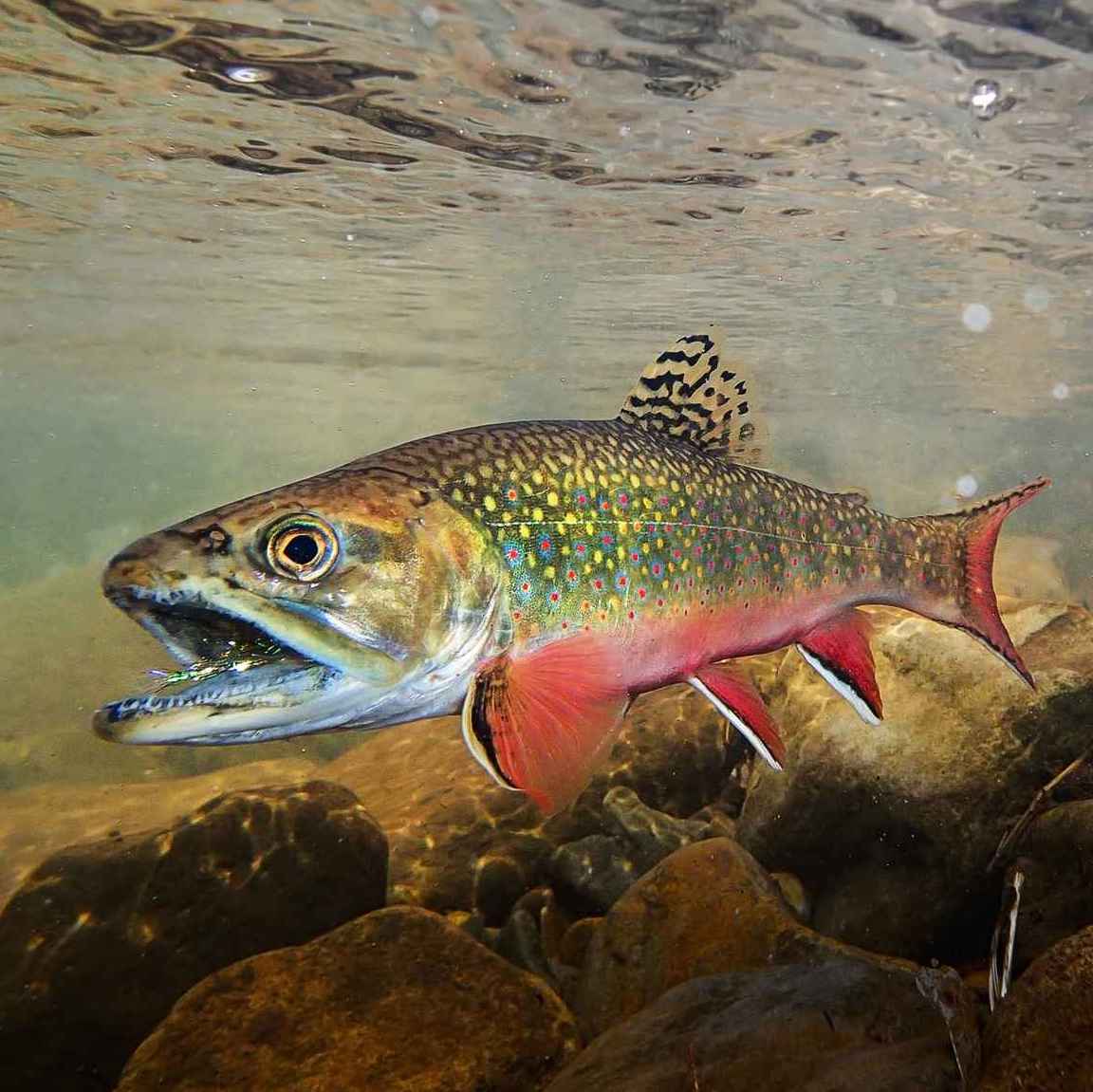
An eddy doesn’t just roil the water on the surface; the effect often extends all the way to the bottom. Because this buffers the current, it’s the perfect spot for a predator fish to lie in wait, with minimal effort, for prey getting swept past.

And the circulation can be vertical as well as horizontal. This is why it’s so dangerous for a swimmer to get caught in the area just downstream of a dam or a submerged rock or log. The rolling undertow there can keep pulling you under with no escape.


            Get outdoors and let Nature be your
            slowing-down, calming "eddy."

GO WITH THE FLOW…OR NO?
So are there any life lessons to be taken from eddies, as there are from so many of Nature’s teaching ways? 

What would that big brook trout lurking behind the rock say? Perhaps “Why fight the current stalking prey when you can relax here and simply let the current bring dinner to you?”

Perhaps the message is that if you run up against an obstacle, it doesn’t mean your quest is over; with flexibility, you can simply “flow” around the barrier, and regroup in the calm before moving on.

Or maybe that life doesn’t have to be one continuous onslaught of expectations and demands. You can seek out those quiet “eddies” where you can relax and take sustenance.

Or that just about the best eddy you can find is immersion in Nature.

What other metaphorical lessons can you add? We’d love to hear your thoughts!

      “Water… for a dwelling it chooses the quiet meadow; 

        for a heart the circling eddy.”

             LAO TZU, Tao Te Ching