Showing posts with label fluid dynamics. Show all posts

Friday, April 18, 2025

WATER, WIND AND SPIN – My Go-round With the June, 1981 Minneapolis Tornado


For some reason I’ve been thinking about fluid dynamics. Maybe it’s that, after yet another long northern winter, our 11,842 lakes here in Minnesota are finally turning back to fluid. Or the prospect of soon getting out on the St. Croix River in my little canoe—that is if we’re spared the river’s usual spring flooding.

Another reason might be that it will soon be prime tornado season here. (From May through July Minnesota averages 41 twisters each year.) Wait…fluid dynamics and tornadoes?

I could, and probably should, write a post just about all the ways air acts like water. Suffice it to say for now that how water drains from a sink or bathtub, how it swirls—counterclockwise in the Northern Hemisphere—is exactly the way air acts during nearly all tornadoes. And yes, just like water, most tornadoes spin
clockwise in the Southern Hemisphere.

A DRAINING EXPERIENCE

It’s June 14, 1981—a Sunday—a bit before 4 PM. I’m upstairs in my little house on 16th Avenue South, Minneapolis, chipping away 60 years of paint that's lost its grip on a window sill. Though it’s far from taxing work, I’m sweating.

The air outside, and even more so inside—on the second floor of a non-air-conditioned house—is thick with humidity. I’m grateful for the occasional waft of breeze that finds me.

The work is pleasant. I’m accomplishing something, listening to some nice Hall & Oates on the stereo, and Bess, my sweet black lab, is lying on the rug beside me, panting.

At one point, I notice it’s getting kind of dark outside, and now those breezes are holding their breath. You can almost smell the rain coming. Oh well, I figure, I’ll work until I feel it on my hands.

 A few minutes later the gunmetal sky and everything I can see out the window has taken on an eerie greenish cast. I realize this can’t be good.

I don’t remember hearing the civil defense sirens going off. Just that soon it’s raining, then hailing. Then the air starts churning…and that’s when I hear it.

          I picture the massive, vacuum-cleaning
          vortex swirling overhead.


SO MUCH DUST

Nearly everyone who’s lived through a tor-
nado says they heard an unearthly rumbling heading toward them. Like a freight train. That’s exactly what I hear. Bess hears it too and gets really squirrelly.
 
I’d been fascinated with tornadoes ever since I was a boy and always wished I could see one. I admired those daredevils who tear along back roads in Kansas, Oklahoma and the Texas Panhandle to document them. And here’s my moment; I’m about to be in the middle of one. But I can tell you, what I’m experiencing is not a thrill.

IMAGE: The Weather Channel

I imagine the massive, vacuum-cleaning vortex swirling overhead. And here’s this flimsy little house, these two minute creatures helpless in its path. If it’s an F4 or F5, we’re like so much dust.

I take the cues and start down to the basement. First I shut the window, and I feel my ears pop as if something just sucked all the air out of the house. In the kitchen I grab some candles and my portable radio and by the time we reach the cellar it’s like we’re under a trestle and the train is thundering right over us.

     The entire roof of the three-story apartment
     building next door gets lifted off and dropped
     across my back yard and garage.


FOREST FOR THE TREES
We’re not in the basement for more than a few minutes when the ominous roar ebbs. And we still have a roof over our heads! I head cautiously up the stairs and, thank God, everything appears intact.

It’s when I go outside that I see the destruction. Eighty-foot, half-century-old trees ripped from the ground. Cars piled on one another. Large sheets of drywall and other building materials strewn in the street. (I later find out they’re from the Sears yard a mile away.) And the entire roof of the three-story apartment building next door lifted off and dropped across my back yard and garage.

IMAGE: teapots happen

  • The so-called Har Mar tornado, rated an F-3 with winds reaching nearly 200 miles per hour, was on the ground for 26 minutes.
  • The human toll: two fatalities, 6 serious injuries, more than 80 minor injuries. (Experts considered it miraculous that these numbers weren't much higher.)
  • Other impact: $47 million in property damage; 1,300 homes, 50 businesses and 400-plus vehicles damaged or destroyed; 3,500 trees killed; some 30,000 customers without power.*

So I’ve finally experienced my tornado, up close and personal. I suppose that affords me certain bragging rights. But, ironically—and disappointingly—I’ve yet to see one. Maybe this tornado season I’ll get that chance (from a safe distance this time).
                                               ~       •      ~       •      ~      

TIP #30 ON HOW TO BE IN THE MOMENT:

Blow toward a candle from across the room.

Air's like this magical, invisible liquid. It ebbs and flows, pours in to fill voids, lifts huge things...like roofs and wings.
Like a wave, your blown breath rolls across the room. Will there be enough left of it to make lap candle’s tongue of flame?

FROM UNDER THE WILD GINGER – BY JEFFREY WILLIUS

* Storm data thanks to CBS News, WCCO and Minnesota Public Radio, and
   Hennepin County Emergency Management.


Saturday, August 13, 2022

SWIRLING EMOTIONS – An Ode to Eddies

An irrepressible flow, an unmoving impediment. If both were solid objects, there’d be a collision, likely some damage, and motion would cease.

But with water—or any substance that either is, or acts like, a liquid—the effect
of that collision is a thing of beauty, a sublime coalescence of concession and conquest.

Take a rock and a river. Collision’s no problem for either of them. The water simply separates effortlessly to flow around the barrier, then momentarily reverses course and regroups to carry on its gradual, inevitable surrender to gravity.

It’s an object lesson in fluid dynamics.

     Eddies are made by objects as small as the
     teaspoon you use to stir your morning coffee
     or as large as…well…Antarctica.


SPIN CYCLE  
An essential characteristic of flow is that when the liquid changes direction it creates a void in the place where it would have gone if left alone. It’s something like a vacuum, which draws in the liquid next to it. This creates the swirl we call an eddy—or vortex, gyre, whirlpool, maelstrom…all the same thing, though some of these terms suggest varying scales.

If the water flows ‘round that rock on both sides, the void occurs right behind the rock, stirring a swirl on each side and an area between them where the water flows back against the current. If the rock is a peninsula, there’s also a backflow, but from just one swirl.

Liquid eddies are made by objects as small as the teaspoon you use to stir your morning coffee (made easier to see when you stir right after putting your cream in) or as large as…well…Antarctica.


WHERE MONSTERS LURK
I know a thing or two about water eddies because I’m a canoeist and a fisherman.
I see them coil from either side of my paddle as I dip and pull it back. On those rare occasions when the water’s like glass, I can turn and watch them spin down for a few seconds as they recede behind me.

Bigger eddies might offer a challenge to steering a canoe. As you enter one, you can feel it grab and rotate the craft. But an experienced canoeist anticipates such twists and turns.

An eddy doesn’t just roil the water on the surface; the effect often extends all the way to the bottom. Because this buffers the current, it’s the perfect spot for a predator fish to lie in wait, with minimal effort, for prey getting swept past.

And the circulation can be vertical as well as horizontal. This is why it’s so dangerous for a swimmer to get caught in the area just downstream of a dam or a submerged rock or log. The rolling undertow there can keep pulling you under with no escape.


            Get outdoors and let Nature be your
            slowing-down, calming "eddy."

GO WITH THE FLOW…OR NO?
So are there any life lessons to be taken from eddies, as there are from so many of Nature’s teaching ways? 

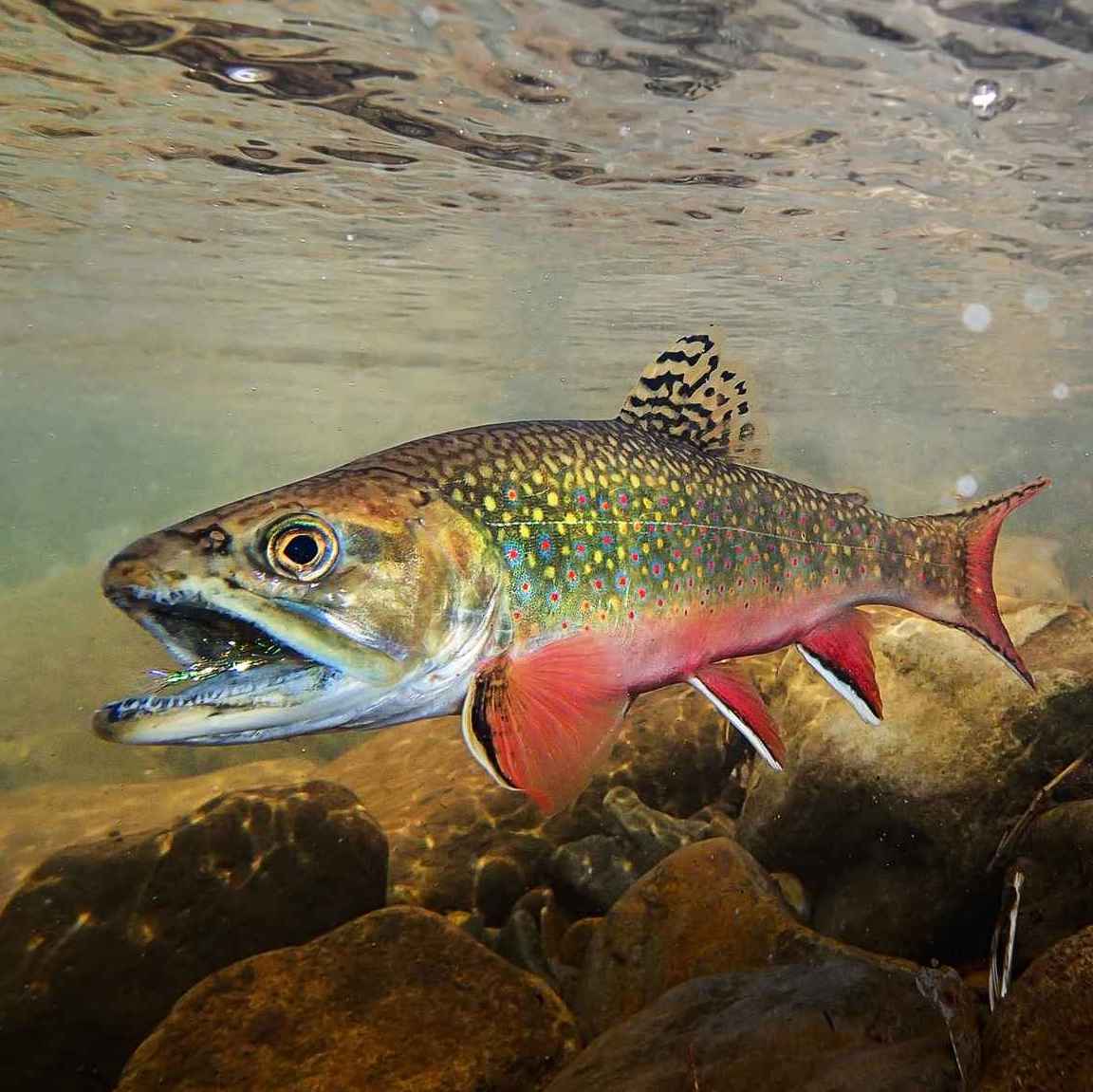
What would that big brook trout lurking behind the rock say? Perhaps “Why fight the current stalking prey when you can relax here and simply let the current bring dinner to you?”

Perhaps the message is that if you run up against an obstacle, it doesn’t mean your quest is over; with flexibility, you can simply “flow” around the barrier, and regroup in the calm before moving on.

Or maybe that life doesn’t have to be one continuous onslaught of expectations and demands. You can seek out those quiet “eddies” where you can relax and take sustenance.

Or that just about the best eddy you can find is immersion in Nature.

What other metaphorical lessons can you add? We’d love to hear your thoughts!

      “Water… for a dwelling it chooses the quiet meadow; 

        for a heart the circling eddy.”

             LAO TZU, Tao Te Ching

Tuesday, June 23, 2015

HOW TO BE IN THE MOMENT – Tip 116

Ride a wave.

PHOTO: Pixabay


How exquisite waves’ chimera motion; their pulse moves 
laterally; their blood does not.

Like emotion, they lift and let you fall, yet you are still afloat. 

They flow through you, but they are not you. 

Friday, September 16, 2011

MISPLACED DISPLACEMENT – A Fluid Dynamics Mystery

Kids are natural scientists. It’s their job to notice, to explore, to experiment.

When I was twelve I went to Camp St. Croix, a YMCA camp on the St. Croix River, the serene, still-relatively-wild waterway forming part of the border between Minnesota and Wisconsin.

My cabin group’s adventure that summer was canoeing the St. Croix to its confluence with the mighty Mississippi at Hastings, Minnesota, and then 350 miles down the great river to East Dubuque, Illinois.

We learned a lot about water on that trip: respecting its power, managing large waves, using its properties to skillfully maneuver a canoe, and trying to keep it out of our packs and tents. Of all these lessons, one observation really struck me—though its explanation continues to elude me to this day.

I noticed an eerie glow on the trees on 
the other side of the channel.

One night we were camped on one of several narrow channels the Mississippi assumes along that stretch. After supper, our campfire gradually died out and it got so dark that there was nothing to do but go to bed. As we felt our way toward our tents I noticed an eerie glow on the trees on the other side of the channel, and stayed outside to investigate.

As I watched, the apparition would dash from side to side, then remain fixed in one place for a few seconds and, finally, vanish. This sequence repeated itself several times. By then, I’d put the light together with the faint rumbling I was beginning to hear, and realized I was seeing the navigation searchlight of a freight barge. (As an indication of the power of these beams, it took almost 15 minutes for the barge—running with the strong current—to reach us.)

How far...would the huge vessel’s displacement raise the level of one of the world’s great rivers?

I don’t know what made me think of it, but I was curious what a fully loaded eight- or ten-unit river barge and pusher would do to the water level. So, well before it reached our campsite, I pushed a foot-long stick into the sand at the water line. How far, I wondered, would the huge vessel’s displacement raise the level of one of the world’s great rivers?

PHOTO: Thomas R. Machnitzki

By the time the barge finally lumbered past our campsite, my buddies had heard it and come outside. They joined me in exuberant hoots and howls and, sure enough, the pilot noticed and turned the spotlight on us. I could’ve sworn I felt the heat from that blinding ray!

Despite the excitement, I remembered to keep an eye on my stick and noticed that, instead of climbing the shore as I’d assumed it would, the waterline had dropped—and not by an inch or two, but by more than two feet down the sandy slope. I figured this indicated a vertical drop of several inches! How could that be? I imagined taking any container of water and pushing any object into it. How could it possibly do anything but raise the water level?

The waterline had dropped—and not by an inch or two, but by more than two feet down the sandy slope.

Now, I could understand it if the water went down after first going up—the theory being that the barge pushes a hump of water in front of itself. But this isn’t what happened; the water line just moved down and then back up to its normal height.

I still get to watch the Mississippi, now within a block of my home. I’ve repeated my experiment countless times and, despite what common sense might suggest, the water level still drops every time a loaded barge goes by. When I Google the phenomenon, I don’t find a single reference to it.

If you ever find yourself on the banks of a major river with heavy commercial shipping, try the stick-in-the-sand experiment for yourself and let me know what you find. And you physicists and engineers out there: what’s the deal?