Showing posts with label curiosity. Show all posts

Friday, December 12, 2025

HOMELESS FOR THE HOLIDAYS – The Woe of Nowhere To Go

Last night, while driving home from my men's group, I noticed a young man standing alone in a bus shelter. It was the motion that caught my eye. Rocking back and forth, hugging himself in a flimsy, white blanket, his breath made clouds in the 20-degree air.  

I’m guessing he had nothing on under the blanket but pants, a shirt, maybe a very light jacket. The shelter was quite dark, so I don’t think the infrared heaters were working. 

AN ILL-FITTING GARMENT
I often wonder about strangers, especially when they’re alone—who they are, what they’re doing, what’s their story. But for some reason, in this fellow’s case the question that struck me was, Where are you going?

Are you on your way home? Going to see a friend? Off to your night shift? I probably shouldn’t read too much into such details, but somehow the blanket feels like a poignant answer to those questions. A garment less chosen than scrounged. 

PHOTO: Lily Fulop

What if, I asked myself, you’re homeless? What if all your family bridges have burned? What if the next bus provides the only shelter you’re going to find tonight? Do you even have the fare?

And, again, that insistent question: Where will you get off?

              How easily we take for granted 
              our destinations in life.


DESTINATION: SURVIVAL 
The young man drew just a passing glance, but he’s been on my mind ever since. It’s not just curiosity and compassion, but also sadness. For, even if my reckoning on his particular plight is misplaced, I know there are countless others tonight for whom it would not be.

How easily we take for granted our destinations in life. Appointments, a job, social occasions… Even if our engagement’s with no one but a favorite place, we’re very seldom without an aim in our comings and goings.

PHOTO: Kidstuff Counseling

But when the notion of belonging somewhere lies beyond reach, do you think a person’s idea of “destination” might change from one of place to one of time? How long can I stay on this warm bus? When will they kick me out? 

For some—like perhaps this young man—the aim is simply survival. Can I make it till morning?

        I’ve decided there must be some purpose, 
        some intent, in my having noticed him.


CAUSES, EFFECTS, REMEDIES  
I used the same excuses most of us would for not stopping and just asking the kid these questions, maybe helping him out. Instead, I weigh his fortunes from afar, from a world of warmth and belonging.

Nonetheless, I’ve decided, there must be some purpose, some intent, in my simply having noticed him. And, yes, in contemplating the causes, effects and remedies for homelessness and its attendant ills.


In 2024, it’s estimated that .23 percent of Americans—roughly 770,000 of us—
experienced homelessness.* 

To be honest, I don’t think I’ll be out anytime soon looking to engage, face to face, folks like this young man who look displaced. But I am moved to find and start supporting an organi- 
zation that provides effective, reliable “housing first” services and programs here in Minneapolis. 

Among those I’m considering: Avivo Village—which provides indoor communities of “tiny houses; People Serving People—focusing on keeping people in their existing homes; or the United Way—which engages citizens, businesses and organizations in combating homelessness. 


Just imagine how it might feel if, especially during this busy, destination-rich holiday season, you had nowhere to go, nowhere to be. I hope that, like me, you’re moved to help our fellow citizens—like my White-blanket Man—whose home might very well exist only in their dreams.

* National Alliance To End Homelessness 

Monday, January 6, 2025

HUNKERED DOWN – When Wonder Moves Indoors

It's the depth of winter here in Minnesota. Not to worry; we're hearty souls. Generally, we don't let that stop us from enjoying life, even life outdoors—which, by the way, is still full of great beauty and life.

        A person's need for discovery and wonder 
        doesn't get left at the door like the parka 
        and boots.

Nonetheless, below zero wind chills conspire with the sun's quitting at 4:30 to make us spend far more time cooped up inside than we do in the summer. Some- times we have no choice but to hunker down for a couple of days and wait out a blizzard and the arctic deep freeze that so often follows.


But a person's need for discovery and wonder doesn't get left at the door like the parka and boots. Even indoors we're curious; our child side still needs to play, learn and experience delight.

Of course, there's always TV, a good book or the Internet to help pass the long, dark hours. But these, I submit, are remote, second-hand experiences. They may entertain or inform us, but do they nourish a curious soul?

Even indoors I'm always surprised and delighted at how many real-life, present-moment natural wonders await discovery when I'm willing to look with care. Here are just a few examples:

       Study the strokes and patterns; marvel 
       at the feathered crystalline brushwork; 
       imagine how the artist determined where 
       each element in the composition would go.


Could there be a more elegant artistic expression than the crystalline masterpieces Nature renders with water? Outdoors, of course, it’s snow; whether seen as flake or drift, it's the most sublime of sculptures. Indoors, though, relegated to the two-dimensional “canvas” of frozen glass, she once again outdoes herself.

Look closely at frost; study the strokes and patterns; marvel at the feathered crystalline brushwork; imagine how the artist determined where each element in the composition would go. Touch it; see how ephemeral it is. See if you can melt it without quite touching it.

Perhaps the one thing that changes most when our world moves indoors is our appreciation of things that live and grow. Instead of marveling at trees, shrubs or flowers in their natural, wild setting, we devise ways to shrink, capture and confine them in pots that clamber close to windows. Try not to take them for granted. These plants, for their staunch, surrogate duty, are all the more worthy of our notice.

For our indoor animal fix, we turn from summer's chancy thrill of spotting critters in their own realms and on their own terms to the certainty of specimens we've shaped to our convenience, bred to need no more than our care and attention. Take advantage of these most opportune occasions to relish your closeness to these dear creatures.

    The subtle white, comet-tail streaks suggest the 
    seeds have streaked out from center. And there 
    they’ve landed, on the vivid, glossy surface of 
    the fruit, each cupped in its own tiny crater. 


Instead of discovering a strange new fruit or nut on a wild plant somewhere in the woods, we learn in winter to explore things closer at hand, perhaps things so common we never thought to look at them with wonder. For example, have you stopped to appreciate the elegance of line, color, form and texture in a freshly sliced strawberry?

See how the flesh morphs from furry, white, womb-like core into sweet, solid crimson. Note the subtle white, comet-tail streaks that suggest the seeds have streaked out from center. And there they’ve landed, on the vivid, glossy surface of the fruit, each cupped in its own tiny crater.

Would you agree that discovery and wonder need not be lost on the home-bound? See if you can find "wild" living critters like meal worms, spiders or perhaps the occasional holdover ladybug. See what you can discover about another person. Play with soap bubbles or static electricity. Explore the attic. Cook something. Try to...ah-h-h...wait a second...whoa-a-a!...I'm sorry, I have a fire going in the fireplace, and there's this...amazing bright blue...tongue of flame…

Wednesday, April 12, 2023

SLIME, SPARKS & SLUDGE – And Other Wonders Grandpa Showed Me

When Sally asked me recently about my relationship with my grandfather, the first thought that came to mind was that I’d never had much of a relationship with him. He was a very busy man, often traveling for business, and of an age where children were “to be seen and not heard.” I didn’t recall right away having fun with him nor getting much from him in the way of affection.

But Sally primed the pump just a bit, reminding me of a memory of Grandpa Janssen I’d once shared with her. Then, as I thought about it, more and more images emerged from remote corners of my mind of ways he opened the doors to wonder for me.

SLIME TIME

When I was about ten, Grandpa took me fishing a few times. Before we left home, though, he’d put me in charge of catching our bait. He'd take the garden hose, turn the water on to a low flow, set the end down in the middle of the back yard and instruct me to wait and watch. Sure enough, after about ten minutes, big, fat night crawlers, their digs thoroughly flooded, would emerge, clambering for higher ground.

Nothing’s easy to spot when it’s slithering along the ground under half an inch of water and layers of grass and thatch, but I soon learned to watch for telltale bubbles or movement of the grass. (Little did I realize that it was a test of the same kind of patience I’d need once we started fishing.)

By the way, if you try to grab a night crawler before it’s at least 90 percent out of its hole, you’re in for a mighty, slimy tug-of-war. They’re fast, and, to my dismay, some of those muscular varmints would break in two before they’d let go.

PHOTO: Tim McCormack
FLOWER POWER
There was a peony bush just outside Grandpa and Grandma’s back door. I barely knew what a peony was—I thought the name was kind of icky, though. I knew they were beautiful and that the flowers smelled amazing, but I needed Grandpa to show me about the plant’s intimate, symbiotic relationship with ants.

I could see that each big, dewy bud was crawling with the little critters—black ones, somewhat smaller than carpenter ants. Grandpa explained that the peony buds exude a sweet nectar for the ants in exchange for their defense against harmful insects like aphids.

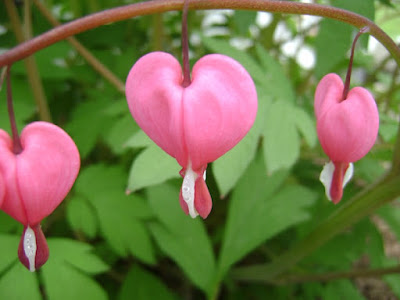
Speaking of plants, my grandparents also had a couple of bleeding heart plants in their garden. One summer evening, Grandpa plucked one of the blossoms and sat me down on the porch steps. He pulled apart the flower and used the various parts—resembling two pink rabbits, two white slippers, a trumpet and, of course, the heart—to illustrate a little fairy tale.


               I’ve never forgotten those lessons,
               and have passed them down to my
               own kids and grandkids.


CHANTS ENCOUNTER

I used to sneak part-way down the basement stairs to where Grandpa was playing cribbage with a few of his pals. I peered around the corner between balusters. Through a haze of cigar smoke I could see the men sitting around a card table, their faces intent on this beautiful little wooden board riddled with little holes that marched up and back in neat ranks. And in some of those holes, chasing each other around the track, were little pegs, two each in gold, silver and copper.


But what intrigued me most was what the men were saying. It was like some solemn, mystical chant intoned by each in turn: "Fifteen-two, fifteen-four and eight is twelve…and nobs for thirteen." Apparently each man had fifteens, but the other numbers varied. One man looked kind of disgusted when at his turn he mumbled simply “Nineteen.”

At one point, Grandpa spotted me and called me down, where he and the others taught me the basics of the game. I’ve never forgotten those lessons, and have passed them down to my own kids and grandkids. 

    When Grandpa presented Grandma a bag of
    the new product, yours truly happily provided
    the elbow grease to test it.


MAKING A POINT
Grandpa Janssen’s garage was wonder central. There I soaked up the sights, sounds and smells of all the knowledge a kid could possibly want—and probably would never learn in school. Stacked on shelves and hanging from pegboard was stuff for his blue ’54 Buick; implements for lawn and garden work; tools for every conceivable do-it-yourself task; and coffee cans full of nuts, bolts, screws and nails.

And there was the dart board. As with the cribbage, I learned most of what I’ve ever known about darts from Grandpa and his buddies. He was pretty good, and I’m sure he collected on his share of small-change bets. This made a big impression on me, especially given his unorthodox style: he threw his darts underhand.

Every so often a dart that missed the board or failed to stick would drop to the concrete floor, dulling the point. And Grandpa showed me how to hone it sharp again on his hand-powered grinding wheel.

I loved the job so much—especially the shower of sparks it produced—that I’d sometimes grind an eighth of an inch off the point. It wasn’t long before I got busted and, instead of extinguishing the spark of wonder, Grandpa switched me from darts to nails held in a Vice-Grip.

LIKE BUTTAH

Grandpa represented the retail grocery industry, both in Minnesota and nationally. This led to his role as Secretary-Manager of the National Margarine Institute. When manufacturers started adding color to the white beef-fat or vegetable-oil based spread, the dairy industry objected, worried about colored “oleo’s” impact on butter sales.

The debate led to a compromise: the margarine would still be white, but it would be sold in a clear plastic bag with a little capsule of yellow-orange food coloring. The consumer would pop the capsule and then hand knead the sludge until it resembled the color of butter.


I’ll bet you knew where this was headed. Indeed, when Grandpa returned from the next convention proudly presenting Grandma a bag of the new product, yours truly happily provided the elbow grease to test it, delighting in how that way-too-dark burst of color first marbled through the margarine and eventually looked good enough to spread on toast.

So I’m sorry, Grandpa, for selling you short, for forgetting what a big part you played in my awakening to wonder. Now I remember. Thank you!

Can you remember how your grandparents—or other adults in your childhood—opened doors of wonder to you? We’d love to hear about it!

Thursday, October 11, 2018

THE MOWER THE MERRIER

Fresh-mown grass painted on pavement by recent rains takes on new life as a bounding cottontail. Or perhaps you see something else?


Monday, October 1, 2018

KARMA CHAMELEON – Nature’s Optical Surprises

As you should know by now, I’m constantly awe-struck by Nature’s small wonders. But as I’ve ramped up my botanical-lampshade-making craft over the past year or so, I’m discovering new surprises every day.
 

I’m experimenting with all sorts of leaves, stems, seeds and berries, to discover how they act when held up to light. One of the surprises is Nature’s incredible witchery with color.

          It turns out the skin of those deep blue 
          berries isn’t really blue at all.

RED TO GREEN…AND BACK AGAIN
For example, I found that an autumn grape leaf—a sort of muted gray-green to first glances—turns a luxuriant burgundy when I put a light behind it.

The ornamental grass in a pot on our neighbor’s patio turns that chameleon feat around; when you pick a blade, you’d swear it’s color is something like maroon or oxblood. But hold it up to the light and it turns green.

As I play around with ways to create natural “gems” of bright color to accent the more muted browns, golds and rusts of most leaves, I’m experimenting with various berries. One of them, that of the Solomon’s seal plant, is dark blue.


I wondered, what if I cut those berries in half, scraped out the seeds and goo inside and filled them with clear-drying acrylic medium. Would that give me a nice, translucent, bright blue “gem?”

Well, it gave me a gem all right. But as it turns out the skin of those deep blue berries isn’t really blue at all. It’s a brilliant emerald green.


So the search continues. I’m thinking, what color berries must I look for to serve as my red gems? Green ones?

AND YOU?
Can you recall any of your own such surprises from Nature? Where what you thought you saw turned out to be something very different? We’d love to hear about it in the comments.

Saturday, September 1, 2018

THE SOUND OF MOONLIGHT – Sensing the Pulse of a Late-Summer Night

I’m inspired today by naturalist Jim Gilbert’s column in yesterday's Minneapolis Star Tribune. It’s about crickets, specifically the ones whose effervescent chee-chee-chee chorus bejewels these precious late-summer nights.


RIBIT OR CRICKET?
I’ve wondered about crickets my whole life. Not that I’ve done much about it. Mostly, as with so many of Nature’s ubiquitous small wonders, I’ve come to take their amiable background music pretty much for granted. I should do better.

One question I do ask myself is, is this really crickets I’m hearing, or might it be tree frogs? Here in east-central Minnesota, though spring peeper frogs sound quite similar to crickets, they generally sing only—as the name suggests—in the spring or early summer. Crickets are harbingers of late summer.

There’s also a difference in the quality of sound emanating from the two singers. Frog voices are a series of smooth notes ranging from sharp, bell-like dings to longer whistles, each one rising slightly. Cricket chirrs, on the other hand, because they're produced by rubbing its upper, serrated wings rapidly together, have a high-pitched grating quality and maintain nearly the same tone throughout each note.*
        House and field crickets are known
        more as soloists than choristers.


Another question: are these night-chorus crickets the same ones folks are used to finding in their homes? You know, the stocky mostly black or brown ones thought by many to bring good fortune? Not likely. Those are either house or field crickets known more as soloists than choristers.

The most common of our night-singing crickets here in the Twin Cities is the snowy tree cricket. They’re delicately built and mostly green.

             Listen to the Snowy Tree Cricket Sound

PART THERMOMETER
Snowy tree crickets definitely sing en masse—though just the males. With their individual songs blending into what sounds like one pulsing strain, it’s hard to tell whether there’s dozens or hundreds of the critters…or just one really big one.

Tree crickets are the ones thought to gauge the air temperature through the rhythm of their song. (Just count the number of pulses in 13 seconds, then add 40 to find the temperature in degrees Fahrenheit. By the way, I tried this last night and they were spot-on!)

    Here is a tweet we can—and must—believe.

Enough with the phenology. Though the facts are fascinating, I’m also moved by the intangible qualities of this summer-nightly cricket chorus. The peacefulness. The poetic possibilities. The reassurance, with this sweet sound’s constancy in my life, that somehow everything must be okay. That perhaps there is still hope for my own species…for this world.

And, certainly, as sinister forces do their damnedest to render suspect so much of what we once knew to be good and true, here is a tweet we can—and must— believe. If we're to save this precious planet from ourselves, we must notice tiny creatures like this, know their names, care about their well-being.


So are you as moved as I am to tune in your senses to cricket sounds? Why don’t we listen first to the whole ensemble, then zero in on one individual, track it down and shine a flashlight on it. Say hello to this incredible little performer. Thank it for the constant reminder of Nature’s astounding, eternally fragile beauty.

Let’s do it tonight!

   If moonlight could be heard, it would sound just like (crickets).
    
NATHANIEL HAWTHORNE

* Cricket song is a result of stridulation, an insect’s rubbing particular body parts, called stridulatory organs, together to produce sound.

Friday, June 8, 2018

WHAT’S GOING AROUND HERE? / Curious Things That Spin

What does a tequila bottle have to do with spinning?
More than you might imagine; read on...

Ok, a little free-association game: What first comes to mind when you hear the word “spin? For me, it’s spin the bottle, that mortifying little kissing game we played as kids.

Now if you were to approach this a little differently, the question might be, what’s the first thing a kid would think of to play with a glass bottle? Knock it over? Fill it with water or sand? Mold mud around it? But spin it?

Turns out there are all kinds of things that spin, including many you’d never think of unless—like the incurable kid that endures deep inside all of us—you just try them.

Among my most spectacular spinning discoveries:

THE LID OF MY FAVORITE SAUCEPAN – We have this one stainless steel pan—I’ve had it for forty-plus years—whose lid nestles nicely into a channel around the rim. When something’s simmering in that pan the escaping steam turns the lid into a sort of hovercraft; when I rotate the knob, the whole thing turns nearly frictionlessly, riding on the steam and lubricated by a coating of water in the channel. My record so far: 18 seconds.


TEQUILA BOTTLE STOPPER
– A friend recently gave me a bottle of Trader Joe’s tequila. Now I’ve emptied my share of exquisitely-designed tequila bottles, but my focus is normally on what’s inside.

That can change, however, when one has consumed a few caballitos of the stuff. With the Trader Joe’s nectar, what ultimately grabbed my inner child’s attention was the simple, pleasant-to-handle cork-and-wooden-ball stopper.

While chatting one night, I was idly fiddling with that stopper, and just happened to put it, knob down, on the counter and torque the cork as if I were spinning a top.

Not surprisingly, it did spin, but what I wasn’t ready for was just how well, how long and, well, how comically. (Be sure to watch till the thing stops moving.)

SPINNING CORK VIDEO

YOGURT LID
– I eat ridiculous quantities of yogurt. One day I took off the translucent plastic lid of a Dannon 32-ounce tub and set it down on the counter. I guess I must have glanced the edge of it while reaching for a bowl. It rotated quite easily. I tried it again, this time with more intention, and it kept going for well over 30 seconds.

My guess is that these lids are injection molded. One result of that process is a little nipple of plastic jutting up in the exact center of the circle. The thing is so precisely made, so perfectly balanced, that when the lid spins on that axis, its outer rim barely touches the counter. With so little friction, it just keeps going and going…and going.


So what spinning oddities have you discovered? Keep you eyes open and your 10-year-old’s appetite for play well whet and chances are you’ll come across a few possibilities.

Then, go ahead, just give it a whirl!


Saturday, December 30, 2017

A FEW GROUNDING RESOLUTIONS FOR A REALITY-CHALLENGED TIME

I believe I'm surrounded by wonders great and small, all the time, wherever 
I am.

I understand that many of those miracles lie hidden to first glances.

I will open my spirit to wonder. My eyes, my ears, my heart will follow.

I will make time for awareness, curiosity and wonder.


I will turn off the television, put down the book and start looking, learning and living first-hand.

I will decide for myself what entertains me and, more importantly, what nourishes my soul.

I will notice and celebrate the power of presence.   

I will carefully examine the myth of certainty, and value learning more than knowing.

I will be more aware of the miracle of grace that resides around and within 
every person.

I will shine the light of my own spirit, and will give other people the chance to shine too.

I will try to experience everything as if it were for the first time.

I will approach each day with faith in Nature's instruction, and with gratitude for being Her lifelong pupil.

I will be patient, not just with Nature, but with myself, celebrating small steps in the right direction.

I will seize every opportunity to help a screen-bound child reconnect with Nature. 


WANT TO PRINT & FRAME THESE RESOLUTIONS?

Framing example only; frame not included in offer.
 
ORDER YOUR FREE, FRAMEABLE, FULL-COLOR 
RECLAIMING WONDER PLEDGE DOCUMENT.
Print it out, frame it, or make it the background of your computer desktop.
Give a framed copy to someone you know who's also yearning to reclaim wonder in his/her life.

TO ORDER, JUST SEND JEFF AN E-MAIL: jeff@willius.com
Thanks for taking the Reclaiming Wonder Pledge! Have a wonder-full day!

Monday, September 25, 2017

HARD TRUTHS – The Telling Face of Rocks


This gray Keweenawan basalt, whose fifty-foot ramparts flank this stretch of the St. Croix River, is unfathomably old, dating from the Precambrian Eon, somewhere between 500 million and a billion years ago.

It is also the hardest basalt-type rock in America—so hard that boulders of it were used by NASA to test the drills employed on the moon probe.

And yet, these rocks are far from the static, silent objects they seem. There is movement here; those sinuous lines—visible only when the sun shines at just this angle—bring to the moment red-hot lava’s flow when life on earth consisted of little more than algae.

 There are distinctly human 
 utterances here.

VOICES OF TIME
These rocks speak volumes of a broad swath of history. Cracks and fissures recount epic battles between ice and stone, heat and cold, forces commanded by gravity. Lichens, some of their species nearly as old as the rocks themselves, bear testament to those ancient algae. For, in the face of otherwise untenable circumstances, only the subsumption of those algae by the lichen has enabled them to survive.

Near the cliff's base, the St. Croix’s natural scums and dissolved tannins have ranked water-level horizons on the rock face—a subtlety captured in just the last nanosecond of geologic time.


And, perhaps most compelling for their flesh-and-blood kinship with the likes of me, there are distinctly human utterances—portrayals of hands, a buffalo head and other symbols—likely made by Dakota or Ojibwe hunters nearly 1,000 years ago.
 

Tuesday, September 19, 2017

COMMON SCENTS – BOX ELDER BUG INSTANT MESSAGING

(A follow-up on my Facebook post the other day showing spruce boughs festooned with bright red box elder bug nymphs)

I’m out walking Sylvia the puppy. It’s cooled off considerably from the last-gasp-of-summer heat wave of the past few days, but it’s still a lovely, fall-ish sunny day.

I notice a couple of small sun-lit spots on the lawn slapped with blotches of red: dense swarms of box elder bugs. One numbers at least 1,000; the other, maybe half that number. The two hordes are about three feet apart.


Sylvia spots them and follows her nose to the smaller group. When she’s about a foot away, they scatter, suddenly, haphazardly…and all at once. Their flight evenly dilutes the red spot, and within five or six seconds it’s gone.

Meanwhile, the larger swarm has not moved. But I watch—fully expecting wonder as usual—as those insects headed that way from the first group reach its perimeter. Then—mind you, I now have Sylvia firmly in tow several feet away—the second legion explodes in flight simultaneously just as the first had.

         I’d have expected one of the heralds to 
         shout "Run for your lives!" or at least
         wave its wings madly.

PHOTO: Timothy Ng

WHO CUT THE CHEESE?
Now, I can understand how the big, red, compound eyes of every single one of the box elder bugs in that first swarm may have caught sight, in the same instant, of the schnauzer colossus coming at them. They’re out of there; no communication needed.

But for the second swarm to have reacted identically, with no sensory input other than the approach of a few fugitives from the first group, begs the question: how do these little red-coats communicate?

I’d have expected one of the heralds to shout "Run for your lives!" or at least wave its wings madly, but it turns out box elder bugs don't do that. Instead, it’s quite likely a matter of scent—one which apparently disperses incredibly quickly.*

All this leaves open the broader question: how do other creatures do it? A murmuration of starlings, chased by a falcon, sloshing like pools of water across a pitching sky. A school of 10,000 of herring veering as one from marauding dolphins.

PHOTO: John Myers

I guess we’ll leave that investigation for a future post. That’s what it’s like with Nature; so many questions, so little time.

* FROM ANIMALDIVERSITY.ORG:
Adults and nymphs have a pair of scent glands located on the dorsal side of the abdomen that secrete monterpene hydrocarbons and may be used for communication. Boxelder bugs also have a pair of ventral abdominal scent glands through which males secrete an exocrine compound during copulation to stimulate or claim the female. It is speculated that males also use this secretion during confrontations with other males. Males are attracted to the odor secreted by females. Boxelder bugs have compound eyes and ocelli, which are believed to aid in perception of the environment along with antennae, the primary sense organs. There are no acoustic or vibrational signals used for communication. (Aldrich, et al., 1990; Bauernfeind, 2005; Millar, 2006)

Sunday, May 8, 2016

SELF-DRIVING CARS – And Other Collisions With Consciousness

I don't know about you, but I’ve never been able to read a book outdoors. It’s like, okay, here I am, worshiping in the sacred temple of deep woods. So I think I’ll just tune that out, escape to Manhattan and engage in some sexy shenanigans with Eva and Gidean.

What?

      These days folks walk around with their 
      thoughts as far away from the here and now 
      as a gasp of wonder is from a yawn.

The advent of iPads and smart phones has not helped. These days folks walk around—not just in the woods or mountains, at the beach or on the water, but anywhere at all—with their heads down, their thoughts as far away from the here and now as a gasp of wonder is from a yawn.


A HARD BARGAIN
Don’t get me wrong; I’m no Luddite. Technology is amazing. The irony that I'm here every day, urging moderation in the use of the very same media I employ to air that message is not lost on me.

But the key word there is moderation. It’s one thing to break up a long road trip by letting the kids play a video game or watch a movie in the back seat; it’s another to let them arrive at your destination utterly clueless as to the characters, landscapes and happenings they’ve passed along the way—not to mention the goings-on inside the car.

So, back to the progression of technology at the expense of consciousness. We are now very close to seeing the mass marketing of a driver-less car. Aside from the obvious concerns about safety, how might this hasten the already-alarming atrophy of human awareness, curiosity and wonder? Could it further deepen our separation from Nature?

I’ve discussed this with my wife, who’s a fierce advocate of technology. She points out that with no need for drivers or passengers to keep their eyes on the road, the robotic car might actually increase one's ability to enjoy the scenery. But I’m not buyin’ it. My money's on most folks turning to their iToys or laptops, or even—now here’s a quaint notion—reading the newspaper.

    Anyone else find it sad that the only way this 
    new concept of transportation will transport 
    you is from point A to point B?

A PERFECT SYMBIOSIS?
I was going to say we’ll know I’m right when car makers start touting the obsolescence of windows. But that evidence is already old news. In the May 15, 2015 issue of the Atlantic, the article “Why Driverless Cars Don’t Need Windows” (excerpted from author Peter Waymer’s book Future Ride) paints what seems to me a grim, dystopian picture:
 “Daimler doesn't seem to think the passengers will spend much time actually looking out (of windows). Photos from the company emphasize the way that four passengers can sit facing each other, talking, working or playing games, all while ignoring the outside world.” (Anyone else find it sad that the only way this new concept of transportation will transport you is from point A to point B?)


“Daimler sees the car of the future as a ‘digital living space’ that provides ‘a perfect symbiosis of the virtual and the real world.’” (And what part of this would you describe as the “real world?”)
 “The sentimental among us may still choose windows out of nostalgia, but... accountants will flinch at extra costs and almost certainly grow to see windows as an extra expense that breaks too easily and adds too much to the air-conditioning bill.” (I'll tell you what breaks too easily: the human spirit when we allow others to decide what is and what isn't worth looking at.)

     Call me old-fashioned, but I’m going to fight 
     for the right to look out...at the real world.

KEEPING YOUR HEAD DOWN

Might those bean counters someday reach the same visionless conclusion about other vehicles? Trains? Airplanes? How about our homes?

And might we human beings, besides our already-predicted evolution toward bigger eyes, wider butts and longer fingers, eventually transform into so many forward-slumping, nearsighted moles, incapable, any more, of looking up or out
at anything?

What do you think? Are you ready for a windowless world? Not me! Call me old-fashioned, but I’m going to fight for the right to look up and out—whether I’m walking or riding or flying...or just sitting in those deep woods—at the genuine, perfectly beautiful, first-hand miracles of the real world.


Thursday, April 14, 2016

FALLING SENSATION – The Sad Decline of Empathy

“You can only understand people if you feel them in yourself.”   
  JOHN STEINBECK

Are you an empath? How does one even know?

Some time in my thirties my own answers to those questions presented themselves to me. I was watching some kids playing. One little brat tripped a playmate—a klutzy little boy—who fell like a ton of bricks, skinning a knee and a wrist. As he was falling I felt this sinking sensation in my gut…as if I were the one falling.


I’ve experienced that sensation many, many times since. It doesn’t matter who’s falling—a child, an adult…even a bad guy—nor if the fall occurs in real life, a movie or the tiny screen of my iPhone. As long as it’s a fellow human being I always end up sharing the drop. (It’s funny, though; I don’t remember ever feeling it when I see a pro football player falling. Why do you suppose that is?)

I also catch myself absorbing all kinds of other little human dramas—from kindnesses to conflict, gladness to grief. Is there something wrong with me? Do I just have too little emotion in my own life? At times I wish I could turn it off.

If Empathy 101 is simply learning to be aware of and experience others' pain, then the next semester would start instilling the ability to truly care what happens to them. It's what psychologists call "transcendence," a deep-seated desire to see and help others achieve their potential. Perhaps it takes an idealist like me to hope this sort of altruism would beat in the heart and soul of every person, organization and culture.

And I hope it applies not just to what happens to other human beings in the here and now, but even to what might happen in the future after we're dead and gone. I can think of no more telling measure of this kind of empathy than our wise, gentle care and handling of the environment so that future generations may enjoy the same kinds of joyful connection with Nature we experienced when we were young.

   It gets beaten down, covered up…by an ugly 
   collaboration...conspiring to make what’s really 
   all about them feel like it’s all about us.

HARD-WIRED, SHORTED OUT
Empathy, like so many of our better, more practical emotions, is hard-wired into us at birth. How do I know this? First, there’s a wealth of research showing it. And there’s also an element of logic: why, if empathy is not meant to help guide our behavior toward other human beings, would I feel absolutely none of that sinking feeling when I witness an animal falling?

The good news is that this inherent spark of empathy can be kindled—through experience, teaching, role-modeling and the influence of Nature. The bad news? Judging from the growing number of folks who seem to have utterly lost it, apparently it can also be extinguished.

Like children’s inbred curiosity and wonder, empathy too often gets beaten down, covered up, by years of learned structure, stress and cynicism. By values drummed into us by an ugly collaboration of sometimes-dirty players like commerce, politics and the media—all conspiring to make what’s really all about them feel like it’s all about us.

      Scheming, conflict, denigration and gotchas
      —that’s what they’ve decided we want.


A FAUSTIAN BARGAIN
The dying out of empathy is not an illness; it is a symptom—of a disease brought on by the Faustian bargain the past few generations have signed onto: we get to make more money, accumulate more stuff, pretend to be “connected” with more people and information. In exchange for that illusion of power, knowledge and love, we agree to allow the circumference of our real, first-hand experience be ever shrunk, reduced to what’s determined by some algorithm to suit us, and then spoon-fed to us through a phalanx of little glowing screens.

Among the collateral damage inflicted by this attack has been the loss of empathy, that most precious survival mechanism, the one that used to give us true connection, allowed us to be kinder, more collaborative, more creative…and kept most of us from killing each other.

But someone's decided kindness and civility no longer sell ad space, air time or bandwidth. So, nearly everywhere one looks—entertainment, advertising, journalism, politics—it’s all gotten turned upside down. Now more and more of the human interaction we see on our screens involves scheming, conflict, denigration and gotchas.

One of the most obvious casualties, during this election year, is an entire political party—one claiming to represent more than half the people in the United States. It has turned, in the past decade or two, from its roots as the protector of individual freedoms and opportunity to an angry, take-no-prisoners ideology based on fear, judgement and control. (I'll let you decide for yourself which one that is.)

If that’s what the powers that be have decided we want, it’s far from what I consider being human to be all about.

Teach them that the way they see the world around them is a product of what’s going on inside them

THE WORLD IS A MIRROR
So, what do you want? Are you still able to see the essential core of goodness in every human being and truly care what happens to them? Can you still feel someone else’s hardship and pain in your gut, even folks who might be quite different from you? Do you care what happens to this precious planet even after your life on it is over?


After all we’ve traded away let’s take a step or two backward and revisit that Faustian bargain. If we won’t reclaim real connections with each other and with the earth for ourselves, let’s at least do it for our kids and grandkids. Teach them that the way they see the world around them is a product of what’s going on inside them—their awareness, their curiosity, their kindness, their sense of wonder. And teach them never again to bargain away those gifts.

And teach them that, at the very heart of what makes us human lies a generosity of seeing that makes what we perceive hinge directly on what we are willing to give of ourselves to that connection.
 

“I believe empathy is the most essential quality of civilization.”
  ROGER EBERT

Friday, March 25, 2016

UP CLOSE AND FAR AWAY – The Soul of Vacation Photography

When one is on vacation, as Sally and I are for a month here in Zihuatanejo, Guerrero, Mexico, one tends to appreciate sweeping new vistas. A tropical climate, with its exotic flora and fauna, cuts in on what was proving a long, grudging dance with a northern winter. A whole people with faces, words and customs perhaps different from our own.

We want to paint it all with a broad brush, taking long shots of the sea, the beach...maybe the bar.  Look, Facebook friends, I am here!—we want them to see as much as possible in one or two photos. About as close to details we come is when we take pictures of the people we're sharing that experience with. And too many of those are taken quite spontaneously, with no regard for a background that might impart even the slightest notion of specifically where we are.
 
I've finally come to realize...why the question, "Want to see our vacation photos?" elicits more lame excuses than "Can you help us move?"

A SENSE OF PLACE
Believe me, I've taken hundreds of exactly that kind of photo. But I've finally come to realize—most often weeks later when I show them to someone else—why the question, "Want to see our vacation photos?" elicits more lame excuses than "Want to help me move?" The reason? Most of those images have no soul.

So in recent years, though I still shoot the occasional "look where I am and who's with me here" landscape and portrait, I've found myself drawn to more subjects I hope will capture a deeper sense of place and culture.

Here are some of those soul shots I've taken this month in and around Zihuatanejo. Images capturing very specific places—some of them no bigger than a square foot; the colors, shapes and patterns of a natural environment and a culture. And people—most often not posing, but captured at play or on the job, perhaps in a happy or pensive or poignant moment.

If you're still with me to this point, I think you can tell that, every year, I leave more here in this lovely town than a chunk of dinero; I also leave a piece of my heart.

The Holy Week crowd of Mexican tourists begins on Playa La Ropa

Yeah! Maybe that older guy with the limp and the camera!

Up and away!

Primordial patterns

The breezy colors of la Calle Adelita

Sign-painting crew about to add sponsors' logos to firemen tribute

To every season...even if it's only two

Still life with fertility goddess & re-bar

Proud mamá and her beautiful little girl


Sí, I am zi one zat inspired Godzilla

She's kept an eye out for fashion trends along Juan Alvarez for nearly a decade.

Entrance to the Vega household

One of Zihuatanejo's excellent strolling minstrels - a dying breed

Yellow-Crowned Night Heron

Who is this young man whose passport photo settled into this crude stairway?

Fish guts - one of Zihuatanejo's many stunning murals


Banded Peacock - Anartia fatima