Showing posts with label space. Show all posts

Thursday, October 6, 2022

WHERE NOTHING IS EVERYTHING – The Sacredness of the Spaces Between

In Nature, as in life, we can see more if we notice not just things, but the spaces between things; not just sounds, but the silences they frame.
Far from empty, these inhalations in the song of creation are what make each note so clear, so sweet.

From Under the Wild Ginger – A Simple Guide to the Wisdom of Wonder, by Jeffrey Willius
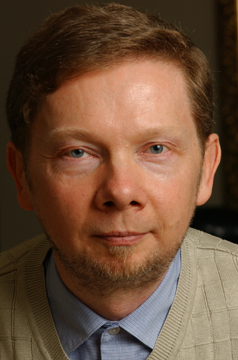
I’ve been reading Eckhart Tolle’s inspiring 2005 book, A New Earth – Awakening to Your Life’s Purpose. I’d been aware of the elfin spiritual guru’s Zen-like teachings for many years, and have watched several of his interviews about spiritual evolution and the path toward ego-less consciousness. (I also enjoy actor/comedian Jim Carrey’s unlikely musings about his own Tolle-inspired take on life.)

Revisiting Tolle has piqued my interest in better understanding and articulating my own spiritual beliefs, especially where they align with his on the concept of space.

I’ve written in these pages many times about the metaphysical significance of space. How to find it amongst the phalanx of responsibilities and stimuli that press in on us every day. How Nature can help provide that space.

         It’s all just story, whose true setting
         is invariably in the past or the future,
         neither of which even exists.


EVERYWHERE AND NOWHERE

I love the way Tolle delineates the realms of ego and higher consciousness. Ego, he says, comprises all the thoughts, feelings and even experiences that seem to define our lives. Higher consciousness, our true essence, our Being is everything else. It’s like this invisible—yet somehow perfectly beautiful—vessel, which exists both everywhere and nowhere.

While the ego feeds on stuff—Tolle calls it “content”—that comes and goes through that space, it’s all just story, whose true setting is invariably in the past or the future, neither of which, he asserts, even exists.

Content—like emotion, accomplishment, personality or pain—though the ego wants desperately to glom onto it, inevitably comes and goes. Our self-actualization depends on our ability to let it do so while realizing that it has nothing to do with who we really are. 
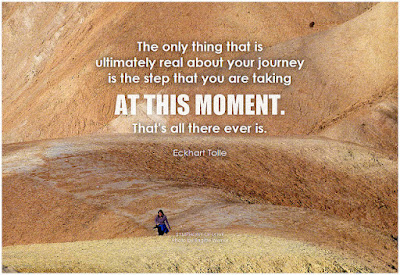

         Though I often hear people describe their
         ultimate happy place in terms of fullness,
         I experience mine as a divine void.


THE ELOQUENCE OF SILENCE
I love this notion of space being the essence of awareness. It feels like the central truth in which I’ve always known my personal spirituality is grounded. It explains perfectly why, though I often hear people describe their spiritual happy place in terms of fullness, I experience mine as a divine void. It’s why, for example, I find the “moment of silence” sometimes offered in services of prayer and remembrance so powerful.

It explains all kinds of notions human beings find hard to comprehend, but which I know somewhere deep inside to be true. Like how one reality might reside just a membrane’s thickness away from its opposite. Like the seeming mirror images of the immense and infinitesimal. Or how there’s no such thing as a straight line—since they all eventually end up at the same place they started.

That timeless, placeless, formless expanse in which those truths reside sounds a lot like what many spiritual traditions would call God.

                                             ~            ~             ~    

                                SIDEBAR: There’s Nothing To You
In case you had any doubt about the relative importance of matter and space in the Universe, consider this: If one could remove all of the empty space contained in and around every atom in every person on planet Earth and compress us all together, the overall volume of our particles would amount to something roughly the size of a sugar cube! *  **

* “The Volume of Humanity – If All the Space In Our Atoms Is Removed” By Phil Plait, SYFY Wire, Oct. 29, 2018

** Of course, this compression can only happen theoretically. Since the position of atoms in most solids is determined by what’s called wave function, they are about as close together as the laws of physics allow.

Friday, January 12, 2018

WHAT’S UP?...OR DOWN? – Breaking the Bounds of Vertical Perception

I was reminded today, in a news report about some newly discovered deep-sea organism, that the deepest part of Planet Earth's oceans is the Challenger Deep section of the Mariana Trench in the western Pacific about halfway between New Guinea and Japan. There the depth has been measured at just over 36,000 feet.

That got me thinking of how inept we human beings are, accustomed as we are to experiencing and gauging horizontal distances, at fully comprehending vertical distance.

PHOTO: National Geographic

Sure, we all know about those monumental NASA expeditions into earth orbit, then to the moon, Mars, and now deep space. And we know that people keep venturing to ever-deeper parts of the ocean—think the resting place of the fabled Titanic, at 12,400 feet.

But can we really grasp how high is high and how deep is deep?

           We set her on auto pilot and sit back
           with a good novel.


SIREN SONGS?
You may know how I like to play with perspective in the way I look at Nature and life. Well, one way of appreciating vertical reach is to imagine the one instrument of speed and distance we are most accustomed to—the automobile—and turn the axis against which we measure its motion from horizontal to vertical.

So picture this imaginary vehicle that can act just like our own family car—we can get in, start it up, take off and easily accelerate to highway speed. Except this vehicle can only go up or down. Oh, and, magically, it can cut through salt water as effortlessly as our real, horizontal car can through air.

Got the idea? OK, now back to that deep trench in the western Pacific. We’re on a ship, floating right over it. Our amazing vertical water car is suspended over the side by a crane and we’re at the wheel. On command, the crane releases us and we floor it, straight down.

In ten or twelve seconds, we hit 60 miles an hour. At that speed, you’d think we'd want to keep an eye out for the bottom pretty soon; after all, the seafloor is right down there. Nope. We can just keep the pedal to the metal, at highway speed, relax and listen to two average-length songs* on Spotify—almost 7 minutes—before we near our destination.

Once we slow down and nudge the bottom, we turn right around and head back up. Only this time, we’ll traverse the distance from that deepest ocean floor right through the ocean's surface and all the way up to the elevation of earth’s highest point above sea level, the summit of Mount Everest (at 29,035 feet, over 1 1/4 miles closer to sea level than the Challenger Deep).


This time, we set her on auto pilot and sit back with a good novel. If it's a page-turner we can devour 20 or 25 pages before this mile-a-minute leg of our trip is done.

          This “super-sense” is among the few 
          tools we possess for appreciating our 
          place and scale in the world.

INURED TO WONDER

Nature holds so many wonders we can barely appreciate for their true scale—that is, until we shift our vantage point, our way of thinking. Part of the challenge is that the world is so immense, and we are so pitifully small. Another is that, by the time we get used to thinking a certain way about something for decades, we become inured to the degree and scale of its spectacle.


How sad and unnecessary that so many of us, subject to the constraints of schedules and responsibilities—and maybe a little wear and tear on our faculties—lose our child-like sense of wonder.

The good news is that it's easy to reclaim it. Get outdoors, preferably with kids, explore, play and take time to simply be fully present with Nature. This is the medium in which human senses were meant to function best. Not just the orthodox five senses, but many others whose existence is just beginning to be recognized.

One that’s especially pertinent to this post is proprioception, the sense of the relative position of one’s body parts and the effort being exerted in moving them. It’s this “super-sense,” together with the vestibular system of the inner ear, and, of course, our better-known senses, that helps us appreciate our place and scale in the world.

Failing to nurture and grow all those senses, including fully comprehending and being moved by vertical space, is to squander a precious gift. Especially if we give them up in a bad deal with the little digital devil residing in all those glowing screens in our lives.


* Song length / A Journal of Musical Things

Thursday, October 19, 2017

AWARENESS TO THE POWER OF N – Finding Our Place In Infinity


Have you ever seen this amazing video by Danail Obreschkow that attempts to show, in just three minutes, the vastness of the known universe? It starts with a close-up of a woman’s face. The camera then begins to draw back. The woman, lying on grass, gradually becomes a small dot in a complex of buildings. The scene soars continuously into ever-broader panoramas: the whole city, then rivers and mountain ranges, sea coasts, the recognizable outlines of continents.

PHOTO: NASA
Out and out the eye travels. Soon the earth itself shrinks to a pin point; then it’s the solar system lost in the distance; then the Milky Way; then other galaxies. And, finally, at about ten billion light years away from the woman’s face, we’re looking at a fine mist each of whose nano-droplets is a galaxy.

This has all happened in 60 seconds. Then the process reverses; the camera starts back toward infinitesimal Earth. Falling, falling…until once again that apartment complex appears, that little speck on the lawn, and finally the woman’s face.

As if that weren’t enough with the perspective thing, the view now moves seam- lessly into the woman’s left eye and navigates a comparable journey into inner space—from cells, to molecules, to electrons…all the way to quarks.

PHOTO: IBM Zurich
     
     Why, one might wonder, do we keep wasting 
     the effort to measure something we all can be 
     quite sure is immeasurable?

A CHALLENGE TO TERMINOLOGY
How stunning, for a visual learner like me, to see this perspective illustrated so graphically. But a few numbers I've come across recently can also make the point.

Yes, our world—this earth—is immense...to us. But in terms of its place in the solar system, meh, we’re just another of eight apples in the sack. (Nine, if one accepts the presence of the as-yet-unseen “planet nine.”)

And the solar system? Our all-powerful sun is just one of at least 200 billion stars in the Milky Way galaxy, and who knows how many of those twirl their own planets around them?

So you think we’re rhetorically zoomed out far enough to maybe begin grasping the vastness of the universe? Not quite. Take our little galaxy with its billions of stars…and multiply it by another 200 billion. That’s how many galaxies astronomers were thinking existed.

Hubble took this 100-hour exposure of a spot in space previously thought to be virtually empty.
PHOTO: Robert Williams and the Hubble Deep Field Team (STScI) and NASA

That was a decade ago, when the NASA’s Hubble Space Telescope was providing its earthshakingly clear examination of the universe. Current research suggests even that number is at least ten times too small.* Does anyone at all believe that these wild stabs at enumeration won’t just keep growing?

It’s like economic hyperinflation; the currency of classification becomes so worthless that we keep having to issue new, ever-larger “denominations” of terminology. So now, acknowledging the futility of counting even galaxies, scientists are beginning to think in terms of a “multiverse,” comprising numerous universes.

Why, one might wonder, do we keep wasting the effort to measure something we can all be quite sure is immeasurable?

It’s beyond me.

         We are part of this universe; we are in this universe, 
         but perhaps more important… the universe is in us. 
         Many people feel small, because they’re small and the 
         universe is big, but I feel big, because my atoms came 
         from those stars. ~ DR. NEIL DEGRASSE TYSON

* NASA galaxy count    

Monday, December 14, 2015

IT IS WHAT IT ISN'T – Does a Vacuum Really Suck?

      In Nature, as in life, we can see more if we notice not just things, but 
      the spaces between things; not just sounds, but the silences they frame.
      Far from empty, these inhalations in the song of creation are what 

      make each note so clear, so sweet.
       From Under the Wild Ginger – A Simple Guide to the Wisdom of Wonder, by Jeffrey Willius
 
INTO THE VOID
When is the absence of something more powerful than its presence? It's not a trick question. In fact, Nature provides many answers: the colossal explosion of a lightning bolt; the swirling core of a vortex; the mind-boggling power of a cosmic black hole.

I’ve written occasionally here about the interplay between positive and negative space. As I’ve tried to capture in that quote from my book, Under the Wild Ginger, it can have a profound effect on how we see the world and life.

It’s knowing the whale’s down there without even seeing it. It’s the void, the potential, in the human experience an entrepreneur or inventor sees and then fills. It’s the hurtful implication of a friend’s hesitation when you ask them what they think of something you’re just nuts about.

Whether it's the inescapable laws of physics or the often-less-clearly defined rules of human dynamics, seeing and appreciating the spaces between is one of the great little secrets of being truly aware and in the moment. And it doesn’t come naturally to everyone. At least in western society, most of us are raised and educated quite literally. We’re taught to see what’s there, and completely miss what’s not.

            To twist the old axiom a bit, 
            you have to believe it to see it.

NATURE THE TEACHER
Allowing existence to something most people would say isn’t there takes a little practice. What’s perhaps most difficult for many folks is the irony that, the harder you try to do this, the less likely you are to succeed.

My best teacher has been Nature, with a dash of faith, instilled by my parents, thrown in. If you can simply BE in Nature—no agenda, no schedule, no expectation, just pure, simple presence—Nature will eventually show you both what is and what exists right next to that, behind it...even in the space it now occupies, but once didn’t.


Sounds a bit metaphysical, a little new-agey, right? That’s where the faith comes in. To twist an old axiom a bit, you have to believe it to see it. And how does one unaccustomed to it come by that faith? It helps if you want to—something I’m not sure many millennials do, addicted as they seem to be, to all the predigested information and virtual experiences available to them at the tap of an icon.

The other key to hearing the inhalations of Nature's song lies in what I like to call seeing generously. It’s the attitude, the belief, that truly seeing—even what may not seem at first to be there—is more like giving than receiving. Far from the competitive, materialistic fervor our culture seems to believe drives our economy and makes us all happy, it is not an act of acquisition. It’s an act of surrender.


              So how do you embrace what's left 
              of life's sweet spaces and silences?

AWKWARD SILENCES
We live in a culture that does not easily abide empty spaces and times. We find even the briefest silences awkward, filling them with "ahs" or "ums" or silly small talk. We allow others to dictate our schedules—not just bosses or clients, but loved ones who, with the best of intentions, pounce on what's left of our "free" time as if we could not say no—and too often we do not.

And don't get me going on all those silly little screens that spoon-feed us information, entertainment and advertising wherever we go, whatever the time, and which we find so hard to turn off.

So how do you embrace what's left of life's sweet spaces and silences? By staying in your seat a few minutes, still listening, after the concert is over? Watching the way the brook flows between two rocks? Finding your deepest inner space and letting it merge with infinity? Can you think of other ways?


Wednesday, July 15, 2015

SOUND ACROSS WATER – In Touch with Eternity


             Lovers row aimlessly, never beyond 
            sight of the dock—but lost anyway.

I have this romantic notion in my head about the way sound carries over an expanse of water. The image that keeps coming to mind is that of a small east- central Minnesota lake around the end of the 19th century. It could be any lake or placid river, though—perhaps one you remember fondly.

I am at my dream lake. I see families who've come out here from Minneapolis or St. Paul by horse and wagon to spend the long summer afternoon swimming, boating and reveling in the crystal clear waters. Laughter shimmers across the water in gentle, agreeable waves, eventually washing up on every shore.

As evening draws in around the lake, lovers row aimlessly, never beyond sight of the dock—but lost anyway. By nightfall, most have gone home, but a few campfires wink from surrounding woods. The snap…snap of the burning wood sounds like it’s yards away, not half a mile. You can practically hear a whisper across the lake.

SOUND AND SPACE
You’ve been here before, haven't you? In your childhood, or maybe just in your imagination? What is it about a scene like this that so captures our hearts?

Is it the purity, the utter care-free simplicity of a more innocent time? I guess that goes without saying for us slow-it-down, soak-it-in romantics. But there's more to it than that, something about how the mood gets carried in those sounds.

I know there are scientific reasons for how sound waves carry across water—something about the water surface and the cooler air just above it combining to contain and channel them. But that doesn't interest me as much as the symbolic meaning.

     These sounds—if we let them—draw us in.
     Whether we like what we hear or not, they
     connect us, define us, define our community.


For me, sound is spatial. I think of the way great, spreading American elm trees define the space under and around their huge, fountain-shaped canopy—and how they used to form cathedral-like arches over St. Paul’s residential streets. Like those magnificent arbors, sound encompasses everything it can reach.

If you're a city dweller, it might be the muddled shouts and laughter stirring the thick summer evening air from the baseball diamond a block or two away.  If your neighborhood's a little rougher, maybe it’s the sounds of more boisterous goings-on.

Whatever the source, these sounds—if we let them—draw us in. Whether we like what we hear or not, they connect us, define us, define our community.

LONGING TO BELONG
Imagining once more that idyllic summer evening at the lake, that timeless sense of community is somehow intensified. With no competing noise, the clarity and reach of that laughter, those campfire conversations and lovers' whispers, seems funneled through our ears and right to our souls. It wraps around us. And the fact of its having to reach across such a chilling, empty space makes the connection feel all the more intimate.

I'm sure that's part of it for me—a longing for community. Don't you feel, sometimes, that we're losing that sense of sharing beloved places or spaces, of wanting to protect them, of knowing, deep inside, that we belong to them and to one another? Do you share my disappointment that, more and more these days, everyone seems concerned with nothing more than the time- and-space immediacy of their own consumption? 

Alas. But why curse the silence when we can make music? Listening for those vital signs and sounds of community doesn't mean we have to live other people's lives nor fix all the world's problems, because, while a quiet lake at night may serve as the instrument, the notes originate in the soul. All we have to do is pay attention, listen with our hopes and our hearts, and care what we hear.


Sunday, August 3, 2014

THE STUFF OF STARS – What Every Human Wants

The other day one of my Facebook friends shared a video that’s got me thinking like very few social media posts do. It is astrophysicist Dr. Neil DeGrasse Tyson’s response to this question from a TIME Magazine reader: What is the most astounding fact you can share with us about the universe?*

EVERY SINGLE ATOM
In brief, what astounds Tyson most about the universe is that every single atom of everything that comprises life on earth—or anywhere else for that matter—originated in certain high-mass stars that exploded some fourteen billion years ago and blasted gas clouds through the galaxy. Every ingredient necessary for life was in those gas clouds, which eventually condensed, collapsed and formed the next generation of planets.

       We are part of this universe; we are in this universe, but perhaps more 
       important… the universe is in us. Many people feel small, because they’re 
       small and the universe is big, but I feel big, because my atoms came from 
       those stars. ~ DR. NEIL DEGRASSE TYSON


At our very core, isn’t this what every human being wants most? To know where we came from; that we’re part of something bigger and more enduring than ourselves or our self-devised institutions; that, in fact, we’re connected—to each other, to all life, to the earth, to all of creation?

             At our very core, isn’t this what  
             every human being wants most?

I suggest that this is why we experience such profound joy, such awe, beholding the Grand Canyon, the birth of our child, or perhaps the rescue of a person or animal from grave harm. This is why I felt my spirit deepen and soar at the same time when a 50-foot Pacific gray whale cow, just twenty feet away from my dinghy, swam under her calf, lifted it gently and pushed it to my outstretched hand.

These wondrous moments are, necessarily, rare. But there are countless smaller, everyday wonders that surround us every day. We knew how to see them and let ourselves be affected by them when we were children, but too many of us have lost that ability. Too much other stuff competing for our attention—distractions, pressures, expectations.


LIGHT YEARS OFF THE MARK
It’s sad enough to see how many of us have lost that innate, childlike sense of wonder, that feeling of belonging, in its deepest, truest sense—to Nature, to each other, to life. But what’s sadder still is seeing how seldom we seem to realize it, or, if we do, how little that bothers us.

Still, the loss must hit home at some level, judging from how desperately we struggle to compensate.

      I’m afraid...we’ve come to actually think 
      that virtual reality is the best we can do.

I’m not about to say that this age of instant gratification, of crowd-sourced truths, of virtual connections, is entirely without redeeming value; that would make me a hypocrite. But the degree and the sheer amount of time consumed by these illusions of “reality” and “connectedness” is nothing short of astounding.

According to Nielsen's annual Social Media Report, in just one month, Americans spend 121 billion minutes on social media sites. That’s more than 230,000 person-years we spend “staring into the glaring screen of so-called sharing”—and remember, that’s just in the United States, and in just one month!


I’m a great believer in the notion that if something looks bizarre or over the top, it’s quite likely more than a fluke; there’s often a good reason for it. In this case, I’m afraid that reason may be that somehow we’ve come to actually think that virtual reality is the best we can do.

It isn’t.

This brings me back to Tyson’s inspiring words. When we hunger for something to inspire us, for a sense of belonging, for a purpose, there will never be a shortage of answers flying up at us from the ten-diagonal-inch screen sitting in our lap.

If all you want is an answer, that’s fine. But for those of us seeking THE answer, that can only be found by turning that thing off and looking up at the stars.
* MOST ASTOUNDING FACT - Neil DeGrasse Tyson

Wednesday, May 18, 2011

THE TRUTH OF SILENCE

There's a "fill-in-the-blanks" conspiracy out there, a plot to cover every square inch of every possible surface with a mark claiming it as either the property or the advertising medium of some enterprise or another. If it's not already there, we'll soon see advertising tattooed on people's faces!

And, as if this visual scourge weren't bad enough, the offensive has also taken aim on audible open space.

In this era of $10 million-a-minute Super Bowl spots and ever- more- aggressive, ever- more- creative advertising blitzes, air time is money. Those nice quiet spells sitting in a theater, waiting for the feature to begin…gone. Being able to concentrate on your shopping list while negotiating the aisles at the super market…nope. Escaping the blitz on "commercial-free" public media…forget about it.


  Silences are the driving force behind real dialog.

Furthermore, this saturation of every possible medium with some kind of message seems to have spilled over into how we human animals communicate with each other. To be fair, we already seem to have a natural discomfort with silences in our conversation. But have you noticed that, between this aversion and the aggression of sheer, blatant self-promotion, it's often hard for one without an agenda to get in a word edgewise?

In fact, it's gone beyond just losing the silent intervals in conversation; the new norm seems to be for all the tracks of a conversation to run simultaneously. In Minnesota Public Radio's just completed membership drive, for example, it struck me how this multi-tracking banter has become the norm for these fundraising affairs. The same with those inane morning TV talk shows; everyone's talking over each other. Do they know something we don't? Is that really what they think we want to hear?

I LOVE SILENCES
I've only recently begun to articulate what it is that bothers me so much about this trend. I love silences. Not necessarily silence in general, though I enjoy that too, but intervals of silence, pauses, a little breathing room here and there in a conversation.

Silences are the driving force behind real dialog. Not only do they indicate that the speaker is thinking—a good thing, don't you think?—they also give the listener a chance to enter the conversation. And even when it's just one-way communication—such as a speech or a lecture—those little breaks allow listeners a chance to begin processing what they're hearing, time, if you will, to respond mentally.

   It was as if he'd intentionally allowed those 
   intervals for the thoughts to complete 
   their flow from him, transfer and take root 
   in my consciousness.

GIVING VOICE TO THE SPIRIT
I recently heard, for the first time, the voice of the astute author and spiritual guide, Eckhart Tolle. I was struck right away by how soft-spoken he is. But what drew me in even more were the lavish periods of silence he welcomes into his delivery—intervals of sometimes ten to fifteen seconds.

I suppose that, in some kinds of conversation, that sort of void might have made me uncomfortable. But, in this case, I found myself basking in those silences. You might say I found as much of a message in the spaces between his thoughts as in the thoughts themselves. It was as if he'd intentionally allowed those intervals for the thoughts to complete their flow from him, transfer and take root in my consciousness.


I also experience the spiritual richness of silence in church, in my men's group or at any gathering where time is devoted to quiet prayer or reflection. There's something so powerful and moving about a group of people together engaged in that kind of transcendent dialog. In those instances, it's even more clear to me how much we need silence in order for our own souls to both listen and speak to us.

SILENCE IS RELATIVE
Though we think of Nature—or more particularly, wilderness—as being rich with silence, this is rarely the case. I guess it's just that, unlike the background noise of our workaday worlds, the ambient sounds of nature are something we choose, and therefore welcome. Perhaps the whisper of pines, the gurgling of water, the jabber of birds, seem like silence because something deep inside tells us they belong.

    The next sound to enter that empty space in 
    my soul was the one that woke me the next 
    morning: the electrifying howls of a pack of 
    wolves from across the bay.

I've experienced utter silence just a few times in my life. The most memorable was one night while I was on a solo canoe trip deep in northern Minnesota's vast Boundary Waters Canoe Area Wilderness. As I lay in my sleeping bag one still, starry night, I realized I couldn't make out a sound of any kind. Not a breeze, not the smallest wave breaking, not even the ubiquitous, mournful plea of a distant loon. The silence was so profound that I experienced it as a thundering reverberation, perhaps a response my brain devised as its own nervous response to such an unaccustomed lack of stimulation.

I eventually fell back asleep, unaware at the time that the sound vacuum I'd experienced was to serve a higher purpose, to make room in my spirit for an even greater wonder that was to come. In fact, the very next sound to enter that empty space in my soul was the one that woke me the next morning: the electrifying howls of a pack of wolves from across the bay.

 So, what's the balance of noise and silence in your life? How do you experience the silences? Do you find yourself wanting more?

Music and silence combine strongly because music is done with silence, and silence is full of music. -- MARCEL MARCEAU