Showing posts with label sound. Show all posts

Friday, July 4, 2025

THE SOUNDS OF SILENCE – Hearing Nature In the City

Only once before in the 15 years we’ve lived here in Minneapolis’s Prospect Park had I experienced such quiet. It was late May, 2020, right after George Floyd was killed, and they closed the freeways as a security measure while protests surged.

This time, it’s because they’ve closed I-94 in both directions this weekend for construction.

Sally and I knew, when we bought our townhouse right next to the interstate, that we’d live with the constant hiss of tire treads on pavement. We made light of it, pretending it was the surf—just like in our favorite Mexican Pacific beach town.

In the city one gets used to things like that. But I, as one committed to noticing and celebrating life’s small wonders, have been acutely aware of what I couldn’t hear through all that traffic noise: the sweet, subtle sounds of Nature.

SOFT-SPOKEN BIRDS 
Usually, Nature’s soundscape around our house is like splashes of translucent watercolor thrown on drab, grey paper, the hues all but swallowed by the dim background. But back in May, 2020, and again today, the paper is once again pure white; the colors, vivid. 

IMAGE: Vecteezy

PHOTO: Nat'l Audubon Society

Most days it takes the raucous scolding of the blue jays to penetrate the veil, but today I’m catching the subtler notes of sparrows and 
house finches. In fact, I hear dozens of bird voices from all over our block. 

Today, pleasant summery music wafts to my 
ear from someone’s patio over on East River Terrace. Today I hear the cadence of my own footsteps.

       The deafening hush was rent by the eerie 
       wailing of wolves just across the bay.


A SILENT ROAR
 
Silence is, indeed, a rare and precious gift. But is what we believe to be silence really silent? I’ve found that it isn’t. Nearly always there’s at least a murmur of sound—an airplane high overhead, a whisper of wind through pines, the indistinct hum every city produces from vehicles, air conditioners, people…whatever—to sort of anchor your hearing. 

And if you’ve ever experienced true silence, the kind that might envelop you in the wilderness, it can be unnerving. It is, as they say, deafening. 

PHOTO: Save the Boundary Waters

I experienced that kind of stillness at night on a solo canoe trip in northern Minnesota’s Boundary Waters Canoe Area Wilderness. My brain had a hard time processing that profound absence of sound, manifesting a kind of roaring sensation as if in protest of the depravation. (One early morning, that deafening hush was rent by the haunting wail of wolves just across the bay.)

         It may take a bit more focus sifting out 
         those subtler notes.


HEAVY METAL BANNED
Silence—at least occasionally—is good for us. Not just us introverts, but everyone. A 2021 article in Healthline details eight distinct physical and mental health benefits. Many other studies agree.

So I urge you, if you can, to get out of town for a while to a place where the voices of Nature can land as bright brush strokes on that pure white paper of silence.  

PHOTO: Wikimedia Commons

And even when we’re in the city, let’s make a special effort to discern the natural sounds hiding in plain hearing all around us. It may take a bit more focus sifting out those subtler notes from the “heavy metal” of urban noise, but its proven health benefits—not to mention the equally-well-proven spiritual lift—make it well worthwhile.

Have any tips or tricks for better hearing and appreciating Nature’s sounds? We’d love to hear them! Just jot a comment using the “comments” link below.

Monday, September 11, 2023

WATER MUSIC – The Complex Song of a Cascade

If you follow me here at OMW or on Facebook, you know I’ve been volunteering to visit a delightful 108-year-old woman twice a week at her nursing home. She loves it when we head outdoors to the gardens and sit in front of the largest of three cascading waterfalls there.

She’s often characterized the sound of that tumbling water as musical, as having a voice. And that’s got me thinking.

How would you describe the sound of this kind of rushing water? Not a waterfall, where it does a free-fall and kind of explodes when it hits bottom; not a flume, where it’s fast, but more soft-spoken; but more of a steep, rocky rapids. That, my aquaphile friend and I have observed, is where this quicksilver element’s at its musical best.


       What we heard is not a homogeneous sound,
       not a solo, but a chorus of many voices.


What is it about that sound that we find so calming, so enchanting? So much so that nearly every “white noise machine” on the market features it as one of its tracks.

At this morning’s visit I did with the cascade’s voice what I so often suggest we all do with Nature’s small wonders: I experienced it as if for the very first time.

What we heard this morning is not a homogeneous sound, not a solo, but a chorus of many voices. I tried to separate those parts and appreciate each for its unique contribution to the harmony.

There aren’t even words—not in English anyway—for some of the sounds. But those our language can approximate with single words include:

Rush, gurgle, swish, splash, titter, slap—they’re all there. And when you think about those verbs you realize each connotes a very distinct sound. (In fact, most of these words are onomatopoeic; they sound like what they describe.)

What do you think? Have I missed some intonations of water that you’ve discerned? Do you have a favorite type and scale of water music? We’d love
to hear from you.  


     They both listened silently to the water, which to them was not
     just water, but the voice of life, the voice of Being, the voice of
     perpetual Becoming.
~ HERMANN HESSE

Sunday, April 23, 2023

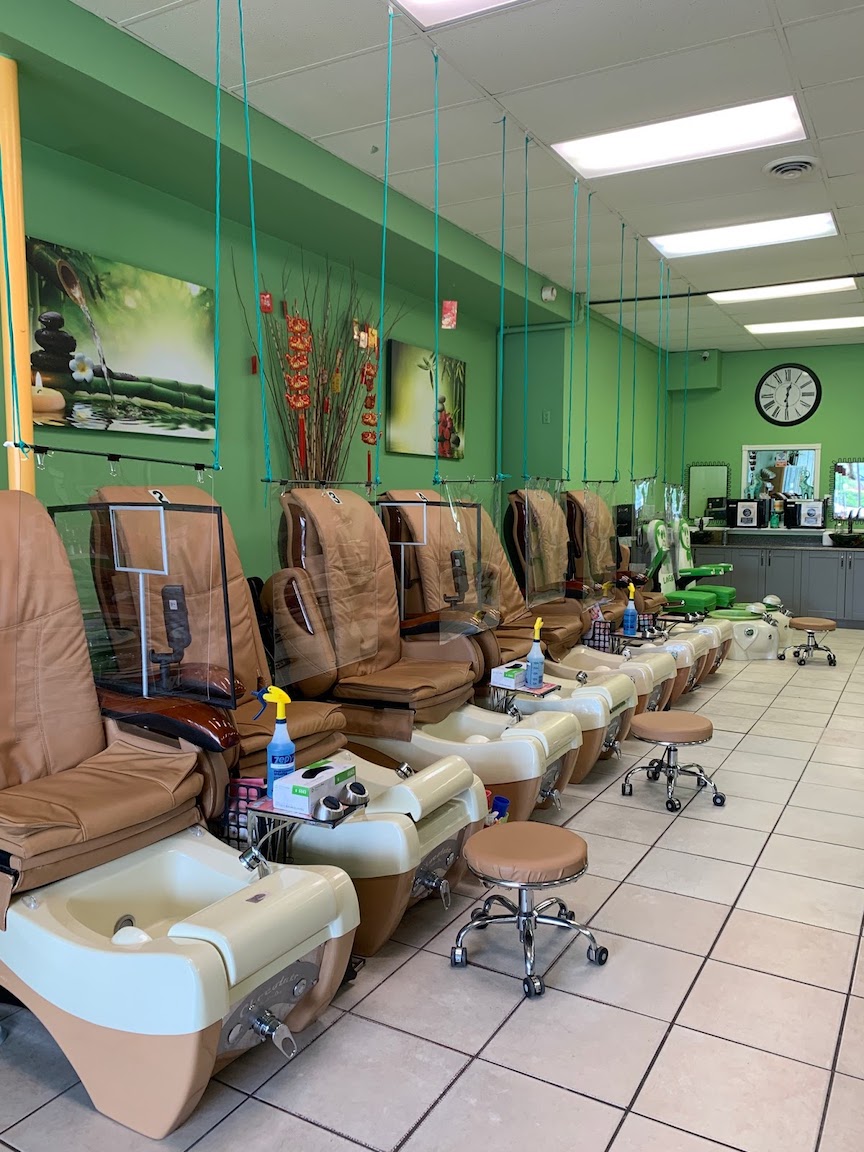
ON MY TOES – The Unexpected Soundtrack of a Pedicure

I always try to appreciate life’s experiences with all my senses, not just the obvious ones. You know, feeling music, seeing flavors, hearing color. So when I went to this typically touch-oriented spa session, I was primed to take it in with all my faculties.

                                              ~             ~             ~    

For the past couple of years Sally’s been inviting me to join her for her occasional pedicure.

At first, I was reluctant. You know, the whole macho thing; guys don’t get pedicures. But once I tried it—and survived the good-natured ribbing I got for giggling as they used their small version of a power sander on my callouses—I’ve come to love the experience.

A pedicure, I’ve discovered, is a trip for all one’s senses. And each time I go it seems I come away having especially appreciated a different sensation. One time it might be the toes massage; the next, maybe the gritty exfoliant; or the immersion of my feet in bags of hot wax.

So many delights—not just of touch, but the fragrance of the various soaking solutions and lotions, watching the fish swimming around in the salon’s big aquarium, taking in the Asian-kitsch art on the walls.

Among my favorites every time is the cushy, full-featured massaging chair. Like some hefty Nordic masseuse, the chair’s four rolling, kneading, pummeling fists work tirelessly up and down my back. And I can set it to any combination of massage styles and intensities. (I’d gladly pay the $55 for just an hour’s worth of that.)

            What I found so pleasant, so hypnotic
            about her voice was the music of it.


BEGUILING BABBLE
And this last time, just today, I found myself transported into a new dimension of sensory delight, one of sound. I know, of all places to get lost in sound: a spa.

The young lady who administered my pedicure is very good at what she does. And, shall we say, quite easy on the eyes. Maybe it was that my eyes were blissfully closed much of the time, but what my senses kept focusing on was her voice.

She talked incessantly for the entire hour. Not to me, but to her counterpart working on Sally’s feet right next to us. I don’t know how she kept it up; aside from her co-worker’s occasional word in edgewise, it was a monologue.

That may sound annoying, but I didn’t find it so. They were both speaking Vietnamese, so I couldn’t understand a word of it. And even if it had been English, most of the time my manicurist spoke so softly that I couldn’t have made out much of it anyway. But that wasn’t the point.

What I found so pleasant, so beguiling about her voice was the music of it.

        Vietnamese is a contour tone language,
        where two or more accents might occur
        in a single syllable.


CONTOUR TONES

Vietnamese is a tonal language. That is, it employs varying, often subtle, voice modulations which can lend two identically-spelled words completely different meanings. And those vocal ups and downs start from a significantly higher pitch than the baseline tone we’re accustomed to in English.

From that key, the tones jump or slide around, often more dramatically than the tonal variations in English. For example, the basic syllable ma can be pronounced with any of six intonations. *

Most of the accents give shape to sounds we’re not accustomed to in English. Like the many nasaly tones, and syllables that get suddenly cropped off at the end.

There’s also a different rhythm to Vietnamese. English is what is called a stressed-timed language whose syllables vary in spoken length and emphasis, with accentuated syllables occurring at quite regular intervals. Vietnamese is a syllable-timed or contour tone language, where syllables are all the same spoken length and where two or more accents might occur in a single syllable. **

My manicurist has a very pleasant, soft-spoken voice to start with. But then hearing it adorned with all these subtleties of her first language turned it into the lilting, hypnotic song I enjoyed while getting my feet done. Another of the many reasons why I’ll be back.

The lesson from all this: Life’s just too rich, too precious, for us not to be fully present. So with any experience, try calling on more than the obvious sense. At
the symphony, notice the smells. At dinner, relish the colors. At a hockey game, feel the beat of the pep band. And, yes, at your next salon, barber or massage parlor visit, bask in the sounds.

* Six Vietnamese Tones

** Stress-timed vs. Syllable-timed languages

Wednesday, March 22, 2023

MAS QUE SALTA A LA VISTA – The Sounds of Zihuatanejo

Beautiful Zihuatanejo, this enchanting Pacific Coast town in the Mexican state of Guerrero, inspires a rush of sensory impressions. What always hits me first are the visual ones, the colors, patterns, forms and textures of a place that’s not afraid to flaunt them all.

I’ve often likened these visual excitements to a feast for a starving man, and this year, having just escaped a monochromatic, snowier-than-usual Minnesota winter for a while, I’m snarfing down the sights even more eagerly than usual.

       Their embellishment—the weft, if you
       will—is an array of softer, more
colorful
       and richly
textured fibers.

HEARD AND NOT SEEN
But we possess, after all, five senses. I derive great pleasure from exploring them all. So let me feature another with some praise for the winsome sounds of this place.

Many are those one might hear in any developed-world town: the chatter of people’s comings and goings, the clack and clang of light industry, the hum of traffic. Sounds I don’t consider especially pleasant.

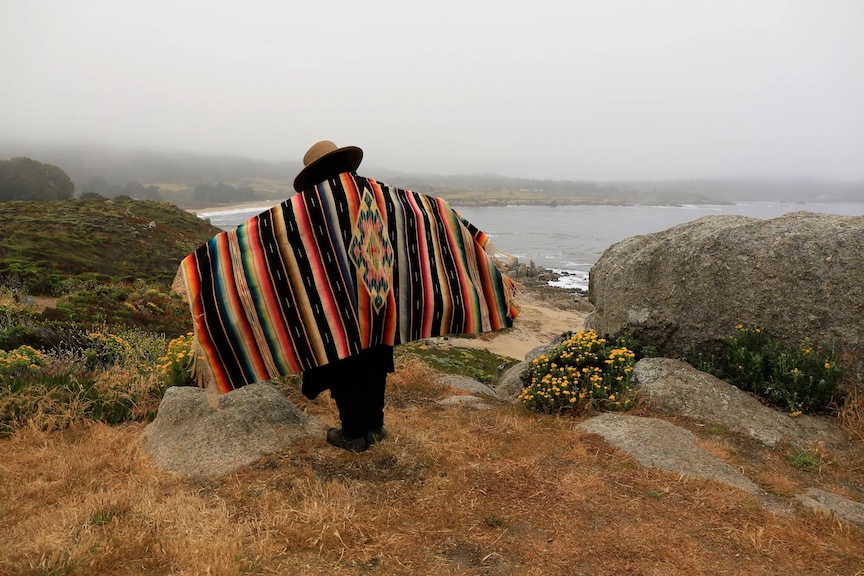
But that’s where the sound tapestry of Zihuatanejo takes a turn to the exotic. If the warp of the cloth, its strength, is those workaday strands of noise, their embellishment—the weft, if you will—is an extraordinary array of softer, more colorful and richly textured fibers.


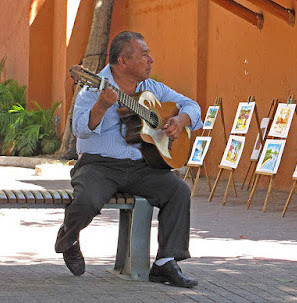
The soft breath of the Pacific surf; the shy coos of Inca doves; the haunting little flute ditty of the itinerant knife sharpener; strains of ranchero music animating the work of painters and carpenters.


There’s also the laughter of kids splashing in the surf along Playa La Ropa; the traditional música costeña of strolling musicians; the “Peta, Peta, Peta” call of the young attendant hanging out the door of the rickety bus to Petatlan.


And the rustle of palm fronds; the barely perceptible whirr of a ceiling fan; and the bird-like chirps of geckos as they stalk bugs on the ceiling.

        Even the Spanish word for German makes
        the German word for it sound severe.


DEUTSCH IT’S NOT
And then, of course, there’s the language.

My family roots are German. Naturally, offered the choice of just French or German in high school, I took German. I’m sure that made my parents and perhaps the spirits of a few long-gone ancestors very happy.

But in my mid-50s I decided I’d been a Mexican fisherman in a previous life, and that “Ich bin ein Fischer” just wouldn’t sound right coming out of that character’s mouth. So I took up Spanish, and have become, if not a great fisherman, a passable hispanohablante.

Spanish, with its softer, romance-language color and lilt, is another of those weft strands that make the tapestry of sound here in Zihuatenejo so rich and vibrant. I mean even the Spanish word for German—aleman—makes the German word for it—deutsch—sound severe.

So, while I still think of Zihuatanejo’s visual blessings as good enough to eat, I think I’ll digest them wrapped in the fine serape of its audible ones.


Thursday, April 14, 2022

HEAR, HEAR! – Music As If For the First Time

Those of you familiar with my As If For the First Time (AIFFT) series will recognize the premise: pick some common observation or activity—one so ubiquitous as to easily escape one’s full appreciation—and describe it as if I’d never seen or done it before.

I’ve written at least fifty of them, and the other day, while listening to our local public radio classical music station, I realized music just begs for a place at the
AIFFT table. Why had it taken me so long?

                                                    ~        ~        ~    

         It can curl one into the fetal position
         or lift one to prayer.


BABIES DIGGING MOZART

Usually these treatises practically write themselves. But the more I think about music, the more it’s proving one of the hardest themes I’ve tackled.

It’s just that music is so intangible. Unlike any of my previous AIFFT reflections, experiencing it involves no physical action. You can’t see it, pick it up, turn it over, smell it or taste it. You can only listen…and relate.

Much of our response to music is emotional. Like poetry for the ears, it can render one sad, happy, pensive, agitated…or sleepy. It can curl one into the fetal position or lift one to prayer. It can move one to dance. 

IMAGE: New York Times

It coaxes out the sweetest and sorest of memories. It can draw shut dark curtains of fear or doubt, or open them to the golden-hour light of promise.

And yet, how do I describe music as if I’d never heard it before? Doesn’t its appreciation require some cultural or personal reference point? Or could some aspects of it actually be innate to us? In other words, might even infants love a Mozart concerto the first time they lay ears on it? (Brain sciences researchers say they do, and that music plays an essential role in speech development.)

NATURE’S MUSIC
I’m reminded of a film I once watched portraying some early 20th century explorer who’s managed to penetrate a remote jungle—in Borneo I think it was—and discovers a tribe whose culture remained untouched by modern civilization. The visitor unpacks a Victrola, winds it up and plays Caruso. The natives are spellbound.

Why? Is it because the music their visitors love has touched their souls too? Or is it simply the novelty of their magically producing such sounds—any sounds—from that odd spinning disk?

It’s not that they’ve never heard—or played—music before. Of course they have their own rudimentary music. But where does the inspiration for that creation come from? And why hasn’t it produced works of comparable sophistication to those of Mozart or Steely Dan or Nas?

Nature’s sounds are influential—as they have been for composers in other cultures. From the rumble of thunder to the shrill airs of birds; from the sighs of wind through trees to the rhythm of cricket chirps or water dripping.

This might explain basic melody and rhythm, but what do those wide-eyed Borneans know of harmony? Of tonal color? Of counterpoint? Even though Nature has never shown them such niceties, might they not have simply invented them through experimentation?
     Is rhythm something we’re born with, part
     of our DNA, or is it taught us by no less
     a maestro than our own mother’s heartbeat?


I GOT RHYTHM
The one aspect of music that just might be inherent to us human beings, even before it’s ensconced in culture, is rhythm. So is the urge to tap our fingers and move our feet a need we’re born with, part of our DNA? Or is it taught us by no less a maestra than our own mother’s heartbeat? (Brain development research has shown that it is.)

And our appreciation for harmony, is that an innate quality of sound, an invention of our hearing, or a component of our souls?

          Do infants love Mozart the first time
          they lay ears on it?


NO ACCOUNTING FOR TASTE
We listen to and appreciate different types of music for different reasons. While some folks love what we might call traditional harmonies and rhythms, others prefer their music dissonant, their tempo harsh, even angry. And still others…well, our tastes are all over the map.

One example: Years ago, I met and became friends with the fantastic Mexican magical-realist painter Fernando Garrido. I was absolutely sure Fernando would love a new album I’d discovered, a CD by Norwegian jazz pianist Tord Gustavsen, whose sublime style “melds brooding Nordic lyricism and modern jazz.” *

So, next time I visited him at his home in Querétaro, I brought the CD and gave it to him.

Now I find Gustavsen thoughtful, soothing, at times etherial—creating the perfect “head space” for my own creative writing and crafting. What better music, I reasoned, to stir the creative juices of a famous, prolific, Caravaggio-inspired Mexican painter? Right?


Wrong. After months of my trying tactfully to pry an honest opinion of the CD from my tactful friend, he finally came clean. He said, “It’s so slow; it has no life.” So much for becoming soul mates with Fernando Garrido—at least music-wise.

So I guess music’s effect on us, like that of art, or design, or any other type of expression, is colored not just by taste, but by culture and by our own experience. I know I’ve heard music most people would find nice, but not especially moving, which, because it recalled for me a particular moment of love or loss, caused my heart to swell or brought me to tears.

         It's like trying to assess emotion as if
         we'd never been able to feel.


A LOSS FOR WORDS
So, experiencing music as if for the first time. Is that even possible?  

For something so ingrained in the development of our brains, so influenced by our natural surroundings, so colored by both experience and culture, I’m inclined to say it is not. It’s like trying to assess emotion as if we’d never been able to feel. Or discussing language without words.

IMAGE: www.KarlAndreasGrosspixelpoems.de

At least for me there are far fewer answers than more questions. If you have some answers based on your own experiences with music, we’d all love to hear them!

“If I can learn to understand this language without words, I can learn to understand the world.”
~ PAULO COELHO

“Remember, all music was once new.”
~ SLOGAN OF THE AMERICAN  COMPOSERS’ FORUM
* Apple Music ( https://music.apple.com/us/artist/tord-gustavsen/18309440 )

Sunday, April 12, 2020

THE SIGHS OF PINES – And Other Sounds of a Pandemic

The bigger the tree, the more wisely it speaks.

I live in the heart of Minneapolis, a mile from the bustling University of Minnesota campus, and less than a block from interstate I-94. So I’ve gotten used to the constant din of tires on pavement, faulty mufflers, air conditioners, lawn mowers, trains and planes. Sally and I pretend the ever-present freeway hiss is the surf, piped in from Zihuatanejo, our second favorite place to live, on the Pacific coast of Mexico.

        Other, more subtle voices of Nature
        get absorbed in the urban sound sponge.


We do hear birds here in the city, but mostly just those within half a block. It’s kind of like trying to spot the Milky Way or Northern Lights through the veil of urban light pollution; they just can’t beat the competition.


Other, more subtle voices of Nature are lost entirely, absorbed in the urban sound sponge. Sounds like gentle rains, pigeon wings, soft voices…and the sighs of pines.

What a shame the latter. I’ve spent a fair bit of time in true wilderness, where pines speak uncontested. They forecast the weather; they shush you when you’re loud; and they lull you to sleep.

            They spoke to me. In whispers I’d
            have missed a month or a year ago.


SH-H-H-H...
One recent windy day, I was out on one of the twice-daily walks I’ve been taking since the corona virus pushed us all into more sedentary routines. By now, the route’s become so familiar that I’m finding I hardly notice little natural wonders along the way.

In a small park just off East River Parkway stand a half dozen medium-sized white pines—I suppose you could call them adolescents. Usually, I pay them little heed—except I like to walk through their soft skirts of rust-colored needles.


      So much worry, so much stress over this 
      pandemic nightmare, released just like that.

That day, though, something was different. This time I heard them speak to me. In whispers I’d have missed a month or a year ago, before the city’s volume got turned down. Breathy words that soothed me, counseled me not to worry, to tap into my core of hope and faith just as their own roots reach deep into the soil for nourishment.

PHOTO: Arbor Day Foundation
That chafing of long, supple, five-to-a-cluster needles, like brushes on drums, brought me to my peaceful center. Without thinking, I took a deep breath and sighed myself. So much worry, so much stress over this pandemic nightmare, released just like that.

I stood there in awe for several minutes, savoring that delicious windfall gift, a precious and timely reminder I’d never have discerned above typical workaday ambient noise. And one that lightened and brightened a day otherwise muted by dreadful, deafening habit.

Monday, January 2, 2017

THE EDGE OF ICE


The jutting edge of ice, undercut by last week’s melt water, is once more frozen brittle-hard. And ah, the silly joy of wrecking it.

I step, as on a tightrope, along the frozen filigree, and the sonorous, crackling notes, distilled in cold, dense air, belie its delicacy.

Is it just the challenge of finding winter’s upside, or are these fancies of foot not more satisfying than other seasons’ softer sounds of puddle splash or rustling leaves?

I thank Creation for the objects of such pure, simple play…and for such innocence of soul to be moved by them.


Wednesday, July 15, 2015

SOUND ACROSS WATER – In Touch with Eternity


             Lovers row aimlessly, never beyond 
            sight of the dock—but lost anyway.

I have this romantic notion in my head about the way sound carries over an expanse of water. The image that keeps coming to mind is that of a small east- central Minnesota lake around the end of the 19th century. It could be any lake or placid river, though—perhaps one you remember fondly.

I am at my dream lake. I see families who've come out here from Minneapolis or St. Paul by horse and wagon to spend the long summer afternoon swimming, boating and reveling in the crystal clear waters. Laughter shimmers across the water in gentle, agreeable waves, eventually washing up on every shore.

As evening draws in around the lake, lovers row aimlessly, never beyond sight of the dock—but lost anyway. By nightfall, most have gone home, but a few campfires wink from surrounding woods. The snap…snap of the burning wood sounds like it’s yards away, not half a mile. You can practically hear a whisper across the lake.

SOUND AND SPACE
You’ve been here before, haven't you? In your childhood, or maybe just in your imagination? What is it about a scene like this that so captures our hearts?

Is it the purity, the utter care-free simplicity of a more innocent time? I guess that goes without saying for us slow-it-down, soak-it-in romantics. But there's more to it than that, something about how the mood gets carried in those sounds.

I know there are scientific reasons for how sound waves carry across water—something about the water surface and the cooler air just above it combining to contain and channel them. But that doesn't interest me as much as the symbolic meaning.

     These sounds—if we let them—draw us in.
     Whether we like what we hear or not, they
     connect us, define us, define our community.


For me, sound is spatial. I think of the way great, spreading American elm trees define the space under and around their huge, fountain-shaped canopy—and how they used to form cathedral-like arches over St. Paul’s residential streets. Like those magnificent arbors, sound encompasses everything it can reach.

If you're a city dweller, it might be the muddled shouts and laughter stirring the thick summer evening air from the baseball diamond a block or two away.  If your neighborhood's a little rougher, maybe it’s the sounds of more boisterous goings-on.

Whatever the source, these sounds—if we let them—draw us in. Whether we like what we hear or not, they connect us, define us, define our community.

LONGING TO BELONG
Imagining once more that idyllic summer evening at the lake, that timeless sense of community is somehow intensified. With no competing noise, the clarity and reach of that laughter, those campfire conversations and lovers' whispers, seems funneled through our ears and right to our souls. It wraps around us. And the fact of its having to reach across such a chilling, empty space makes the connection feel all the more intimate.

I'm sure that's part of it for me—a longing for community. Don't you feel, sometimes, that we're losing that sense of sharing beloved places or spaces, of wanting to protect them, of knowing, deep inside, that we belong to them and to one another? Do you share my disappointment that, more and more these days, everyone seems concerned with nothing more than the time- and-space immediacy of their own consumption? 

Alas. But why curse the silence when we can make music? Listening for those vital signs and sounds of community doesn't mean we have to live other people's lives nor fix all the world's problems, because, while a quiet lake at night may serve as the instrument, the notes originate in the soul. All we have to do is pay attention, listen with our hopes and our hearts, and care what we hear.


Monday, September 15, 2014

WHEN NATURE SPEAKS – Echoes of Eternity

When Nature speaks, it’s for a reason. She's sharing things we need to hear—invitations, affirmations, lessons about truth, beauty, love and life.

While the human animal’s obsessed with how to stretch and bend her to create our own realities, Nature reminds us of one eternal reality, that everything is connected. Everything. That what we might fear in her we actually fear in ourselves. And that what we do to her we do to ourselves and others. 

What a joy our place in her should be, a position that, miraculously, both humbles us when we’re arrogant and ennobles us when we’re feeling unimportant.


BODY AND SOUL
Nature’s voice surrounds us, fills us, every day. She speaks to our minds, showing us immutable truths of how things always grow and move and interact. At the same time, she refreshes those ancient instincts that have always advised us on how to apply those truths. She tries as she can to show us both the portals and the boundaries of our intimacy.

            Only if we love her back will we 
            care enough to protect her as if 
            she were our own flesh and blood.

Sometimes the message is for our bodies, calling us to work with her, run with her, bask in her. She fills us with contentment, with exhilaration, and then reminds us that, while she may seem indefatigable, we are not.

Finally, she speaks to our hearts and our spirits, reminding us of our deep belonging to her. It is an unconditional love, that of the tenderest of gods, yet utterly indifferent to the values we humans have devised for ourselves—and so often fail to exemplify. 
 
WHAT TO SAY BACK
Don’t think for a moment that what Nature has to say to us has to be a monologue. In fact, there are many ways to hold up our end of the conversation. Perhaps the most obvious is through sound.

If we spot a beautiful bird—a cardinal, let’s say—we obviously can’t look like a cardinal; we can’t feel or taste or smell like one either. But we can sound like one. I do it all the time (and the cardinal nearly always comes closer).

When Nature calls us to our child side, we might answer her with playful cries and joyous laughter. Or we can welcome her accompaniment as we shuffle leaves, crunch acorns or splash water.

We can shout or clap our hands and listen as desert ignores, forest ponders or canyon mimics. Or we can offer Nature the one gift we have that might nearly rival birdsong and wolf call—our own voices in song.

                You know it's not really a 
                sound, but still you hear it.

THE SOUNDS OF SILENCE   
Can we converse with Nature through silence? Have you ever experienced true, total silence? I’ve done so only a few times in my life. It leaves an impression. At first your brain doesn’t quite know what to do without the foundation of at least some ambient sound.

It’s kind of like being in total darkness. It makes you dizzy. You can almost feel your ears reaching out, expanding, cupping to detect something, anything, to get a bearing on.

Then, like the way we try to fill the awkward lull in a conversation with an “um-m-m” or an “ah-h-h-h,” Nature comes up with her own space filler, a sort of dull roar. You know it's not really a sound, but still you hear it.

How curious that, while total silence may disorient, near-silence—especially that infused with Nature’s whispers of wind through trees, water over rocks, the jabber and scurry of life—is where, more than any place, you will hear the sound of your own spirit, that reassuring voice that reminds you of your unique part in the oneness of everything.


MISPLACED FEARS
This is an era in which too many of us humans seem to be getting it backwards in our attitude toward Nature. We've come to fear her more than we love her. We keep our young ones indoors where we can keep an eye on them. We discourage them from the kinds of adventures that defined our own childhood, but which we now somehow believe are too risky.

        In her voice are the echoes of everything 
        that ever lived...or ever will live.

If we truly listen, we know that the truth is a different matter. In fact it is Nature that should fear us. Once again, she’s telling us—and we should be listening—how we hurt her through our arrogance, our greed, our short-sightedness and, perhaps most tragically, through those poorly-informed fears.

Nature is as benevolent as she has ever been. And, in this era of virtual experiences and connections, her presence in our daily lives is needed more than ever. Depriving our children of her nurture, her teachings, her healing spirit, is hurting them—and us—in ways we are only now coming to document, and to a degree that far, far outweighs any actual risks.

FLESH AND BLOOD
So keep your ears peeled for Nature’s voice. It’s there, not just in the forest, but in the heart of the city. You can hear it in creatures’ voices, including our own. It comes from growth and movement—the raspy rattle of tree branches rubbing shoulders in the wind; water’s cheery chortle as it charms its way over and around hard rock. Some folks even hear the trees, the clouds, the land.

And only if we listen—truly listen with ears, hearts and souls open—will we learn about Nature and our belonging in her. For in her voice are the echoes of everything that ever lived...or ever will live. Then, only when we know and trust that eternal bond, will we be able to reciprocate her love. Only then will we know enough to protect her as if she were, indeed, our own flesh and blood.


Monday, June 2, 2014

HOW TO BE IN THE MOMENT – Tip #41

 TIP #41
Listen Underwater


Slip into an alien world, one of slimy, legless phantoms, where 
sound carries forever through an atmosphere devoid of air.

Next time you swim, listen for the unearthly sounds: muffled splash, shrill whirr, odd, cryptic click. Can you imagine their origins?

Saturday, September 14, 2013

CALL ME CAP'N CRUNCH – Walking On Acorns

While out on my evening walk yesterday, I found myself doing something that's become, for me, a harbinger of autumn. I crunched dry acorns underfoot. In fact, I go out of my way, to the very edges of the sidewalk where most of the iconic little oak bombs lie, swept aside by the elements and a hundred other walkers.

Whole acorns don't crunch so easily; even the broken ones still have a little meat
to cushion the blow. But those little caps, they're the crème de la crème of crunch, delivering a crunch so deep and satisfying you can feel it in your head.

Be careful, though. If you step and there's no give, there you are on a bed of ball bearings, and the crunch you hear might indeed be in your head.

Here, fittingly, is one of my favorite posts in my series, 101 Tips on How to Be 
In the Moment.

 TIP #65
Celebrate your own footsteps.

A whisper through crispy autumn leaves; the earnest crunch of dried acorns; the thin chatter of a kicked pebble.

Though they bear the weight of the world, let your feet proclaim their joy…not just in getting somewhere, but in the going.

Monday, September 2, 2013

CICADA SIZZLE – The Dying Gasps of Summer

These waning days of summer show their age: today warmth and light won't
last 16 hours; here and there leaves run out of green; and there's a new sound
in the air.

Cicada sizzle.

Like a two-inch civil defense siren, it winds slowly up, crescendoes, then
tapers slowly off, so sharp a sound as to leave its imprint in the ear—a kind of
mental echo.

The bittersweet sound evokes, for me, the end of carefree boyhood summers,
a sad turn from natural impulses and rhythms to disciplines not my own.


                   Can you pick up the beat
                   of such
cicadian rhythms?


And what a paradox: a sound so intense, so penetrating, it goes right through you. Yet it sneaks into city soundscapes so deftly that we barely notice, inhabiting the background like cricket strum or nighthawk's airy plea.

As I ride my bike along high, sunny river bluffs the shrill whines play leapfrog with me. At times, they flow together, one continuous sound as if from a single cicada flying along just above me.

I cross the bridge and return home on the other side—the shady side—where I notice there are fewer singers. Too cool here, I guess, for good vibrations.

Can you pick up the beat of such cicadian rhythms? Keep your ears open.


The most common cicada we have here in Minnesota is Tibicen canicularis
also known as the dogday cicada, harvestfly or annual cicada.

Thursday, November 15, 2012

HOW TO BE IN THE MOMENT – 101 Tips

 TIP #50
Ghostly Geese


These late fall nights, keep your ears open for what may sound like a crowd of people chattering in the distance. If you look up, you might see the hundred-strong "V" of migrating geese, two thousand feet up, dimly lit against the blackness by ambient earthlight.

Saturday, August 18, 2012

HOW TO BE IN THE MOMENT – 101 Tips

TIP #10 
Feel the pulse of a hot summer meadow.


Late summer afternoons, the meadow is a shrill cacophony, a population of buzzing, whining, whirring beings.

And, like any city, this one emits one common, unifying sound, a kind of pulsing, sizzling energy. Can you hear it in the meadow, this heartbeat of life?

Thursday, April 12, 2012

GNAWING CURIOSITY – What’s That Sound?

From some quiet bay the eerie wails of loons poured across the lake. My thoughts would drift that way until the sharp snap of a jack pine knot popping in the campfire pulled them back.

At 15, I was on my first unguided northern Minnesota wilderness canoe trip with five of my buddies. There we sat one night after dinner. We'd put our makeshift log benches close to the fire so we could dry our socks, waving them on sticks, steaming, over the flames.


Then, somewhere beyond the cozy wrap of radiant heat and conversation, I heard something that just didn't fit with the rest of the scene. It was a faint, rhythmic grinding or "munching" sound. I scanned my friends' mouths and hands to see if anyone was chewing, whittling, rubbing stones together or anything that might explain the mysterious sound.

No, it was coming from the other side of the fire pit, somewhere behind my friends, close to the edge of the deep woods.

I stepped closer, with that simultaneous craning 
of neck and tilting of head that so often precede discovery.

Pushing aside my small concern about the ever-hungry and occasionally forward black bears often drawn to campsites, I got up and walked toward the pulsing noise. Sure enough, it got louder. I couldn't imagine what it could be if not some kind of abrasion. A beaver on the night shift? A deer rubbing felt from its antlers?

I followed the sound to a pine tree and shone my flashlight right on the spot it seemed to be coming from. There was something there. I stepped closer, with that simultaneous craning of neck and tilting of head that so often precede discovery.

PHOTO: Steven Katovich, US Forest Service

Aha! A BB-sized hole in the bark, and all around it a golden extrusion of hardening resin. I put my ear as close to the rough bark as I could without touching the sap. Sure enough, whatever the little critter was, it was the one responsible for that prodigious munching.

When I called my friends over, they too were fascinated, but we agreed our curiosity wouldn't justify gouging and injuring the tree. So we had to wait a while to learn the identity of that little buzz saw.

When our trip was over, a camp naturalist explained that the pine engraver beetle (Ips Pini) actually does gnaw its way through the wood, like a tiny beaver, just below the bark where the adult male excavates—"engraves"—a lattice of tunnels.

        
PHOTO: Dennis Profant'

I've heard pine engravers a couple of times since, and have taken great delight in amazing my paddling companions, who'd either not heard the sound before or never taken the time to investigate. (Or could it be that they had, indeed, been curious, but were just afraid of bears!)