Showing posts with label fishing. Show all posts

Saturday, April 11, 2026

IMMISCIBLE EVIDENCE – Wonders of the Air/Water Interface


Two elements: air and water. At first glance, they seem about as different as they could be. They’re entirely different states of matter, after all. Even so, consider the surprising number of similarities:

     • They’re both classical elements—those believed by ancient Greek, Indian and 
        other cultures to constitute all matter in the universe.

PHOTO: CK-12.org

     • Neither has a fixed shape.
     • Both flow.
     • Both are subject to gravity.* 
     • Each is rendered visible just by the stuff 
        it carries, and by certain kinds of light.
     • Both are vital for life.
     • Each infuses the other.** 
     • Both suffocate denizens of the other.
     • Both refract light.***
     • Both acquire new properties when heat-
        ed or cooled—including changing state.****
     • Each, unless contained, spreads to fill whatever space gravity compels it to.
     • Both are harmed by abuse from the only creature capable of destroying them.   
          The fascination comes down 
          to part science, part magic.


So…if water and air are so similar, why is the interface between them—think the surfaces of lakes, streams or oceans, of raindrops, of the glass of water on my desk—so complex, so fascinating?

A decent answer would require volumes. But, at least to this inexpert witness to wonder, it comes down to part science, part magic. 

ILLUSTRATION: ConceptVis.app

THE SCIENCE
The first and perhaps most obvious impact of this air/water junction is their interaction’s generation of weather and climate. You know, evaporation, conden-
sation, precipitation…and repeat. But there’s more 
than that going on.

Turns out the water cycle melds with a carbon cycle, which finds carbon dioxide at the water surface—defined as a one- to two-nanometer membrane—transforming into bicarbonate and carbonate ions. †

GRAPHIC: Journal of Physical Chemistry

Atmospheric scientists have also found that these ion-to-ion interactions become "stickier" near the air-water interface, resulting in proteins unfolding, aggregating, or assembling into significantly different structures. ††

The compendium of scientific findings continues with a list of mind-boggling processes like peptide synthesis, phosphorylation, oligomerization, colloid mobilization, protein unfolding or aggregation †††…I’ll spare you the rest.

     To unlock the mystical properties...it took 
     a ten-year-old with a cane fishing pole.

ILLUSTRATION: Norman Rockwell
THE MAGIC
It took lots of science and technology to discover those arcane properties. To unlock the mystical properties of the air-water interface, though, it 
took a ten-year-old with a cane fishing pole.

I’d throw an angleworm deep into the lake, this hidden, alien world, connected by a thin filament held between my fingers. Then I’d wait. If there was life down there in that cold, dark, liquid place, it eventually sent me a message through the fiber. 
If I was lucky I’d get to meet the sender. ‡

That cryptic contact seemed to me no less otherworldly than receiving a faint message from deep space.

PHOTO: Warner Brothers

     What other substance can…bathe an 
     infant’s head and carve the Grand Canyon?


ICEBERG IN MY COFFEE
As this insight might suggest, when it comes to air and water, I’m partial to water. For one thing, I spent nine months submerged in it just before I was a kid. 

For another, air seems almost too easy to take for granted—except, I suppose, when one’s flying…or suffocating. I mean which wakes you up faster, a cool breeze or a splash of cold H2O? 

I love the capricious relationship water has with other elements. With light, it can bend it like a prism, absorb it like a sponge or reflect it like a mirror. Percolating into soil, water provides the nectar of life for nearly 300,000 species of plants. 

ILLUSTRATION: FreePic

What other substance can both render a Winslow Homer masterpiece and torture a suspected terrorist? Transform itself into the exquisite intricacy of a snowflake and the Titanic mass of an iceberg? Bathe an infant’s head…and carve the Grand Canyon?

PHOTO: FreePic

While I realize the Law of Conservation of Matter holds for all the elements, I’m especially captivated by how it applies to water. For example, the possibility that a molecule of water melted from that iceberg that sank the Titanic might reside, for now, in the coffee I’m sipping.

THICK WATER
As with most of my musings here, digging up answers about the seam between water and air also uncovers more questions:

     • Is a splash caused by something falling into the water the obverse of that 
       caused by something like a fish jumping out? 
     • If water can vanish into thin air, could one say that air—also absorbable by 
       its counterpart vanishes into thick water?
     • Why does water as a mist cool us, while as humidity it makes us feel hotter?
     • When we refer to the surface of a lake, isn’t it just as true to call it the sur-
       face of the air above the lake?
     • Is the only difference between swimming and flying the speed at which you 
       can do it? 

IMAGE: Medium.com

When you let loose your child-like sense of wonder, what do you notice about air, water and their interaction? I and the couple of thousand people who stop by here every day would love to hear your thoughts! Just click on the “comments” link below.


* Because air has mass, it is attracted by Earth's gravity, which gives it weight and creates atmospheric pressure. Gravity keeps the atmosphere from drifting into space and pulls air towards the ground, making it denser at lower altitudes. 
Google AI Overview

** Air absorbs water vapor (humidity) from liquid water (evaporation), with warmer air holding much more, while water absorbs gases like oxygen from the air (dissolving), a process enhanced by surface area and turbulence, both crucial for the water cycle and aquatic life  –  Google AI

*** Air bends (refracts) light just as water does, though generally to a much lesser degree. Both media bend light due to changes in speed caused by density differences, a process called refraction. Air bends light significantly when there are sharp density changes, such as that of hot air above pavement (the cause of mirages). 

**** Air freezes solid, but only at –362 degrees Fahrenheit at standard atmospheric pressure. This, of course, is not possible in our planet’s natural conditions, but it’s commonly seen in scientific and industrial labs. –
Google AI

† Jin Qian, Staff Scientist, Chemical Sciences Division, Berkeley Lab.

†† "The Promise and Intrigue of Where Water Meets Air" – Rensselaer Polytechnic Institute, 
June 5, 2014

††† “Colloid mobilization and transport in groundwater”
Joseph N. Ryan and Menachen Elimelech – ScienceDirect.com

‡ Over the past few years, the wonder of communicating with fish has tarnished considerably as I’ve realized that those “cryptic” tugs and jumps, which since childhood have felt like fun, are no such thing for the fish. I now believe I have no right to enjoy the pain and terror of another of God’s creatures.

Sunday, June 16, 2024

RIVERINE PERFECTION – A Memorable Day On the St. Croix

I’ve been a river rat since I was nine. That’s when I fell in love with the beautiful St. Croix River, a Natural Scenic River forming the border between Wisconsin and Minnesota for most of its 169-mile length.

I can’t simply run down to the St. Croix and hop in our boat or canoe as I did most summer days as a kid. Nowadays it takes a bit more effort, including a 50-minute drive. But I still manage to tote my gear up there to my put-in spot at Franconia five or six times during the summer.
 
These river outings in my little 13-foot Mansfield/Stowe Osprey have always been good for my soul, a close connection with Nature and a cherished expression of
my independence. But today’s paddle is extraordinary, on as close to a perfect afternoon as I can remember.

          By about 6:30, the sun’s slipping on
          its golden-hour filter, bathing everything
          in honey light.


A SLOUGH OF NATURE
First, the weather’s ideal: upper 70s, sunny with scattered cotton-ball clouds and light breezes. The water level is a bit high. That means very little of the landing’s sand beach is exposed, making embarking and disembarking a bit challenging. And it usually means poor fishing.

But high water also means I can access my favorite slough, a flowing backwater that meanders through the woods on the Wisconsin side for several miles, and which becomes accessible only by portaging once the river drops to its usual summer level.

Going on a weekday, there are fewer people out; I see just a few small groups kayaking and a couple of polite power boats in the main channel.

As usual, I head out at about 2:30, since those five or six remaining hours of daylight are always magical, coaxing out all kinds of wildlife, from orioles to ospreys, muskrats to muskellunge. And by about 6:30, the sun’s slipping on its golden-hour filter, bathing everything in honey light.

BIRD TALK
So that’s the setting. Perfect enough, right? But today several other factors contribute to the magic.

One measure of my joy during my river paddles is how much wildlife I get to see. Today, here in the slough, the sense of oneness with Nature is just extraordinary. An eagle soars past at the treetops thirty yards away, a great blue heron flies close enough so I can hear the whisper of the wind on its wings.

Muskrats crisscross the stream, busily tending to their lodges. I don’t see deer this time, but I can hear them in the woods.

I’m far from a bird expert, but I love seeing them, listening to them, trying to imitate them. Today I hear unfamiliar birdsong coming from a dense grove of big trees along the bank. Sifting through memory, I rule out a few bird calls I know well, and come up with a guess: must be orioles. Now I haven’t spotted an oriole for years and have forgotten what they sound like.

PHOTO: Tony Castro

I start replying, and within a minute a dart of orange emerges from the shadows, coming toward me…and then two…and finally a couple more pipe in from deeper in the woods. What a privilege not just to see these spectacular birds, but to communicate with them (saying who knows what)!

Later, I try for another conversation. Nearly always on these evening paddles, I start hearing barred owls’ evocative eight-note incantation in the woods about an hour before dark; most often there are two or more trading calls.

This evening, emboldened by my success with the orioles, I try reaching out to any barred owls who might be within earshot. It’s not perfect, but my low-pitched coo-like whistles do the trick. One of them replies…and then another. I have chills.


SEVEN UP
I enjoy fishing. I like catching too, but that’s not essential to the mystical connection with Nature fishing evokes. Most days on the St. Croix the effects of current and wind make bait casting from a canoe quite challenging; I get one, maybe two, quick casts before I’m either turned completely around or barreling toward the rocky shore.

Today, though, the light breeze and moderate current are in near-perfect balance, managing to hold me in place or even move me gradually upstream—a perfect pace for covering a new spot along the shore with each cast.

        This spiny, mauve, shark-skinned beauty
        is thought to have appeared in the biota
        some 100 million years ago.


Usually, my fishing time on the river is punctuated with little, under-my-breath curses when I’m struggling with stronger winds or when my little Mepps Spinner snags on a stone or log, or, worse, catches an overhanging tree limb. Today, incredibly, I do all the usual target practice on submerged structure all afternoon, and without a single snag.

Now here’s the most amazing part. My average day fishing on the St. Croix might produce a few small fish, usually pike or smallmouth bass. Today, despite the high water, I catch seven fish, each a different species. Exactly one each of sunfish, crappie, yellow perch, rock bass, smallie, northern pike and sturgeon. Do you know how extraordinary that is?

Of those, the perch is one I seldom see on the river. (I worry that, since they love aquatic weeds, maybe that means the St. Croix’s waters are warming.)

But the most exotic by far is the sturgeon. This spiny, mauve, shark-skinned beauty is like a living fossil, thought to have appeared in the biota some 100 million years ago. Catching one—even a 20-inch youngster like this—always leaves me in awe. 

BETTER THAN DEET
Finally, I can’t recount a summer evening on the St. Croix without mentioning our Minnesota “state bird,” the mosquito. We’ve had plenty of rain lately and temperatures are ideal for mosquito procreation. And, with little wind, I’d expected to be mobbed by the little assassins.

VIDEO: LaiTimes

But not today. Whatever this magical spell that seems to envelop me, it’s working better than 100 percent DEET. Nearly all afternoon I’m surrounded with a squadron of dapper dragonflies using me as bait and gobbling up the skeeters before they can land. I ask you, is that not a perfect example of synergy?  

          I allowed myself the lightness of being
          that allows wonder.


DISTILLED SPIRITS
Serendipity is, by definition, elusive, impossible to replicate. We’d love, wouldn’t we, to be able to catch it, bottle it and open it another time. Alas, we can’t make it happen.

Like so many of Nature’s small wonders, it’s not all about what you actually see or do or even what happens to you. A big part of serendipity is about how and where your spirit is when you’re there. As I'm wont to say in these jottings, you see pretty much what you expect to see.

The spirits of some folks I know are like magnets for wonder. They seem always to be in a place that’s wide open to curiosity and awe…and, yes, serendipity. For me, it can be a little harder. Too often I get stuck in my routines; I impose limits on myself when I needn’t; I’m too serious.

So today, this magical, near-perfect day on the St. Croix River, only happened because Nature and I happened to be on the same page. My worries were few; my filters were turned off; my senses were tuned in; and I allowed myself the lightness of being that allows wonder.


Saturday, August 13, 2022

SWIRLING EMOTIONS – An Ode to Eddies

An irrepressible flow, an unmoving impediment. If both were solid objects, there’d be a collision, likely some damage, and motion would cease.

But with water—or any substance that either is, or acts like, a liquid—the effect
of that collision is a thing of beauty, a sublime coalescence of concession and conquest.

Take a rock and a river. Collision’s no problem for either of them. The water simply separates effortlessly to flow around the barrier, then momentarily reverses course and regroups to carry on its gradual, inevitable surrender to gravity.

It’s an object lesson in fluid dynamics.

     Eddies are made by objects as small as the
     teaspoon you use to stir your morning coffee
     or as large as…well…Antarctica.


SPIN CYCLE  
An essential characteristic of flow is that when the liquid changes direction it creates a void in the place where it would have gone if left alone. It’s something like a vacuum, which draws in the liquid next to it. This creates the swirl we call an eddy—or vortex, gyre, whirlpool, maelstrom…all the same thing, though some of these terms suggest varying scales.

If the water flows ‘round that rock on both sides, the void occurs right behind the rock, stirring a swirl on each side and an area between them where the water flows back against the current. If the rock is a peninsula, there’s also a backflow, but from just one swirl.

Liquid eddies are made by objects as small as the teaspoon you use to stir your morning coffee (made easier to see when you stir right after putting your cream in) or as large as…well…Antarctica.


WHERE MONSTERS LURK
I know a thing or two about water eddies because I’m a canoeist and a fisherman.
I see them coil from either side of my paddle as I dip and pull it back. On those rare occasions when the water’s like glass, I can turn and watch them spin down for a few seconds as they recede behind me.

Bigger eddies might offer a challenge to steering a canoe. As you enter one, you can feel it grab and rotate the craft. But an experienced canoeist anticipates such twists and turns.

An eddy doesn’t just roil the water on the surface; the effect often extends all the way to the bottom. Because this buffers the current, it’s the perfect spot for a predator fish to lie in wait, with minimal effort, for prey getting swept past.

And the circulation can be vertical as well as horizontal. This is why it’s so dangerous for a swimmer to get caught in the area just downstream of a dam or a submerged rock or log. The rolling undertow there can keep pulling you under with no escape.


            Get outdoors and let Nature be your
            slowing-down, calming "eddy."

GO WITH THE FLOW…OR NO?
So are there any life lessons to be taken from eddies, as there are from so many of Nature’s teaching ways? 

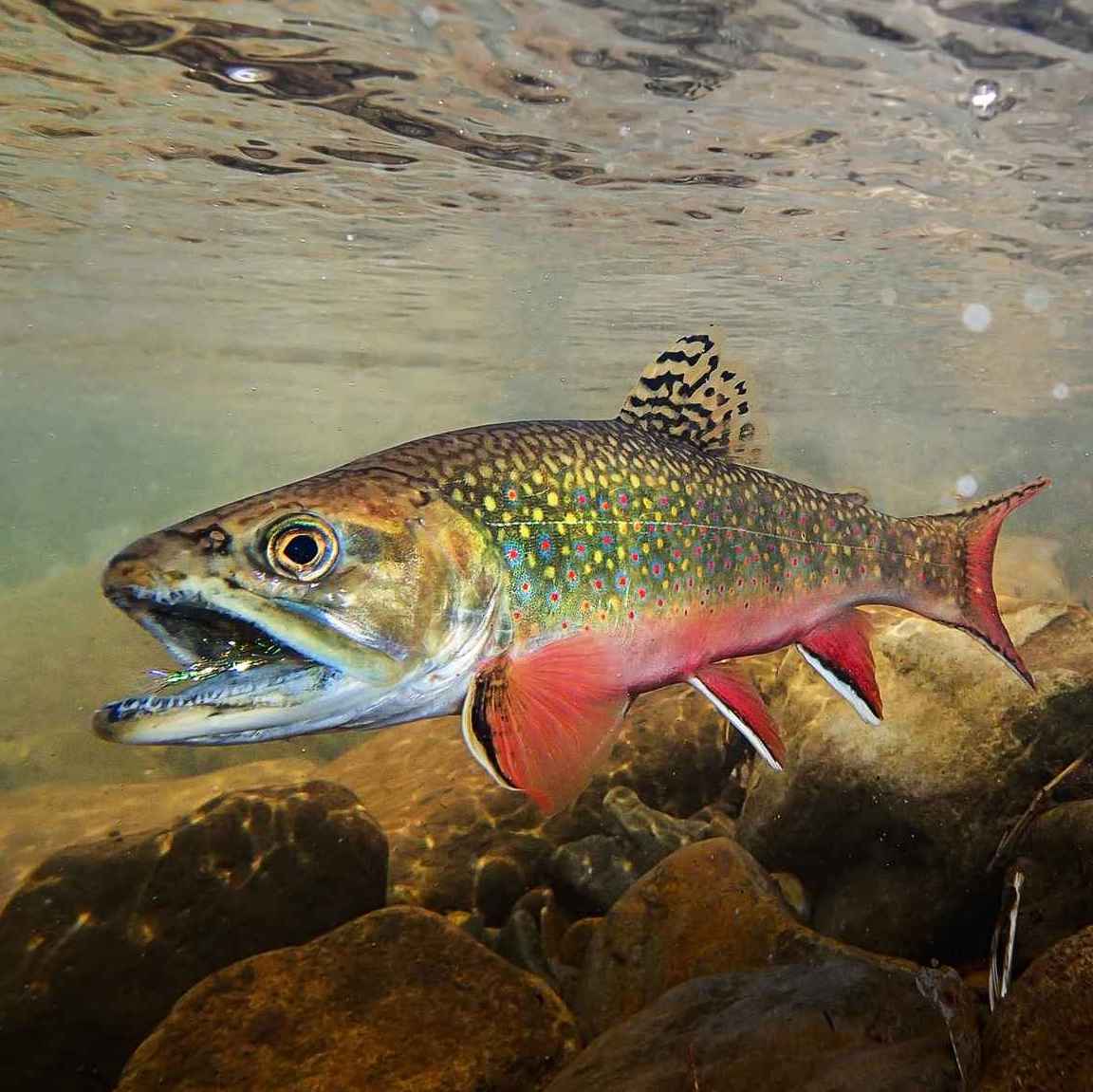
What would that big brook trout lurking behind the rock say? Perhaps “Why fight the current stalking prey when you can relax here and simply let the current bring dinner to you?”

Perhaps the message is that if you run up against an obstacle, it doesn’t mean your quest is over; with flexibility, you can simply “flow” around the barrier, and regroup in the calm before moving on.

Or maybe that life doesn’t have to be one continuous onslaught of expectations and demands. You can seek out those quiet “eddies” where you can relax and take sustenance.

Or that just about the best eddy you can find is immersion in Nature.

What other metaphorical lessons can you add? We’d love to hear your thoughts!

      “Water… for a dwelling it chooses the quiet meadow; 

        for a heart the circling eddy.”

             LAO TZU, Tao Te Ching

Tuesday, May 19, 2020

CALLS TO THE OTHER SIDE - The Mystical Evolution of Personal Communication

It started with that old tin-cans-and-string “walkie-talkie” sham. I wanted it to work so badly that it never dawned on me that I was simply hearing my little buddies’ voices through the air.


Technology wasn’t advancing all that fast back then. So when an ad for what sounded like a real walkie talkie appeared in Boys Life, I had to have one. Now I could actually talk with someone I couldn’t hear otherwise—as long as we were no further apart than the length of the 30-foot cord.

Looking back on those precious games, I can now see that they were the genesis of a life-long fascination with communication. Well, not so much the kind you engage in face-to-face—or through a string—but communication that broaches one or more “membranes” of separation: great distances, long periods of time, physical barriers, different environments or mediums. Communication that feels like you've just discovered buried treasure.

    That little Emerson radio might as well
    have been some deep space receiver developed
    by NASA.


TUNING IN
When I was about ten, I discovered a magical thing called “skip,” in which AM radio waves, prevented from dissipating into the atmosphere by the electronically-charged ionosphere, can travel phenomenal distances, especially at night.

I’d sit for hours with my ear pressed against the dark brown Bakelite speaker grill of our old Emerson table radio. I’d start turning the tuning knob and, bypassing the clear, strong stations, listen for the faintest signal I could make out.


The reception was intermittent, fading in and out. My goal was to hear a station break while the signal was strong enough to recognize its location or call letters. (Of course, my chances would spike on the hour and half-hour, when stations are required to give their IDs.)

Those faint voices brought down the walls of my room. That little Emerson radio might as well have been some deep space receiver developed by NASA. How mysterious and satisfying to learn that some of the radio waves had traveled all the way across the country—and even a few from other countries. I imagined them as sheer curtains, undulating through a thousand miles or more of starry skies.

BREAKER, BREAKER
Even more seductive was short-wave radio. One of my friends had a rather elaborate set-up for a kid. With his radio we could not only listen in on distant signals, but actually talk with a real person thousands of miles away.

Much later it was the CB (Citizens Band) radio fad. My boss at the ad agency I worked for in New Hampshire had one in his car. With no real need, he’d just put a shout out to any interstate trucker lonely enough to pick up, and then ask about road conditions and speed traps. This medium, though it couldn’t touch short-wave in its reach, had it beat by a mile in the relatively compact size of its apparatus.


When I enlisted in the Army, as luck would have it, I was assigned to the Army Security Agency. Our top-secret mission was to listen in on our own forces’ communications and report any security violations. To do this, we had to become proficient in Morse code.

I got very good and very fast at transcribing code. My motivation, besides getting let out of class early to go play pinball at the PX, was, I’m sure, this continuing intrigue with otherworldly communication. And the secrecy element, sending and receiving messages in code, just added to the enchantment.

         If the sender hit an X instead of the C,
         that’s exactly what would get typed out
         on the recipient’s paper scroll.


IMMEDIACY
In my late 30s I worked for a manufacturing company here in Minneapolis. One of my job assignments there involved sending and receiving Telex messages with customers around the world. That precursor to email would transmit directly, typewriter to typewriter via telephone, messages the sender pecked out on the machine’s keyboard.

Of course, I thought that was pretty exotic. Part of the immediacy of Telex communication was that messages were received exactly as they were typed, character by character. If the sender screwed up and hit an X instead of the C, that’s exactly what would get typed out on the recipient’s paper scroll.

If technology had been plodding along all those years since my cans-and-string walkie talkie, it hit warp speed with the development of the Internet. Now, with e-mail you could review what you’d typed, make corrections—or let your computer’s spell-check do it for you—add attachments, and send it off in a neat little package. Before long, some people's idea of communicating got distilled to a 140-character "tweet."


Then, along came the cell phone, and one’s window to the world and to all the information ever recorded was reduced to a device the size of a deck of cards. And today, with video conferencing via FaceTime or Zoom, we just take for granted both hearing and seeing the people we’re communicating with in real time.

In this rapidly changing milieu, it’s only a matter of time before the device will evolve to something the size of a pea implanted into one’s brain at birth.

      If there’s something down there in that
      cold, dark, liquid place, it eventually sends  

      you a message through the line.

WIRED TO AN ALIEN WORLD
There are other kinds of communication with mystical qualities. Ones far more tactile than technical, where the message is sent in ways other than words or pictures. For example, during the boyhood summers I spent in Franconia, a little village on the banks of the St. Croix River, I’d dig holes in the ground just to see if I came across some old square nail or pottery shard. I was always on the lookout for Native American flint or chert arrowheads.

I imagine what it must be like working on an archeological team that discovers artifacts of long-since-vanished civilizations. Or on a paleontological dig unearthing bones of creatures that walked the earth millions of years before man.  

Fishing is another example, one I fully and frequently indulge. You throw out a morsel of food that sinks deep into a hidden, alien world, connected to you by a thin filament held between your fingers. Then you wait for the offering to be acknowledged.

If there’s something down there in that cold, dark, liquid place, it eventually sends you a message through the line. Is it a kind of fish you’ve caught a hundred times before or one you’ve never seen? Is it big or small? Is it even a fish at all, or maybe an eel or turtle?


The clues might come in the form of cautious nibblings or a reckless attack. The creature might pull on the line or it might carry the bait toward you, slacking the line. Some fish gingerly gum the bait to see if there’s anything that doesn’t taste or feel right. Some grasp the bait between their lips, run a few feet and drop it—I guess just to see what happens. Others greedily gobble up the bait and run as fast as they can with it, perhaps chased by rivals.

        It's only a matter of time before there'll
        be some kind of teleportation, and the word 

       "virtual" will fade from use.

APOLOGIES
Now I don’t know what the next chapter of my mystical messages kick will look like. It’s hard to imagine what wonders technology will unleash next. Perhaps a way to make distance messaging feel more immediate, more personal.

Long-term, I suppose it's only a matter of time before there'll be some kind of teleportation, and the word "virtual" will fade from use, along with our other apologies for all these little glowing screens. And time travel won't be far behind.

Or just maybe one day we'll see a global cultural epiphany. A realization that our obsession these past few decades with all things faster, farther and slicker, despite its sexiness, has taken a toll. And just maybe that will open a creaky old door behind which ten-year-old kids will once again be mesmerized by digging holes and fishing.

Tuesday, May 22, 2018

A GUEST IN NATURE'S HOUSE

It’s my first day this still-young spring/summer out in my canoe on the lovely
St. Croix River.

I love hitting the water on weekdays like this when fewer people are out here. Today, I’ve seen fewer than a dozen, most in quiet canoes and kayaks. Much of the time, there’s no one in sight—in fact, no sign this couldn’t be a mid-May day a century or two ago.

How liberating it is, how celebratory of life’s sweet privilege, flipping my trusty old Mansfield down to the water, stepping in and paddling away. I think I feel more comfortable, more competent, handling this little wooden canoe in the water than
I do walking on dry land. That’s how much at home I feel here.
 

Clumps of grass and other flotsam drape like Spanish moss from trees overhanging the bank. The highest of them bring to mind the image of waters, perhaps just a month ago, swirling six feet over my head. But today’s water level is perfect—low enough to expose a few small sand beaches and bars; high enough to afford access to shallow backwaters.

Today’s cast of characters out here is pretty much the same as when I plied these waters as a boy: great blue herons, bald eagles, beavers, muskrats, turtles, clams and scores of other critters seen and unseen. I wonder how many are direct descendants, perhaps eight or more generations removed, of the very beings I communed with back then.

PIKE SURGERY
All afternoon I’m buffeted by gusty southerly winds. Even against the current they nudge me upstream with ease. (Heading back again will be a different story.) The wind makes fishing a challenge; I’m barely able to get in one cast at some targets before being blown out of range. At this rate, I could probably just let my line out and troll without paddling a stroke.

Just the second cast of my Mepps buck-tail spinner fools a forearm-sized northern pike.
A nuisance really, but I can’t just horse it in on my ultralight spinning gear. If smallmouth bass are the grab-and-run foxes of the game- fish world, pike are the ravenous wolves. This one, like most, has engulfed my lure, which sits deep in its mouth, past rows of needle-
sharp teeth.
I’ve developed something like a surgical protocol for this clash point between my love of this sport and my empathy for the fish. Jaw clamp, mouth spreader and forceps working in tandem, I reach in and jiggle free the hooks. If that takes more than a minute or so, I perform the closest thing I know to pike CPR, moving the fish back and forth in the water to force water through its gills. I hold it till it swims away—the more angrily, the better.

               It both pleases and concerns me
               that the beaver’s not alarmed.


APPROACH / AVOIDANCE
Heading into my favorite meandering slough, I escape much of the wind. As I coax my canoe around the first bend I’m aware of a presence. Twenty yards to my left, a young beaver lumbers unbothered down the bank and into its element. I anticipate the instinctual tail slap and dive.


Instead, the wet, furry lump swims toward me and then weaves side to side among felled branches, eyeing, at what seems little more than arms' length, what he must take as one strange vertical creature astride some kind of huge green turtle. It both pleases and concerns me that he’s not alarmed.

Muskrats, too, glide along the shore, some with mouthfuls of soft green grass to feather their nests. They take little interest in me. Mosquitoes, however, do. Even in broad daylight, even with a decent breeze, they’re out. I can handle a few, but this doesn’t bode well for my tender skin come dusk.

THE CANARY LIVES
Working the rocky shoreline with well-placed casts, I hook up with several more voracious pike. I’m beginning to see this as another in a string of signs I’ve noticed over the past few years that the cold streams and springs feeding this river may no longer be up to the task of keeping it a cool-water habitat.

Like the growing numbers of large-mouth bass and sunfish I’ve been catching recently. These are warm-water species, ones one associates with weedy, bathwater lakes, not clear, free-flowing rivers.

But then I tie into a dapper, foot-long smallie, with those distinctive dark rays emanating back from its reddish eye…and then another…and another—this last one a real test for my four-pound-test monofilament. I’m encouraged, for I fear the disappearance of these handsome fish could signal the end of the St. Croix as I’ve always known it.

I’m spotting lots of waterfowl today: Canada geese and several strains of ducks. I try not to look threatening, but the geese posture and scold me anyway as I glide past, Then I notice the trains of little flaxen feather balls traipsing behind each pair. I hope they’ll be safe tonight as hungry coyotes prowl.

    Soon there are five voices—each distinct 
    in tone and cadence—wrapping me in their 
    haunting refrain.

A CHORUS IN THE SANCTUARY
As sure as gravity, the hours have pulled the sun down into the treetops, and I begin wending my way slowly back the way I came.

Dusk’s gradual descent has sapped the wind. I picture the air as a liquid, slowing, cooling, settling in pools throughout the woods around me. Now every sound is caught and amplified in its thick stillness.

The rhythmic anthem of a barred owl stirs that fertile air to my left. I do my best to answer, and another owl joins the chorus from my right. I continue my feeble imitation and soon there are five voices—each slightly different in tone and cadence—wrapping me in their haunting refrain.

PHOTO: OwlEnchantment.com

I have—albeit rarely—heard loons on the St. Croix, but they’re not typical of the soundscape here. These owls, though, with their characteristic eight-note lament, come pretty close in their chilling, exotic effect.

On that sublime note, I’m ready to head back up to the Franconia landing and home. Now, with the cooling air concentrating the heat and carbon dioxide I exude, the mozzies have caught a whiff and are on me in force. I’ve not seem them this thick—or this big—for years. Before running the gauntlet, I break out my new Repel lemon-eucalyptus repellent.

I’m anxious to see how this botanical formula compares with the more controversial DEET-based repellents I’ve used. Sure enough, the pleasant-smelling stuff manages to keep the little buggers off, but just barely. Still, they swarm around me, hovering barely an inch from my skin. It’s all I can do not to inhale them. I wonder how other animals, without the benefit of chemicals or hands, cope with this version of death by a thousand cuts.

As I approach that last bend before river’s main channel, there’s Mr. Beaver again, atop a log perch. This time, he barely looks up from his green-willow supper. I extend my silent thanks—and, I hope, a blessing—to him and the other gentle beings I’ve met today. After all, this is their house, and I’ve been merely their guest.

I hope it’s not presumptuous to say I’ll be back.

Wednesday, May 25, 2016

THE ONE THAT GOT AWAY – Where Expectation Meets Chance

I feel my sinker bouncing along the rocky bottom ten feet below my canoe. I visualize the glob of squirmy night crawler trailing a foot or so behind.

The St. Croix River is a fisherman’s dream. With over 20 species of fish, you
never know what you’ll reel in. Here, at this particular narrowing of a meandering slough, I expect to find sheepshead—or freshwater drum—and maybe the occasional channel catfish or smallmouth black bass.

My line starts moving. I open my bale and let a few coils of line spill off. Closing the bale, I draw up the slack and, feeling some solid resistance, start reeling. This
is no sheepshead. You can tell, by both the sheer resistance and the rhythm of its movements, roughly how big a fish is. And this one is big.

     My quarry’s runs are not the anxious dashes 
     of a bass or a small pike…or a sheepshead; 
     they’re more resolute than panicked.

The clarity of the St. Croix’s water varies, from its normal Lipton-tea brown—it is, indeed, a brew of tannins steeped from plant material in wetlands near the river’s source—to a high- or stagnant-water soup of roiled mud, leaves and algae. Today, I’m having the tea.

I’m fishing with eight-pound-test monofilament, so I have to be careful; this guy feels like he could challenge that. Check my drag—loose enough to let him run; tight enough to tire him out. Oh, no…I forgot about the anchor rope! Keep him away!

My quarry’s runs are not the anxious dashes of a bass or a small pike…or a sheepshead; they’re more resolute than panicked. But in the next few minutes I gradually gain line. I should be seeing something of my mystery catch by now; he’s got to be only a few feet away. Remember, if he’s a smart old pike, he’ll lull you into complacence and then, just when you think you can finally grab him, he’ll use the side of the canoe for leverage and bolt.

As I strain my eyes to make out a form in the dark water, the fish makes one last powerful run…right for that anchor rope. It takes all of two seconds. One loop around the raspy nylon cord, and he’s gone. I’m left numb, my river monster’s species and size left to my imagination.


THE WHOLE ENCHILADA
It doesn’t take the expectation of catching a huge fish to get me out there in that slough. But I’ll tell you, losing one sure is a powerful incentive for going back. Now I know it’s there, that now-legendary-in-my-own-mind leviathan, and after the adrenaline dissipates I’m left not with anger or regret, just gratitude for the experience…and dreams of another chance.

Why doesn’t it work like this for other disappointments in our lives? Why, when our expectations are not met, do we so often experience such loss? And why do we feel such ownership in those perfect outcomes in the first place?

I’ve had my share of these figurative ones that got away. Sports aspirations; an invention; a book; marriages. I don’t know about you, but when something I really, really want doesn’t end up going my way, I often experience it as a defeat, as reason to doubt myself. Rather than celebrate the significant degree of success I was able to achieve, I feel like a failure for there being no more.

     We spend our whole lives learning that it’s 
     not the fishing but the catching that matters.

So why can’t I just look at those disappointments as I did losing that big fish? Not as proofs of the impossible, but suggestions of the possible. As endeavors entirely valid and rewarding simply for the challenge and beauty of the effort. 

In western culture, it seems we spend our whole lives learning that it’s not the fishing but the catching that matters. Immersed as we are in opportunity, competition and relative wealth, we’re taught to dream big and settle for nothing less than the whole enchilada.

IF ONLY...
But such expectation is not good for us. For one thing, it’s the kiss of death for wonder. You set out to catch the big one and eight of ten times you’ll be utterly skunked; the other one-point-nine-nine times, only seriously disappointed. And disappointment and wonder do not play nicely together.

But if you paddle out there simply for the joy of propelling yourself across still waters, for the closeness to wild, yet kindred, creatures, for the mystical process of communicating with mysterious beings in a dark, cold, liquid world through a nearly invisible filament—then nothing can disappoint you. Since you’re expecting nothing but the journey, everything that happens—or doesn’t—ends up a delight.

Whatever twists and turns fate may hand us, life’s simply too short to jump from one expectation-to-disappointment nosedive to the next. So my reflection, my self-examination, continues. If, every day, I can replace just one “If only…” with
a “Wasn’t that amazing?” I am on my way.

For it is, indeed, not the catching, but the fishing that keeps me coming back.


            “Many go fishing all their lives without knowing that 

              it is not the fish they are after.” HENRY DAVID THOREAU

Friday, October 23, 2015

ASIAN CARP, SCHMASIAN CARP! – Meet the Meanmouth

I’ll never forget the first fish I ever caught on the St. Croix River. I was seven years old. My dad and I were trolling one warm summer evening. He kept our seven-and-a-half-horse Evinrude putt-putting along at its slowest possible speed. Still, my little Mirro-lure vibrated more than swam as it bucked the current.

I got a strike. It could have been any of seven or eight species of game fish commonly caught on lures in the St. Croix. Whatever it was, at that tender age I was sure it was a monster. After a minute or two of awkward pulling and reeling I lifted the splendid barely-one-pound specimen out of the water.


The fish’s glistening flanks were surprisingly dark. The sun, about to settle into the bluff treetops on the Minnesota side, brought out olive-gold highlights and muted vertical stripes. I thought it was the most beautiful, exotic creature I’d ever seen. I knew it was a bass, but my dad, grinning proudly, made sure I knew exactly what kind of bass. “That, son, is a keeper!—a beautiful St. Croix smallmouth black bass.”
     I still caught a few bass. But this time, some-
     thing was radically, shockingly, different.

UPS AND DOWNS
Smallmouth black bass (Micropterus dolomieu)
In 60-plus years since that magical moment, I've caught at least a thousand more smallmouth black bass in the St. Croix. It’s the species the river is best known for, perfectly suited to its clean, cool currents, sandy-to-gravely bottom, rocky crags, eddies and deep pools—one many credit as, pound for pound, one of the scrappiest game fish in the world.

Many of my favorite fishing spots lie along a secluded slough that diverts for a mile or so into the Wisconsin-side woods before rejoining the river. I'd been noticing that for some years, with the water level reaching its customary late-summer low earlier and earlier, it’s been getting harder to float into it after late June.

One early-July day a few years back, I found the slough already cut off from the river's flow. I had to drag my canoe over sandbars and through muddy shallows to get in. The backwater’s now-stagnant waters were murky, and weeds I'd never before seen on the river thrived.

I was concerned about whether the bass would still be there—usually only carp and a few intrepid pike tolerate these unappealing waters. Surprisingly, I still caught a few bass. But this time, something was radically, shockingly, different.

Largemouth black bass (Micropterus salmoides)

These were all largemouth bass. Or at least they seemed so to my unskilled eye. The extension of the jaw's upper, maxillary, bone to a point clearly behind the fish's eye, and a dark swath running lengthwise along each side (rather than the vertical-stripe pattern typical of smallies) both suggested it.

So where did these “bucketmouths” suddenly come from? Where did the smallies go? How could such a changeover happen so fast? Was this an irreversible trend—perhaps yet another close-to-home sign of global climate change? Had I seen the last of this handsome, valiant breed—the fish that had defined piscine beauty for me a half century ago?

     I caught seven little bass in the slough. 
     But this time I couldn’t tell what they were.

SPLIT THE DIFFERENCE
In the past few years, I’ve once again caught smallies in the slough, but also the occasional largemouth. The difference hasn’t seemed to depend strictly on water level and quality, so I’m still wondering what’s going on.

This summer of 2015 has been an extraordinary one for this part of Minnesota—relatively cool temperatures and plenty of rain. For the first time in memory, my favorite slough has been navigable all summer long—and well into the fall. I’ve been fishing in there seven or eight times, and have delighted in catching lots of smallies, many of them that amazing dark color that so struck me when I was a boy. And good-sized ones at that.

Yesterday, on my latest outing—likely last of the season—I caught seven little bass in the slough. But this time something was quite different. I couldn’t tell what they were. Every single one had some of the characteristics of a smallmouth and others of a largemouth. Some of those traits fell halfway in between.

Black bass caught and released in St. Croix River, October, 2015

Smallmouth and largemouth black bass

Instead of the maxillary extending back to the middle of the eye’s pupil (smallmouth) or well behind the eye (largemouth), it extended just to the back of the eye. Rather than a compound dorsal fin (smallmouth) or one with a distinct break between the forward, spiny part and the rear, softer part (largemouth), there was something halfway in between.

Instead of vertical stripes and bronze highlights (smallmouth) or a mossy green hue with a dark horizontal stripe (largemouth), these specimens had fairly uniform gray-green coloring with reddish dorsal and anal fins and tail.

   If the meanmouth is really here, what does that 
   say about the health of our beloved St. Croix?

MEET THE MEANMOUTH
So, have I been witness, in the course of just three or four years, to the evolution of a new, hybrid black bass species on the St. Croix? This cross has been noticed and documented elsewhere; it’s called the meanmouth*. More commonly considered the offspring of a smallmouth and a spotted bass (Micropterus punctulatus), meanmouths of the small-/largemouth version do exist, though they are thought to be “extremely rare due to the difference in habitat preferred by the respective parents.”**

But that would clearly support the case for meanmouths evolving in the St. Croix, because both habitats are present: clear, cool, flowing smallmouth waters during half the summer; still, murky, warm largemouth waters the rest of the summer. Wouldn’t that be the ideal habitat for a hybrid?


While we St. Croix River aficionados tremble at the thought of an impending invasion of Asian carp—bigheads, silvers or both—here, sneaking in under the radar, comes the meanmouth. Not invasive, nor destructive (that we know of), but of concern nonetheless.

If the meanmouth is really here, what does that say about the health of our beloved St. Croix? I don’t know if the Minnesota and Wisconsin DNRs are aware of these apparent changes in the river's black bass population, but perhaps more observations from other fishermen—preferable some with more ichthyological knowledge than I possess—would help them at least to quantify and track the extent of the changes.

*The origin of the name "meanmouth" is recounted in this quote from In-Fisherman:
“The term “meanmouth bass” was born when Childers observed a school of largemouth-smallmouths attacking a female swimmer. “The bass leaped from the water and struck her on the head and chest,” he wrote, “and drove her from the pond.” On another occasion, he watched meanmouths attack a dog that ventured into shallow water.”

** BassFishingGurus.com 

Wednesday, August 5, 2015

THE ONE THAT GOT AWAY – Hooked, Lined and Sinkered in Tortuguero

I suppose I should have known I was being had when Franklin, my taciturn Caribbean-Costa-Rican tarpon fishing guide, handed me that rusty, beat-up, medium-weight spinning rig. On the recommendation of our lodge in Tortuguero (in Costa Rica's northeast, Caribbean, corner), I’d paid him his $150 up front to put me on some of that magnificent, acrobatic game fish, revered by its aficionados as the Silver King.

Once he’d skillfully tiptoed his tiny, open boat through the swirling currents and standing waves at the river’s mouth, it appeared Franklin might just meet my expectations after all; there were tarpon everywhere. The mirror-bright flanks of their sleek, 50- to 150-pound bodies caught the sun, flashing in the murky, blue-green water as they “daisy chained” ‘round schools of six- to eight-inch sardines. The bait fish, hundreds of them, turned and darted in unison as if one fluid silver-blue organism.

I was ready.

PHOTO: Tony Cappechi

           There I was...shooting fish, as it were,
           entirely outside the barrel.

FISHIN' WHERE THEY AIN'T
As quickly as my hopes had risen, that's how fast they fell again when Franklin reached under his seat and pulled out his "professional” fishing-guide tackle box. (It was really the small, cheap plastic kind a ten-year-old American kid would buy at WalMart for $9.95.) Inside, strewn atop the one swing-up tray, was a motley selection of well-used lures. He picked up a big, lead-headed jig with half of its red and white feather streamers still intact, and handed it to me.

“Poot deese own deah,” he mumbled indifferently, pointing to the swivel clip on the end of my line. Figuring he must know something I didn’t (After all, he is a professional guide, right?), I complied. Then he said, “Now drope eet ovah and let eet foal to dee boatum…dat weah dee feesh ah.”

I was nearly too dumbfounded to speak. “Ah-h-h, but I can see the tarpon! They’re feeding up here right next to us,” I protested. Franklin was unmoved. “No, dey own dee boatum!” So there I sat, jigging that red-and-white lure up and down off the sea bed twenty feet below as I watched the awesome monsters I was fishing for circle near the surface, feeding on those silver-blue herring.

Just in case, I grabbed my line just forward of the reel and pulled, checking the drag setting. It was set way too tight for these quick-striking, powerful fish, but when I tried turning the setting knob, it wouldn’t budge. Great! Even if I accidentally snagged one of these brutes, I’d have to pray it went easy on me.

My frustration simmered. I looked around and noticed another boat, even smaller than ours, drifting about 100 yards away. Standing in it was a man fly-fishing. I admired his effortless style as he flew his streamer back and forth over his head, feeding it another couple of feet of line with each false cast. Then, about 60 feet out, he let it drop. He watched it sink a couple of feet and then retrieved it with deft tugs of his free hand.


Suddenly, the man reared back, lifted the rod high with both arms and laid into whatever had taken his bait. Before he knew what hit him, a six-foot tarpon exploded from the water, thrashing wildly back and forth. It seemed like one of those sport fishing highlights films, where the action is captured in slow motion. Wow! I thought, this guy’s just caught about a hundred-pound Silver King...on a
fly rod!

And there I was, fishing the wrong lure in the wrong place at the right time—shooting fish, as it were, entirely outside the barrel. Maybe it’s because I’m from Minnesota, but it dawned on me that I’d been sucking it up to spare the feelings of the man who was robbing me.

       I hadn’t turned the crank more than five 
       times when it hit, the kind of strike you get 
       when you’ve suddenly snagged a log—
       except this one was moving.

THE JIG IS UP
My admiration for the fly-fisherman turned to envy; the envy to resolve. Enough
of this!

“Oh, my God,” I blurted, pointing to a random spot in the water just behind Franklin. “That one must be close to 200 pounds!” As he turned to look, I seized the moment, reaching down and opening the main compartment of his tackle box. And there it was: a six-inch long, silver-blue, Rapala type lure. Not only did it look exactly like what the tarpon were feeding on, it was practically brand new.

“How about this one?” I asked, my tone carefully measured somewhere between question and demand. As he turned back to face me, our eyes locked in gritty stares. He blinked first, and I picked up the lure. He started to reach for it, but I’d already unclipped my snap swivel. He scowled, mumbling something under his breath.

With the right bait on, I flipped open my bale, cocked my arms and wrists, and let fly a modest cast in the direction of the other fisherman. (I was so intent on my own hunt now that I didn’t even notice if he’d landed his fish.) The faux sardine landed with a splash and I started reeling. I hadn’t turned the crank more than five times when it hit, the kind of strike you get when you’ve suddenly snagged a log—except this one was moving.


I set the hook as hard as I dared with that pitiful equipment. From the moment
I’d casted, it couldn’t have been more than ten seconds till it happened: my drag nightmare came true. Before it had even jumped, the tarpon took off like a shot…and then that sickening sound fishermen dread, that of heavy monofilament line snapping. Just like that, it was over.

TURNING THE TABLES
I’ve had many sport-fishing captains console me on the loss of a big fish. Sometimes they counsel me on what I might do differently next time. Most are eager to get another bait out there. Franklin? He was just pissed. Here this pushy white guy, obviously a man of wealth and privilege, had just lost his prize lure on, of all reckless things, a fish.

Red and white jig? Bounce it on the bottom? Proper drag? Trust me, I’m a professional? These and other snarky comments clawed at the thin fabric of my restraint. I realized, though, that shaming Franklin would accomplish nothing. Besides, I still had to rely on him to get me back, through those treacherous waters, to the lodge.

Still, though I was more than ready to end our laughable outing, I wasn’t about to let the man off the hook. So, with no more lures in his little Plano box that even remotely resembled a herring, I tied the red-and-white jig back on, dropped it in the water and kept jigging—for nothing more than jigging’s sake...and perhaps to drive Franklin's hourly rate as low as possible—for the rest of our contracted time.

Franklin just sat there brooding—calculating, I suppose, how to lure his next sucker.