

One day, if I’m lucky, all my friends will be gone.
Wait...what am I saying? Would that really be so lucky? Sure, I'd have outlived them, but…
I reflect on this now and then, like on a sultry, pulsing-crickets night like this when I’m alone, deep in thought, sipping a nice tequila on the deck. Maybe it’s the booze, but in such moments I often yearn for that sweet, simple connection: calling to chat with a dear old friend. So I call. Usually, they answer.
I hope there’s room left in the
loneliness for joy and gratitude.
Those chats nourish me, mind and spirit. They reaffirm who I’ve been, who I am, how lucky I am to be both alive and befriended so well. They also make quite clear how empty the former would be without the latter.
How fortunate I am to still have such friends!
But if I were indeed to be the last, I hope missing my old pals wouldn’t hurt too much. That there’s room left in the loneliness for joy and gratitude. That remem-
bering might feel just a bit like calling one of them from my deck.

Living friends or not, I hope I’ll have kindled the kind of relationship with the rest of my world where that affection, too, might sustain me. That, for one thing, my companionship with Nature, with all her familiar ways, might feel like being with an old friend. Someone who cares, who shares their wisdom with me, who’s got my back. And, dare I wish it, laughs at my jokes.
Subscribe To One Man's Wonder

 Posts
All Comments
Posts
All Comments
Monday, August 10, 2026
ONE DAY, IF I’M LUCKY


Wednesday, July 3, 2024
STILL A PERFECT DAY
Last night, after another of my vertigo-like episodes had me recliner-bound
and dodging nausea all day, it was a great relief going to bed and getting fully horizontal.
 |
| IMAGE: Wikimedia Commons http://www.scientificanimations.com/wiki-images/ |
Compared with most days this one hadn’t been fun. And yet, when I began my nightly prayer—typically one of mostly gratitude—instead of that misery blunting my thanks, I found it only sharpened its clarity.

As my tally of the day’s blessings unfurled, I realized it included just about every one I’d listed the night before when I was feeling fine. And when I got to part where I acknowledge my relatively good health, instead of that item migrating over to the unspoken list of negatives, there it was, still right there on the plus side.
I appreciate...the smallest, most essential wonders:
each precious heartbeat,
every precious breath.
Maybe it’s a product of one’s aging, but don’t we find ourselves doing this more and more? Being grateful, even for some unpleasant things, that they weren’t worse? For the reminder that one cannot take all the good stuff for granted?
 |
| IMAGE: www.thetabernaclechoir.org |
After all, I’d still gotten up and gone to bed a free man, living in peace, and owning a few modest talents and ways of sharing them. What more does a person need to be happy and fulfilled?
With this new awareness of adversity’s inability to taint such blessings, I appreciate as never before not just those the big, broad wonders of life, but its smallest, most essential ones: each precious heartbeat, every precious breath.
Thank you, Great Spirit, despite—or maybe I should say because of—the occasional pain, for another precious day of living, breathing, sensing, feeling….and, above all, of loving.

Wednesday, August 30, 2023
BENCHED – Taking a Walk Sitting Down
Every summer, it seems, opens Sally’s and my hearts to a few new discoveries, new experiences. This waning summer has been no exception. Some of these new finds are things most folks wouldn’t find the slightest bit stirring. Yet for us they’ve become treasured parts of our daily routine.
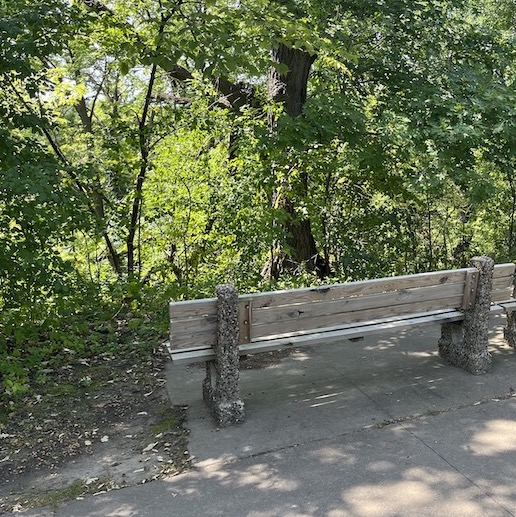
It’s under the leafy umbrella
of a mature horse chestnut tree.
LOCATION, LOCATION, etc.
They could have put it on the ample boulevard, between the sidewalk and the street. That would have set sitters a bit closer to the steep, wooded slope down to the Mississippi flowing below. But it would have given priority to views of soulless sedans and SUVs passing by.
They could have placed the bench ten or twelve yards further west, in more or less the center of their stretch of sidewalk. But that would have put it in full sun during some parts of the day.
No, these thoughtful folks put their gift to pedestrians right next to the sidewalk, where one can interact with neighbors—and their social-lubricant dogs—walking past. And it’s way over in one corner of the yard, under the leafy umbrella of a mature horse chestnut tree. (Amazing, isn’t it, how cozy and sheltered a tree can render the space it overspreads.) The bench is also right next to a flower bed.

If it takes being an old man to value such
languor, I must be aging faster than I thought!
SOUL BENEFICIARY
“Our” bench has become kind of a focal point of our daily walk. Even though its location falls far short of what should be the terminus for a healthy, two- or three-mile walk, what it affords our souls outweighs what a longer walk might do for our hearts.
We love stopping there. (Sylvia’s now learned the word “bench,” and automatically stops and lies down next to it.) We sit, she jumps up in Sally’s lap, and we just chill and observe the usually lazy pace of life as it flows past us. And, since we’re both fairly busy most days, it’s also one of the few occasions where we get to enjoy each other’s full attention.
“Benching it” has become another of what seems like an ever-greater number of our activities that stand out for their sheer simplicity. Hey, if it takes being an old man to value such languor, I must be aging faster than I thought!
Nearly as pleasant as the well-placed bench and Sally’s and my conversation is meeting our “hosts,” Lynn and Rahul, who’ve happened out to visit with us a couple of times. They’re very nice, and are among the few people we ever meet these days who actually seem to care who we are as much as they expect us to care who they are.
We’re trying to think of an appropriate gift we could leave for Rahul and Lynn to say thanks for their putting out “our” bench. What do you think? A small coffee table? Maybe a footrest?
Do you have a special place or activity, one that might seem ridiculously simple, where you can pass a little time just quietly observing, allowing Nature and neighbors—and perhaps a dear friend or partner—to nourish your spirit?
Wednesday, July 19, 2023
THE OLD LADY WHO LOVES FALLS
This morning I visited my 108-year-old friend at her nursing home. (To guard her privacy, I’ll call her Fran). I think it’s safe to say that, during each of my twice-weekly visits over the past year—as we’ve chatted, as I’ve read the newspaper to her or played her favorite music—she’s never once remained awake for more than ten minutes at a time.

Today was very different. She likes going outdoors, but between days too cool or hot and those with air quality alerts, we haven’t had many chances to do so. Today’s nearly perfect, so I wheeled her down five floors and out into the residence’s beautiful inner garden courtyard.
Her favorite place to stop and sit is right in front of the first of the gardens’ three waterfalls. That spot was in full, early-July sun, so I was concerned she might get too warm, but she said it felt good.

Fran’s hearing relies on one temperamental hearing aid, and she has trouble speaking clearly, but today she could hear both the waterfall and me, and we fell into an easy conversation.
We started talking about water, about seeing it as if for the very first time. Its stunning clarity, the way it feels on one’s skin, and, as Fran put it, the music it makes as it trips and tottles its way over rocks.
"I’m so glad you brought me out here!”
Her eyes welled up with tears.
At one point, after a brief silence. Fran turned to me and said haltingly, “I just love this; I’m so glad you brought me out here!” Her eyes welled up with tears as she said it, and I realized what a gift this little outing must have been for one whose day-in, day-out confinement starves her of Nature’s wonders.
MIRROR IMAGE
In the U.S and many other cultures of the developed world, childhood brings us as close to Nature as we’ll ever get. Then we grow up, tie ourselves to our education, careers and homes, and many of us forget what it was like to be one with the natural world.
I’ve always felt that the end of a human being’s life should be more like a mirror image of its beginning. Specifically, wouldn’t it make sense that Nature play as big a role in our health and happiness when we’re old as when we were young?

This is one of the reasons I originally signed up for visiting Fran and other old folks in nursing homes. I imagined myself in those well-worn shoes and how diminished mobility and the realities of institutional living can lead to one’s estrangement from Nature. I thought I could change that.
This morning Fran more than affirmed that hope.
The most important implement I can
bring is the turning of a door handle.
BELONGING
I always bring with me to my visits with Fran my “tool kit” of things to read, pictures to look at, music to listen to, perhaps a few games to play. So, whatever diversion she’s in the mood for, I’ll have what we need.


I hope with all my heart that this will be the case for me. That when I’ve lost my precious abilities to walk and climb and paddle…and see, someone will be kind enough to lend me those capacities. Take me outdoors with the animals and plants, the moving air and singing water, and let Nature replenish my soul with her perfect, timeless beauty and wisdom.
Wednesday, January 25, 2023
RED FELT SLIPPERS
Marie (not her real name) is in the bathroom when I arrive for my weekly visit. The door’s open, so I peer cautiously around the door frame. There she is, rocking slowly back and forth in her wheelchair, bumping repeatedly against the full-length mirror on the wall.
I announce my presence and ask if she’d like to come out and have a chat. With her usual positive intonation, she replies, “Oh, my, yes!”
Marie is a nursing home resident I visit as a volunteer. I’ve been seeing her every Thursday morning for over a month now. She’s a lovely person. Bright, sociable, interested in people and the world.
Oh, and she’s 107 years old.
I explain that I can play virtually any
music from any era, and ask her what
she’d like to hear.
Marie needs hearing aids in both ears. But one’s gotten lost, so I have to sit facing her right side and speak quite loudly so she can hear me.
We’ve settled into a nice routine which Marie seems to like: first, we just chat for a while. Then, since I know she used to love reading the newspaper every morning, but now can barely make out the headlines, I read her a few articles from that morning’s Minneapolis Star Tribune.
By that time, after nearly shouting for half an hour, my voice has given out. So from my tote bag full of activity gear I pull out my compact, Bluetooth speaker and open Spotify on my phone. I explain that I can play virtually any music from any era, and ask her what she’d like to hear.
THE LIGHT FANTASTIC
As I’m navigating to a Frank Sinatra playlist, I idly ask her what were some of her favorite pastimes in her prime. Without hesitation she replies, “Dancing!” And then adds, almost under her breath, “…until my injuries put an end to that.”
I decide not to pursue something that must have been so painful for her. But I switch my music selection from Ol’ Blue Eyes to some big band favorites. You know, the Glenn Miller, the Duke Ellington, the Tommy Dorsey. I play it a bit louder than I would for myself.
At first, Marie's staring kind of distantly as the music plays. But then her eyes close and her head nods forward. Well, I figure, I guess I’ve lost her…but that’s okay.
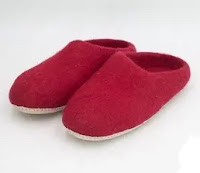 In the Mood ends and Artie Shaw’s Dancing In the Dark starts playing. I happen to lower my eyes to the floor and see that Marie’s feet, adorned in red felt slippers, are moving to the music—one at a time, forward and back, side to side.
When it’s time for me to go I take Marie’s hand in mine, lean down toward her right ear and say “You haven’t lost a step.” I‘m not sure if she knows what I mean, but I detect a little smile that starts in her eyes and spreads like a blush across her face.
You can bet I’ll be dancing with Marie again next week.
Sunday, July 25, 2021
LAST LEGS – Giving My All to Walking Tall
On the self-consciousness scale of one to ten, I’m about a six. It’s far from an obsession, but it does enter my mind now and then: How do I look or sound—or smell, for that matter—to others?

But the list of things I’m self-conscious about has seldom included how I walk. Until about my fifties, that is. That’s when putting one foot nicely in front of the other started becoming something I could no longer take for granted.
MY ACHING BACK
I was a jock all the way through college and beyond. In high school, I’d played football for a leathery ex-Marine coach who labeled a sniveling coward anyone who shied from blocking or tackling head-first.

When I was a junior in college, I was in a bad car accident. Most of the damage involved having my face pushed in, but I always wondered if any musculoskeletal after-effects might show up.
Then there was about 20 years of ice hockey. Oh, and flipping 60- to 80-pound canoes up and down from my shoulders—something I’ve kept doing into my mid-seventies.
So, though I suspect none of these factors by itself resulted in significant impairment, together, I’m afraid they stirred up a perfect storm of damage to my poor spine.
TILT! I’ll never forget the day, about six years ago, when my orthopedic surgeon at Mayo showed me that CT scan of my spine. It wasn’t just a bit worse for wear; it looked like the backbone of someone who’d just jumped off a cliff…and landed on his tail bone.
The surgery alleviated the worst of my referred-pain symptoms, but it could not fix what decades of degeneration had wrought. Alas, the 15-degree sideways S-curve in my spine remains.
Crumbling discs, narrowing nerve pathways, bone-on-bone abrasion. By rights, I should be a cripple…but I’m determined not to look like it. So, of course, I’ve grown quite conscious of trying to stand straight, walk tall, and not limp.
By the time I knew what was happening I’d already lost the battle between dexterity and gravity.
RUDE AWAKENING
Now that I’m in my mid-seventies, my screwy spine is just part of my posture problem. There’s also the inevitable wear and tear of aging on one’s bones and muscles. Not to mention balance, that precious asset whose denigration is a dead giveaway for old folks and drunks.
(I sometimes wonder, if I ever got pulled over on suspicion of DWI, would I be able to walk the straight line—even if I hadn’t touched a drop? I doubt it.)
That reminds me, I’ve recently had a couple of sobering falls. One time I unknowingly stepped off a curb, and by the time I knew what was happening I’d already lost the battle between dexterity and gravity.

FLATTENING THE CURVE
A few years ago, my wife Sally started pointing out that I slouch. Ever since, I’ve made an effort to suck in my gut, rock my hips forward and pull my shoulders back.
Doing so actually feels pretty good. At first, the resident pain in my lower back eases and I feel younger, stronger. I imagine that Sally’s not seeing me as a stooped old man. After a few minutes, though, it starts to feel like a lot of work. I let go of the effort…and of my short-lived fantasy.
Every time I pretend the curve’s still there,
it’s like trying to bend a two-by-four.
I’ve come to realize why standing straight is so hard for me: When most folks rock their hips forward to stand straighter, they’re actually flattening out the smalls of their backs—those inward curves most people have just above their butts.
But after my lumbar spinal fusion I no longer have a small of the back. That surgery, by fusing together the three vertebra central to the lumbar spine, flattened out the curve and rendered it more or less rigid. So every time I pretend the curve’s still there, it’s like trying to bend a two-by-four—one anchored, by the way, by four three-inch titanium screws.
LITTLE BIG MAN
Walking tall is about more than appearances or pride; it’s also a survival strategy.
Some years ago, my friend Silverio and I spent a very late night in a bar on Garibaldi Square, one of Mexico City’s seediest attractions, notorious not just for its glut of mariachi bands, but for its rogues gallery of thieves, beggars and drunks.
 As we’re stumbling out of the place in the wee hours, a group of four or five wiry young men approach and start harassing us. All five-foot-eight of Silverio puffs out his chest, swaggers right up to the punks and gets in their faces.
They backed off, opting to look for someone less formidable.
Later, I asked Silverio about the incident. He explained that, growing up in that close-quarters city of 20-million, he’d learned the hard way that stature is about more than height; it’s also about attitude, the way you carry that height.
To this day, when I take our dog, Sylvia, out for her last walk before bed each night, believe it or not I find myself channeling Silverio, aware of exactly what the way I walk says about me and my vulnerability.
Like my dancer alter ego, I’ll hobble
as if no one’s watching.
HOBBLING WITH GRACE
Especially to us humans, a spine fit for walking also means freedom. It’s hard to imagine losing that elemental ability to go wherever we want, whenever we want, under our own power.
But lose it we will. Aging and physics assure it. In the meantime, I plan to fight the inevitable at every turn. Can’t walk so well? I suppose I’ll get a brace or use a walker. Still can’t walk? There’s always a wheelchair. (My mom got around pretty well in one till she was 100.)
And what about the self-consciousness? I guess I’m counting on its waning at the same rate as my abilities. Like my dancer alter ego, I’ll learn to hobble as if no one’s watching.
Something I now know that I didn’t when I started writing this post: Consciousness—of others, of Nature, of joy—is just too precious to waste any more of it on how I walk.
“Look outside and you will see yourself. Look inside and you will
find yourself.” ~ DREW GERALD
Wednesday, June 10, 2020
HOLD THE HIATUS – Keeping One’s Spirit Alive During the Pandemic

serving me—nor anyone else for that matter—
very well.
 I suppose it’s something instinctive, a sense that in order to get through this prolonged uncertainty and “sheltering in place” I must somehow put my “real life” on hold. Like swimming the length of the pool underwater; basically everything stops but the swimming. Make it to the other side and only then can you come up for air.
about one twentieth of my time left in this world.

 Yes, it keeps me from running out in shorts and flip flops to walk the dog. But as long as I put on my parka and a good pair of choppers, pretty much anything’s possible. And if one keeps doing anything long enough, it no longer seems like an imposition on one’s freedom; it simply becomes part of life.
my spirit during this time comes from grief.
 Many of us are not just mourning the loss of our relatively carefree “normal” lives, but empathizing with so many of our fellow human beings, near home and around the world, who we know are fighting for their lives and losing loved ones—most often in the cruelest of ways—to this disease.
Monday, June 1, 2020
MY FATHER'S HANDS – The Kindest Bequest
And strong too. Not farmer hands, but you could tell they were those of a fellow who rarely needed a handyman. The veins on the back stood up like so many purply little hoses running this way and that across a floor of bone and tendon.

Over the top, shrink-wrap skin which, as he aged, gradually morphed from leathery—toughened and tanned by seven decades of work—to something more like loose onion skin—thin, crepey, nearly transparent.
His palms changed too, the callouses softening, the skin turning shiny, buffed so long by steering wheels, axe handles and the insides of gloves.
And there were spots. What had been a few nice brown freckles inevitably grew and grayed into age spots. And then exploded into those outlandish, reddish-purplish blotches (senile purpura) that decorate the hands of the very old.

Now and then it was more, an outpouring
of pride that flowed into me like a tonic.
My father was fair-skinned; he had to be careful about the sun. But somehow those hands always wore a tan. Generally he kept them clean—I still associate them with the smell of Coconut Castile soap. His nails too were well tended, though they did collect their share of soil, putty, grease and fish slime.
 Dad’s knuckles never got gnarly from arthritis as Mom’s did. So I don’t think they were wracked with pain as hers were. He could still do just about anything with his hands, including playing golf until just a week before he died. I don’t know why, but I wondered if he ever had to use them in a fight. I doubt it.
THE THINGS THEY CARRIED
I think of what those hands did over a 91-year lifetime. Once, they held me like some priceless antique; later, they spanked me when I deserved it, applauded me when I earned it, showed me how to toss a ball, pound a nail and reel in a fish.
They taught me how to replace bike chains and window panes and quite a few other tricks. After I’d flown the nest, they wrote letters to me…and the occasional check.
My dad’s hands, though not accustomed to hugging, must have shaken my hand a few thousand times. I don't think a hug would have felt any better. His robust handshake spoke to me of his approval and assured me of his constancy. Often it was simply a Welcome home! or God speed, son. But now and then it was more, an expression of pride, a transfusion of well-being that flowed into me like a few milligrams of cocaine.
The veins and creases etch a map of
destinations quite different from his.
GETTING A GRIP
Dad was of a generation of men for whom a handshake meant a lot. More than simply a gesture of greeting or agreement, a man’s grip—along with a certain earnest kind of eye contact—was an indication of his integrity.

I don’t remember a lesson, per se, in shaking hands. It was more a matter of role modeling. As you reached for the other person’s hand, you opened the “V” between your thumb and index finger. You made sure your “V” got fully seated in the other’s “V.” At that precise moment, you squeezed. If one of you came up short you were left with not a handshake but an awkward, much-less-than-satisfying finger shake.

Now, at about the age Dad was when his hands were starting to put his affairs in order for “senior living,” I look down at my own hands. The veins and creases etch a map of destinations quite different from his. But all these journeys started in the same place his did.
For sure, I inherited many good traits from Dad...and a few not so good. I got his nose, his receding hairline and his build. But I don’t think you could pay me a kinder complement than to tell me I have his hands.
Yes, I remember those hands as if they were right in front of me…and, as I look down, I like to think they are.

Wednesday, May 13, 2020
WALKING THE TALK – How Learning Spanish Has Become My Ticket to Adventure
Perfect! It’s the best of both worlds for me; I’m a senior citizen who, I’m told, often acts like a three-year-old.
~ // ~ // ~
 My roots are a typical American melting-pot amalgam: a little English, a bit of Italian…but mostly German. My family celebrates that heritage in a well-documented trove of family lore and with a few fine decorative and artistic German heirlooms handed down through the generations.
So, naturally, when I faced the choice of either French or German as my foreign language in high school, I went with the deutsch. Never gave it a second thought.
None of it fit my romantic image of myself
as a Mexican fisherman in a previous life.
AN EPIPHANY
Flash forward to about 2002. It was then, at the age of 57, during one of my several identity crises, that I decided I hated German. Truth be told, I’d never liked the hard, guttural sound of it. I didn’t much care for some of the national characteristics it conjured up for me either. None of it fit my romantic image of myself as a Mexican fisherman in a previous life.

Besides, it was becoming quite clear that I might never even visit Germany. But I had been traveling to Mexico, with my parents when I was nine, and a couple of times with friends as an adult. Then I got married, and Sally and I continued the trend, spring-breaking in nearly all of the popular Mexican beach towns.
I think it was Mazatlán where the epiphany happened. As I usually do, I’d boned up on a few basic pleasantries in Spanish so I could be a more gracious visitor, a better representative of my own country.
But on this one short cab ride, when it came time to pay the fare, the limit of my competence in the language came up and bit me. For some reason, cien (a hundred) and diez (ten) switched places in my brain, and I was convinced the driver had stiffed me.
 He explained with patience I didn’t deserve. Red-faced, I apologized and handed him the pesos…and a little extra for the painful lesson. And it was at that precise moment that the trajectory of my late-in-life quest for Spanish literacy took off.
IMMERSION IS THE KEY
Next time in Mexico, I decided, I’ll be able to carry on at least a simple “How’re the wife and kids?” conversation with a cab driver—and be able to correctly count my change. Those were my goals.
So I signed up for a St. Paul Public Schools Community Ed. class: Spanish for Beginners. My teacher was Silverio Rios, an engaging 40-something Mexican who’d been living and working in the Twin Cities for several years.
One evening after class I asked Silverio to join me for coffee and we chatted a bit about my goals for learning his first language. Toward the end of that first get-together, he told me of his plans to take small groups of his students on week-long Spanish immersion trips down to the part of central Mexico where he’d grown up.
That idea captivated me, and, as I was then a graphic designer, I offered to design and write his brochure for him. He accepted, offering in exchange a spot on his inaugural trip.

And so, Voces del Español was born. In August 2003, Silverio, I and three other students flew to Mexico City, then bussed to Querétaro City, and finally rented a car for the drive to the charming little town of Tequisquiápan, which would serve as our home base for the week.
The format involved formal classes in the mornings and an excursion each afternoon. Silverio had designed all the activities to encourage our use of the language in everyday experiences, such as buying produce from the local market or ordering dinner at a restaurant for everyone in our group.
Also included in those experiences was joining Silverio’s relatives for typical family events like a birthday, a wedding and going to the cemetery to tend to family graves. On different occasions we helped make bread with his mom and joined in the elaborate preparation of a mole.

WHERE LA ACCION IS
By the end of that first Voces trip, I realized my original goal of engaging in small-talk with a cab driver had already been eclipsed. Now I knew I was capable of more.
My Spanish learning was to become the theme—the key, one could say—to many more travels in Latin America. I eventually went on three more Voces immersion trips with Silverio. With each one, I gained more tools and more confidence in expressing myself. (Not to mention the great joy of being virtually adopted into his family.)
I’ve also travelled to Spain, Peru and Argentina, and attended language schools in Veracruz, Mexico, Panama and Cuba. All, if not dictated by my quest for better Spanish, at least encouraged by it.
My goal had been edging up too, like one
of those mechanical rabbits that racing dogs
chase, always just beyond reach.
NOT LOST IN TRANSLATION
One measure of my progress has been the time lapse between when I think of something to say and when the words actually come out of my mouth. I remember quite clearly when that interval was five to ten seconds. In most of my attempts to join a conversation I was getting left behind.
 But my competence level kept edging up, and that time interval down. At some point I realized my goal had been edging up too, like one of those mechanical rabbits that racing dogs chase, always just beyond reach. Now I wasn’t going to settle for any less than holding my own in those conversations with native speakers.
I have my moments—occasionally glorified by a couple of tequilas. They’ve included many conversations with Silverio, members of his family or Spanish-speaking friends I’ve met on my own, about a range of topics from art to zoology.
Once I get going, I enter that rarified air where only the relatively fluent survive. Where my mind goes right from hearing the Spanish to replying in Spanish, without passing through an English translation.
I suppose it’s another measure of my progress that I’m now less focused on vocabulary and grammar than on the finer points, like minimizing my English accent and incorporating common filler words—the Spanish equivalents to the English “um,” “well,” “then” or “so”— into my speaking.
Yes, I’ve a ways to go, but I can definitely see the prize. It may be that I’ll never be able to actually grab it; that might take a few months living in a place where no one speaks English. Maybe in my next life.
EMPOWERMENT
It’s amazing, when traveling, what knowing the local language does for a person. For me, it’s been kind of like watching and envying a competent musician, and then, with a ton of work, being able to play myself.
My new second language opens doors—to friendships, to avoiding conflict, to finding my way around. And for Sally, it cuts through the awkwardness of her having to shop using just hand gestures.
 I can even feel my Spanish competence affecting my posture as I walk down the street, especially in areas where I may be the only person in that town who looks like me. I enjoy seeing the look on a person’s face when someone who looks so unlikely to be a Spanish speaker handles their language so capably.
 More than once, that person has explained that they’d expected me, at best, to speak English with a heavy German accent.
~ // ~ // ~
POSTSCRIPT: My dad, at about the same age I was when my love affair with Spanish began, was also dreaming of learning the language. He chipped away at it, but with all his home and business responsibilities he never really got past the basics. I know that a great part of my motivation has been to honor his dream and make him proud. I believe I have.
Friday, September 29, 2017
BEYOND WORDS – A Dialog of the Spirit
 When I first met him, Harold could talk. That is, he had enough breath to make sounds, and he could move his lips. He’d even punctuate his comments with hand gestures and the occasional little chuckle. But very little of it came across clearly enough for me to understand.
As for my end of the conversation, I’d tell him what kind of a day it was outside, report on how the Minnesota Twins were doing, or maybe recount one of my experiences I thought might resonate with one of his. Occasionally, when he was tracking, he’d respond to something I said quite clearly, “Oh, is that right?” That was nice to hear.

I did my best. Most often that meant simply maintaining eye contact with him as
he spoke, trying to keep that faintly-received channel open. Since I didn’t want to pretend to understand when I didn’t, all I could do was nod so he’d know I was, if not understanding, at least hearing him.
Once in a while I’d make out a word or two. If I heard “brother,” I’d respond, “Oh, your brother. Uh-huh” or “I’ll bet you and your brother were quite a pair.” Anything to preserve a crack in that shell of isolation the poor man must inhabit.
I remember vividly why I originally signed
up for hospice work...I knew it had little to
do with words.
A LOSS FOR WORDS
Harold still likes to talk, but now, at this week’s visit, he’s clearly faded…a lot. He’s gazing up at me with what appears to be the intent of speaking, but I have to look hard to detect the subtle movement of his lips. I hear wisps of air coming out of his mouth, but he can no longer make a sound.
 I feel so sad for him; his daughter had told me he was once been a pretty gregarious fellow. He still had the will, but not the way. I also feel an arresting sense of gratitude. Yes, of course, simply for not being Harold, but also for the opportunity– the privilege—of being with this good man at such a vulnerable point in his life.
I’m a writer; my stock in trade is communicating with words. So this is unfamiliar territory for me. Yet I remember vividly why I originally signed up for hospice work. I felt I had something spiritual to offer. I wasn’t quite sure how to describe it, but I knew it had little to do with words.
HEARING SILENCE
So I’m sitting here at Harold’s bedside, and he’s just looking up into my eyes. It’s a little unnerving, but I feel something—I’ll call it energy for lack of a better word—flowing between us. It feels good, and I can only hope Harold feels it too.
 I take his gnarly hand and hope I can convey some kind of understanding that way. I don’t know how much he can grasp, but I acknowledge how awful it must be to have thoughts ambushed like that before he can get them out. “It’s okay,” I reassure him. “I’m hearing you.”
Our hour together comes to an end. I take his hand again and ask if it’s okay for me to come back next week. He just looks at me. As I walk away, I recall the moment, just the week before, when, after I’d strained the whole time to understand a word here and there, he somehow managed to say, as plain as day, “Thank you for coming.”
Today, he says nothing. But his eyes follow me through the door.
Saturday, September 2, 2017
THE HUNGER OF MY STEPS – An Old(ish) Man's Reflection on Mobility
~/ - /~ ~/ - /~ ~/ - /~
Some time in the winter of 1946 I took my first sips. That was all my wobbly little legs and feet could handle.
From then on, though, my abilities—and my appetite for movement—grew exponentially. I played; I jumped; I ran, sometimes just for the sheer joy of it. Eventually I was playing every sport I could. As an adult I skied; I hiked; I led others on hikes. Even in my 60s I was taking stairs, both up and down, two or three at a time. It was delicious.
I got used to that abundance of steps—those flavors of speed, of rhythm, of palpable heartbeat felt all the way to the tips of my fingers and toes. And lately, as
I notice my stride slowing, perhaps shortening a bit, I crave them all the more.

The length and number of one’s steps may abate, but the hunger for them—especially for a person whose whole identity has been about moving, learning, testing his senses—never does.
Nowadays, I suppose to compensate for the increasingly cautious measure of my gait, I savor not just the number, but the quality, of those steps. I actually think about them and the wonder of being able to move under my own power.
Nowhere do I appreciate this more than in my work as a hospice volunteer, where
I see rather intimately what it looks like to lose the nourishment of one’s steps.
It was like waving a nice juicy steak
in front of a hungry guy with no teeth.
I was a starving man.

CHOMPIN’ AT THE BIT
Travel adds spice to the dish, helps one appreciate the lusciousness of each step. I’ve learned more about life and love and beauty—and certainly about myself—from my adventures in Mexico and other Latin American countries than
I ever could have discovered staying home.
A couple years ago I traveled to Cuba. The trip involved a lot of walking, from exploring the back streets of Old Havana to climbing rugged hills in the western region of Viñales. But I was in pain.
 For quite a few years an impinged nerve in my lumbar spine had been worsening, manifesting as intense phantom pain in my left hip. By the time I went to Cuba, I could only walk or stand for a few minutes at a time. I hated being the “old guy” who had to sit out a hike or, at best, lag behind.
Problem was, every other part of my body and spirit put me in about the top ten percent of men my age for fitness. It was like waving a nice juicy steak in front of a hungry guy with no teeth. I was a starving man.
But last August an incredible surgeon at the Mayo Clinic gave me my teeth back. Free from pain, and with a back that now feels like that of a much younger man, I’m once again able to give my wandering feet what they so crave: freedom. Freedom to taste still-more-exotic places, test my capacity for wonder, delight as much in the journey as the destination.
I’ve no idea how many more steps are left on my plate. But I’m going to relish each one, not as if it were the first—for that tentative step back in 1946 was simply instinct. No, I’ll relish each one as if it were my last. I guess I believe that these precious autumn-of-life strides, so full of knowledge, memory and intention, are the ones whose taste I will most remember as I slowly, inevitably, starve away to nothing.
