

I'm like a hungry man about to sit down to a hearty four-course meal.
That's how I'm feeling on the eve of what I reckon is my 38th trip to Mexico.
As beautiful as Minnesota winters can be, they starve us of sensation.
Against this backdrop of bland whites and grays and taupes, we're
challenged to find the sustenance of color in detail and nuance—like a
rosy cheek or a tenacious crabapple. Smells are served unseasoned,
frozen in midair. Sound, too, seems squeezed of its luscious fullness
like dried fruit. Even touch is blunted by layers of nylon, feathers and
fleece.
In most of Mexico, including Zihuatanejo, Guerrero where I'm headed,
climate and culture collaborate to nourish one with colors, sounds,
smells and flavors.

The colors: a Minnesotan would be dragged before the neighborhood
association for painting his house these vivid shades of pink, blue or
gold. The smells: so often they reveal, where sights may not, the real
life that's going on beyond the sphere of one's sanitized tourist
experience. The tastes: there's nothing dried or preserved about them;
they're fresh and true and sometimes surprising. And the touch, oh, the
caress of that soft, delicious air pouring in over the Pacific!
The sensations of Mexico stir in me
a subtle sense of urgency.

Maybe that's it; maybe it's the warmth that unlocks both stimuli and
senses. Belying the laid back, unhurried lifestyle, the sensations of
Mexico stir in me a subtle sense of urgency. A mango, for example, just
picked from the tree outside our villa door, is such a beautiful form
just to look at. But no sooner than it begins to blush with full color
you have to eat it or it loses its tang and turns to mush. So many
beautiful things are transient.
And Zihuatanejo's a place of seamless flow between indoor and outdoor
life. With little notion of that confinement we Minnesotans suffer
during winter, you sense everything going on —in El Centro, down at
Playa La Ropa out on Zihuatanejo Bay—and want to be a part of it all.
But it's okay; anything you do—even nothing at all—feels completely
satisfying, completely nourishing of body and spirit.
Subscribe To One Man's Wonder

 Posts
All Comments
Monday, February 27, 2023
OFF TO MEXICO – Yum-m-m!


Monday, February 13, 2023
SLEEPING AROUND – My Gradual Turn From Back Sleeper to Stomach
Ever since my back problems began—sometime in my 40s if memory serves—I’ve heard and read that sleeping in any position other than on one’s back is asking for trouble. And I pretty much heeded that advice.
Yet my recurrent back pain persisted, the payback, I assume, for all those years of contact sports—and likely a head butt or two from genetics.
By 2013, things were getting pretty bad. It wasn’t just poor sleep; now I was experiencing phantom pain radiating out to my hip and down my leg. Walking more than a hundred yards was too much to bear.

So in 2015 I had surgery at the Mayo Clinic to remove parts of one lumbar disk pressing on a nerve, and to stabilize a few malaligned vertebrae with four three-inch titanium screws. I walked away from that surgery a new man. But, as my surgeon cautioned me, even though I’d be free of the referred hip pain I’d still be a guy with a bad back.
After that, back sleeping seemed more sensible than ever. In fact, due to this surgery and a previous fusion in my cervical spine, any other position was quite uncomfortable.
Has something changed with my anatomy?
Or do I just have a screw loose?
DONE TO A TURN
Flash forward to 2022. For some inexplicable reason, I was starting to wake up quite often during the night with an urgent need to change position from back to side. As the year went along, the trend continued: less time on my back; more on my sides.

Then, just in the past few months, while I’m still spending most of the night side-sleeping, the “rotisserie” has been turning me another 90 degrees. I now find myself on my stomach several times every night. To my surprise, that’s now become the most comfortable position for me—at least for a few minutes until that yearn to turn sets in again.
I’m baffled. Has something changed with my anatomy? Is it my mattress going soft on me? Or do I just have a screw loose? What do you think? We'd love to hear of your tossings and turnings.
Wednesday, February 8, 2023
ON THE LEVEL – The Truth About Cross-country Skiing
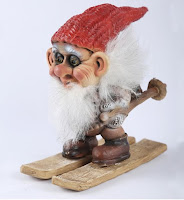
He’s the picture of concentration and resolve, ready for action.
But the ground the little skier stands on is depicted by a prominent horizontal line across the bottom of the scene. Except at one point where just the tips of his skis hang out over a moderately steep, one-foot drop-off.
The headline reads: Ski Minnesota!
GRAVITY, SCHMAVITY
The problem with alpine—downhill—skiing in Minnesota is that there’s just too much gravity and no place for it to go. For a decent run, you need at least 500 feet of vertical drop, which very few slopes in the state have. (By comparison, better ski resorts in Vermont boast of a couple thousand feet of drop; in the Canadian and U.S. Rockies, some have nearly a vertical mile.)
That’s just one of the reasons I love Nordic—cross-country—skiing. You don’t need no stinking’ mountain. And there are also the facts that it’s kinder to one’s body, costs far less and provides its own kind of patient, level-headed beauty.
In downhill ninety-five percent of the effort goes into controlling the force of gravity. In cross-country, nearly all your energy’s devoted to creating your own force, propelling yourself, mostly horizontally, from point A to point B.
It’s like the difference between skydiving and flying, white-water rafting and lake canoeing, an eagle and a swan.
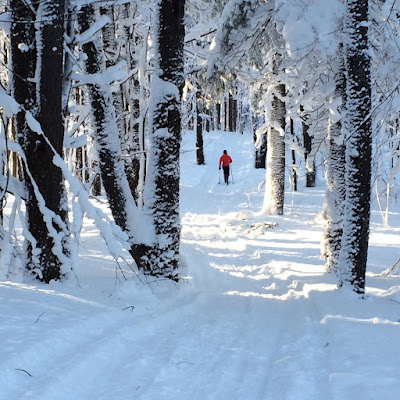
GET A GRIP
Alpine skis are designed essentially to do two things: slide on snow with as little friction as possible, and carve turns. Nordic skis—specifically classic-style cross-country skis—also have to glide, but only in one direction. They employ one of several devices to make them slide forward easily, but grip going backward.
That grip is achieved in one of several ways: One is the application of special waxes, each formulated to grab the snow under certain temperature and snow texture conditions. There are also a couple of mechanical devices to accomplish the same grip-and-glide. They entail either a fish-scale texture embossed into the middle third of the skis’ bottoms, or “skins,” strips of real or synthetic mohair, which has a distinct grain.


For a classic-style cross-country skier the motion is very much like that of walking; there are distinct strides. As you extend one ski in front of you, you transfer your weight to the other ski and push it back. To maximize the amount of grip you get on the snow with that pushing ski, you add a downward force with a subtle stomp or “kick” off the toe of your boot. That makes whatever grip device you’re using bite into the snow.
That constant heel-toe alternation means cross-country ski boots have to be very different from the rigid, cast-like grip of alpine boots. Cross-country boots are much lighter and more flexible, their only point of attachment to the skis at the
very toe.
Cross-country’s more constant, repetitive nature
allows one to escape into the rhythms of one’s
own breathing and heartbeat.
RHYTHM METHOD
Downhill skiing employs the large muscles of the thighs and buttocks primarily as shock absorbers. There are G forces involved. And the poles are used mostly for balance and pivoting.
But classic-style Nordic skiing actually employs more muscle groups and burns more calories than downhill.* One reason for this is that the poles, driven by one’s arms and shoulders, are vital to providing propulsion with every stride.  Besides the physical aspects of the two types of skiing, there are important mental/spiritual differences. While alpine skiing may give one more of an adrenaline rush, Nordic skiing’s benefit, the regular pulse of push and glide, and the whispery sounds, is more of a meditative or spiritual one.
Skiing downhill, you’re constantly navigating around obstacles and changes in terrain. Cross-country’s more constant, repetitive nature allows one to escape into the rhythms of one’s own breathing and heartbeat.
The older I get, the brittler my bones, the more I love the sport’s serenity. There’s nothing quite like the sense of oneness with one’s body and with Nature when you’ve skied far ahead of your group and stop to wait for them. You feel fully alive, in perfect balance, fully immersed in wonder.
A GOOD WINTER
If the trail is groomed, you have nice, neat grooves to guide those long, narrow skis. So most hills are a breeze, at least going down. But if there happens to be a tight curve at the bottom, or if, God forbid, folks have decided your ski track is a nice place to snowshoe or walk their St. Bernard, all bets are off. If you’re out of practice, your skis can easily jump the tracks and send you careening into the woods.
If there are no groomed tracks, you have to break trail, and that’s a whole different animal. Kind of a combination between skiing and snowshoeing, it’s a challenge to one’s stamina, balance and patience. But the reward is knowing that each subsequent skier who comes along will benefit from your labors.
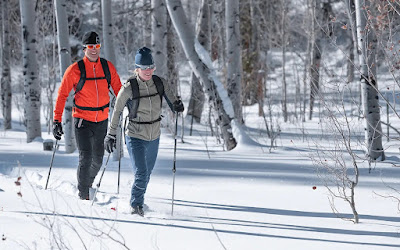
It’s all part of sport of Nordic—cross-country—skiing. If you haven’t tried it this is a good winter for it, at least here in Minnesota. With over a foot of accumulated base and an inch or two of new snow every few days, and very few below-zero days, conditions have been ideal.
If you’re ready to jump—or should I say slide—in, local ski shops should be discounting their cross-country ski gear soon. If you’re not ready, equipment’s available to rent at many ski areas, public parks and ski shops. Either way, I hope to see you out there soon!
* DOWNHILL SKIING – A person weighing 150 pounds can expect to burn 360-570 calories in an hour of skiing. Downhill can be an intense workout for your core and legs, especially as you hit moguls, deeper powder, or jumps.
CROSS-COUNTRY SKIING – A 150-pound person will burn 500-650 calories per hour. Cross-country is a slow but constant burn, keeping your body working every step of the way.
“Downhill vs. Cross Country: The Ski-Booted Battle” – by Brian Hanford, Nov. 30, 2015 – EatFitFuel.com
Wednesday, January 25, 2023
RED FELT SLIPPERS
Marie (not her real name) is in the bathroom when I arrive for my weekly visit. The door’s open, so I peer cautiously around the door frame. There she is, rocking slowly back and forth in her wheelchair, bumping repeatedly against the full-length mirror on the wall.
I announce my presence and ask if she’d like to come out and have a chat. With her usual positive intonation, she replies, “Oh, my, yes!”
Marie is a nursing home resident I visit as a volunteer. I’ve been seeing her every Thursday morning for over a month now. She’s a lovely person. Bright, sociable, interested in people and the world.
Oh, and she’s 107 years old.
I explain that I can play virtually any
music from any era, and ask her what
she’d like to hear.
Marie needs hearing aids in both ears. But one’s gotten lost, so I have to sit facing her right side and speak quite loudly so she can hear me.
We’ve settled into a nice routine which Marie seems to like: first, we just chat for a while. Then, since I know she used to love reading the newspaper every morning, but now can barely make out the headlines, I read her a few articles from that morning’s Minneapolis Star Tribune.
By that time, after nearly shouting for half an hour, my voice has given out. So from my tote bag full of activity gear I pull out my compact, Bluetooth speaker and open Spotify on my phone. I explain that I can play virtually any music from any era, and ask her what she’d like to hear.
THE LIGHT FANTASTIC
As I’m navigating to a Frank Sinatra playlist, I idly ask her what were some of her favorite pastimes in her prime. Without hesitation she replies, “Dancing!” And then adds, almost under her breath, “…until my injuries put an end to that.”
I decide not to pursue something that must have been so painful for her. But I switch my music selection from Ol’ Blue Eyes to some big band favorites. You know, the Glenn Miller, the Duke Ellington, the Tommy Dorsey. I play it a bit louder than I would for myself.
At first, Marie's staring kind of distantly as the music plays. But then her eyes close and her head nods forward. Well, I figure, I guess I’ve lost her…but that’s okay.
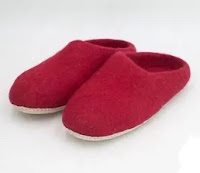 In the Mood ends and Artie Shaw’s Dancing In the Dark starts playing. I happen to lower my eyes to the floor and see that Marie’s feet, adorned in red felt slippers, are moving to the music—one at a time, forward and back, side to side.
When it’s time for me to go I take Marie’s hand in mine, lean down toward her right ear and say “You haven’t lost a step.” I‘m not sure if she knows what I mean, but I detect a little smile that starts in her eyes and spreads like a blush across her face.
You can bet I’ll be dancing with Marie again next week.
Thursday, January 12, 2023
JOY AT FOUR CENTS AN HOUR – A Love Affair Afloat
What’s the best, wisest purchase you’ve ever made?
No sooner did I write that question than I realized the peril of answering it. So let me start like this: Among the best purchases I’ve ever made is…my canoe.
Back in 1976, when I was living in Keene New Hampshire, I found the 13-foot Mansfield Osprey canoe sitting in someone’s back yard, crawling with ants and earwigs, parts of its ash gunwales and cherry ribs rotting. Still, most of the wood-and-fiberglass hull looked intact.
I think I paid the guy $100 for it. I cleaned it up a bit, just stabilizing the rotting areas with some penetrating epoxy resin. It wasn’t pretty and there were a few chunks missing, but that little craft provided many hours of enjoyment for me in southeastern Vermont, where I used it mostly on the Connecticut river and a few local ponds.
I eventually moved back to Minnesota, where I got even more use out of my Osprey, paddling the St. Croix and Mississippi Rivers, and several of the Twin Cities’ many beautiful lakes.

MENTAL FLOSS
In 1987, reeling from a painful divorce, I decided my summer project—and my redemption—would be some much-needed maintenance on my canoe and then outfitting both it and myself for a solo canoe trip in northern Minnesota’s Boundary Waters Canoe Area Wilderness (BWCAW).
In a friend’s small back yard, I put the canoe up on sawhorses and got to work. Keenly aware of the metaphorical significance of what I’d be doing, I removed as much wood rot as I could, soaked the rest in more penetrating resin, and then filled the larger voids with epoxy putty.
I removed and replaced the keel, swapping the mixed bag of rusty screws for new ones of shiny brass. I sealed each screw hole and then the entire length of the keel with clear silicone caulk.
My efforts were more repairs than restoration. The epoxy filler I applied is white, so the areas where I used it are pretty obvious. But those repairs, all of them, have proven rock solid for 35 years and counting.
The current price: about the cost
of an average car at the time my Osprey
was made.
JOY AT FOUR CENTS AN HOUR
I’ve done a little research on the boat. The Mansfield Osprey was originally designed by L.H. Beach in 1954, and manufactured in Vermont by a company called Stowe Canoes, which also produced snow shoes.

Long after I bought my old Osprey I was Googling the Mansfield name and learned that the Stowe Company had been bought and moved to, of all places, Tennessee, in 1972. The company was renamed Merrimack, after another fine New Hampshire town and river.
At Merrimack’s website, I was delighted to see they were still making the Osprey—nearly identical to my half-century-old craft—and that it was still considered a fine, unique canoe. The price for a new one at that time: nearly $2,000.
I recently checked again and found that Merrimack has since made two more moves, first to South Carolina and, again, just in the past year, to Winona, Minnesota, where the Merrimack name, designs and production methods are still honored—now under the corporate umbrella of the Sanborn Canoe Company.
The current price for a new, 13-foot Osprey: $3,500—about the price of an average car at the time my Osprey was made. While I have no plans to replace it, it’s somehow gratifying to know that if I wanted to, I could save my pennies and buy a brand new one.

It’s an interesting phenomenon, isn’t it? That one can become so attached to something very old, very worn, that it takes on greater value than a brand new version of the same thing that has 35 times the monetary value.
In terms of dollars-and-cents, if I take the price I paid for my little vessel, and divide it by the approximate number of hours I’ve spent enjoying it, I come up with a cost of around four cents per hour for all the paddling, exploring, fishing, photographing and communing with Nature I’ve done in it.

I feel as safe and as nimble in my
canoe as I do standing on dry land.
IN MY ELEMENT
The Osprey is not designed as a solo canoe. That is to say, it has both bow and stern seats. So when I paddle alone, my weight causes the bow to rise out of the water, and that makes paddling in any wind nearly impossible.
I simply compensate by filling a five-gallon collapsible water jug with river water and placing it on the floor in the bow.
Once I’m on the water, I experience a deep sense of empowerment and freedom. I can navigate around the tightest turns, through the trickiest currents, and over the roughest bottoms—as long as the water’s three or four inches deep. And if not, I just get out and pull the canoe over the shallows…or portage around them.
I can turn on a dime, and easily move my canoe forward, backward, or sideways in the water. I can paddle silently to sneak up on wildlife. The Osprey’s 39-inch beam makes it really stable, so I can stand up relatively safely to get a better view of what’s ahead, or just to stretch my legs.
After so many years getting to know my beautiful little canoe, I feel as safe and as nimble in her as I do standing on dry land.
It's like I'm paddling a piece of fine wood furniture.
PERKS AND QUIRKS
I’ve paddled and portaged many makes and models of canoes, under a wide range of conditions. Each of them—with a few exceptions—was very good for certain things. The beautiful old wood-and-canvas ones, like the Seligas or Chestnuts, are beautiful and fast, but because they’re relatively narrow and have no keels, they’re quite tippy.

Those old classics also have little quirks, like often leaking a little until the wood gets wet and expands.
The aluminum Grummans and Alumacrafts are workhouses, practically indestructible, great for running rapids. But they’re heavy, not the best choice for trips with lots of portages. And they’re noisy.
The first Kevlar canoes came out in the early 1970s. They’re super light and maneuverable, weighing in about 40 percent lighter than canoes of other materials.
They’re billed as indestructible, but that’s not exactly accurate, since Kevlar, originally developed to replace steel fibers in racing tires, is only strong in certain ways. It can absorb the impact of a bullet, but is easily abraded when the canoe is beached on rocks or gravel.

There’s definitely an esthetic element to the interior of a canoe. It has to do not just with how the vessel looks, but how it feels and sounds. There’s nothing at all warm and fuzzy about stepping barefoot into an aluminum canoe, feeling the cold metal against your feet and hearing the loud metallic clunk as you drop your paddle on the thwart.
Kevlar’s a bit warmer, but it’s quite translucent; from inside, you can easily see the water line through the thin amber skin. And I just find that unnerving.
My Osprey, like the other wood-ribbed classics, feels comfortable, secure and kind of organic, as if I were paddling a piece of fine wooden furniture.

A GUY CAN DREAM
After some 46 years of adventuring—and aging—together, I dearly hope my canoe and I can still enjoy a few more. But the reality is that the Osprey will ultimately weather the aging better than I.
There will come a day when even the relatively light weight of the boat will prove too much for me to handle. What’s more, as the inevitable downsizing of our home occurs, there will be the challenge of where to store it.
That will be a sad day indeed, like losing a good friend.
My fondest wish is that one of my clever, caring grandchildren might figure out a way to keep getting Gramps out there on the water now and then. Because I have a feeling that, even when this old coot can no longer walk so well, he’ll still wield a decent J stroke.
Saturday, January 7, 2023
DEJA BLUES – The Emotional Interplay of Music and Memory
There’s this song I discovered long ago on the Putamayo album, Acoustic Africa. It’s called "Baro," by the Malian singer Habib Koité. I’m sure I liked the song the first time I heard it, but gradually it’s become not just my favorite cut on the album, but one of the dearest pieces of music I know.
Now, when I listen to Baro, the music—the sweet layering of Koité’s silky voice with chorus, guitar, the marimba-like balafon and some gentle percussion—brings me to tears. So what happened since that first time I heard it that has loaded that song with so much emotion?
It taps into…that dimly-lit corner of my
consciousness where many nameless,
placeless scraps of emotion reside.
FROM ROMANCE TO RAP
There are two distinct ways in which music might move me. The first is with its sheer intrinsic beauty. Beauty that resides in the sound itself—the sublime melding of melody, harmony and tempo that, like a beautiful painting or stunning piece of architecture, simply delights my senses.
Reynaldo Hahn’s operatic "L’Heure Exquise" is an example. It calls up no part-
icular emotional association for me, but even the first time I heard it I found it achingly beautiful.
Even more personal than music’s intrinsic beauty is its evocative power. Its ability to recall moments or periods in the past. Sweetness or sorrow; pleasure or pain; gladness or grief—or any combination of those emotions.
It doesn’t have to be one particular experience or feeling either; sometimes it simply taps into that dimly-lit corner of one’s consciousness where many nameless, placeless scraps of emotional memory reside.
Of course, this kind of appeal is subjective. To one person, the music that recalls emotion might be a gentle, romantic-period pastorale; to another, a tender ballad; to yet another—don’t ask me why—it’s the harsh scolding of gangsta rap.
John McVie said that song would “make
grown men weep.” Turns out I’ve become
one of them.
GROWN MEN WEEP
Often, the appeal grows over time. The first time I heard Christine McVie’s (of Fleetwood Mac) "Songbird," I was below decks on a 32-foot sailboat, crossing North Carolina’s Pimlico Sound in a gale. I was hunched over a plastic bilge bucket, barfing my guts out.
McVie’s ex, John McVie, once said that song would “make grown men weep.” Turns out I’ve become one of them. How could the most obvious of associations—the sheer misery of that bilious day at sea—have given way to such tender, weepy allusions?
I have a pretty good idea what those allusions are, but I'll spare you the TMI violation.
Aaron Copeland’s "Fanfare For the Common Man"—all three magnificent minutes of it—stirs entirely different feelings. Instead of melting me, this piece makes me stand tall and feel invincible.
While "Fanfare's" sounds themselves are undeniably thrilling, I’m not sure what the emotional association is, unless it’s a cultural one. A meaning derived, I suppose, from this type of music’s use in grand ceremonies and their depiction in film.
Oh, and don’t get me going on Puccini’s "Nessun Dorma," from Turandot. To me—admittedly far from an opera aficionado—it’s easily the most stirring aria I’ve heard. Especially in the hands of Pavarotti, whose performance takes the emotion to the next level.
FULL OF IT
This intrinsic/associative duality brings to mind something I used to tell clients during my graphic design career about the value of a good logo.
The design, I explained, should be thought of as an empty vessel. It has to be unique and pleasing to the eye, of course. And the really good ones employ devices to make them especially memorable (like the the illusion of movement, or an interplay between positive and negative space).
But filling the vessel with meaning, connecting the visual appeal with feelings that build a positive impression, occurs over time. It comes from repeated association of the symbol with customer experiences. It’s the way the receptionist answers the phone, the quality and pricing of the organization’s products or services, the integrity of its personnel.
Isn’t this what happens with music? Some pieces appeal to us simply for their beautiful exteriors; others, the ones that not only appeal to us, but grow on us, get “filled,” over the course of many exposures, with intensely personal emotional associations.
Let’s make this a conversation. Do you agree that music taps into some well of emotion in nearly every human being? What musical works do that for you? If you hear them too often, does the intensity of the feelings diminish?
Saturday, December 24, 2022
Happy Holidays!
I wish all my
visitors and loyal followers from all over the world—80 countries so
far—the very best of this season. For us Christians, that means MERRY CHRISTMAS! (para mis hispanohablantes amigos, ¡FELIZ NAVIDAD!) For my Jewish friends, it's HAPPY HANUKKAH! For all of us here in the northern hemisphere, it's HAPPY WINTER SOLSTICE!

Whatever your celebration, may these days be kind to you, your families and your loved ones. May they bring you new awareness, wonder and gratitude!